BMW M1 Procar
The racing M1 of 1979–80, built to Group 4 rules for BMW's one-make series at European Grands Prix, where the fastest Grand Prix drivers of Friday practice took the works cars. Also written Pro Car or ProCar; after the series the same cars were the M1's racing stock until the 1990s.
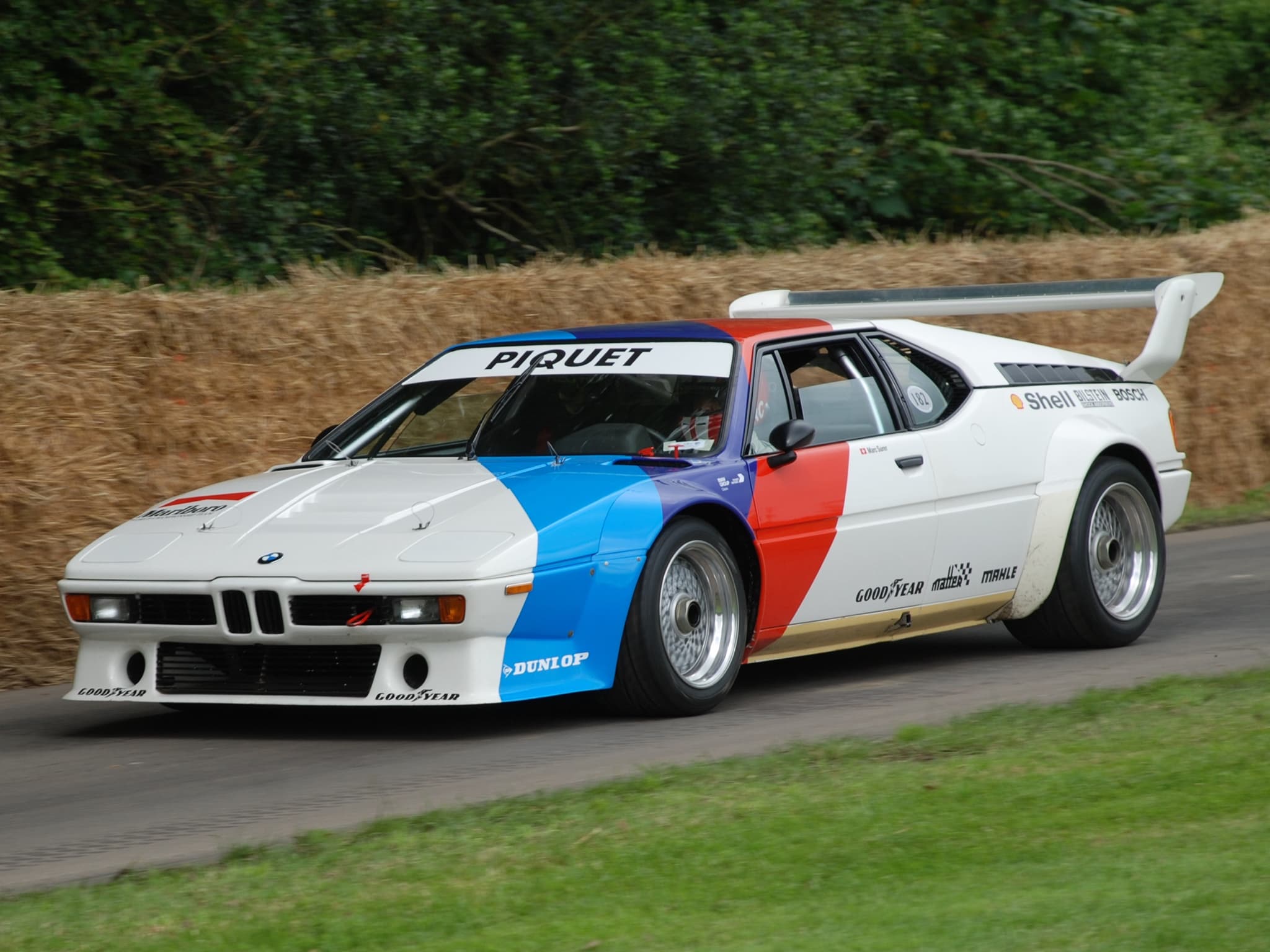
The first Procar race started at Zolder on Saturday 12 May 1979, the day before the Belgian Grand Prix, and Elio de Angelis won it in an M1 entered by Osella. Of 19 cars entered, Denis Jenkinson counted, 17 started and seven finished. Every car on the grid was an M1 built to the same Group 4 specification, and five of them were BMW's own, driven by the fastest Grand Prix drivers of Friday's practice. The Procar was that car: the racing M1, built for a one-make series BMW Motorsport ran with the Grands Prix of 1979 and 1980 because the rules gave its racing coupé nowhere else to go. After the series the same cars raced on, PROCAR 0 among them until 1990.source 1source 2source 3source 4source 5source 6
A racing car with nowhere to race
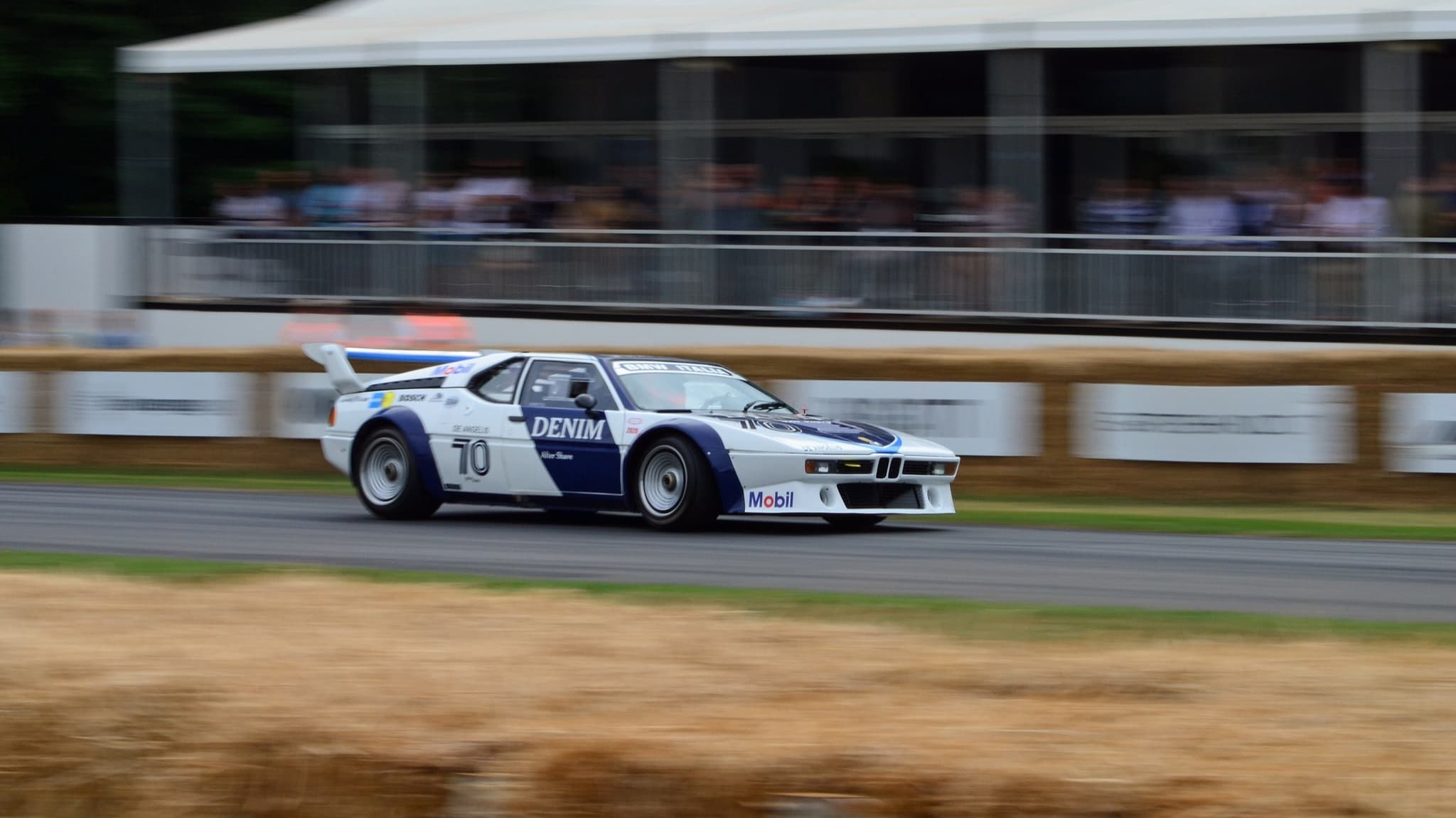
Group 4 recognition waited on the road cars, and the road cars were late. Lamborghini's failure had cost about a year, and BMW could build only 200 a year against the 400 the rules wanted, so in 1979 the M1 was a racing car that could not race in its class. Max Mosley, then the Formula 1 constructors' legal adviser, later named Jochen Neerpasch as the man behind the answer. With Bernie Ecclestone and Mosley, Neerpasch set up a one-make race to run with the Grands Prix, and BMW confirmed it at a press conference in the BMW Museum, Munich, in December 1978: eight rounds, at the Belgian, Monaco, French, British, German, Austrian, Dutch and Italian Grands Prix, with 26 cars for 25 places on the grid, 20 at Monaco. BMW also said the Procars would be eligible for the Group 4 class of the German championship from the start of the season, and in June 1979 Niki Lauda, Hans-Joachim Stuck and Regazzoni raced M1s in that championship at the Norisring. Later that season, touringcarracing records, a national homologation from the ONS let the Procar run in the championship's Rennsport Trophäe with its big rear wing. Motor Sport's report of the press conference looked ahead to the racing:
With 470 b.h.p. on tap from 3.5-litre, straight-six, 24-valve engines, these identical Group 4 M1s should provide fast, close racing – so close that bodywork repairs are quite seriously forecast to be the biggest expense.
The Group 4 specification
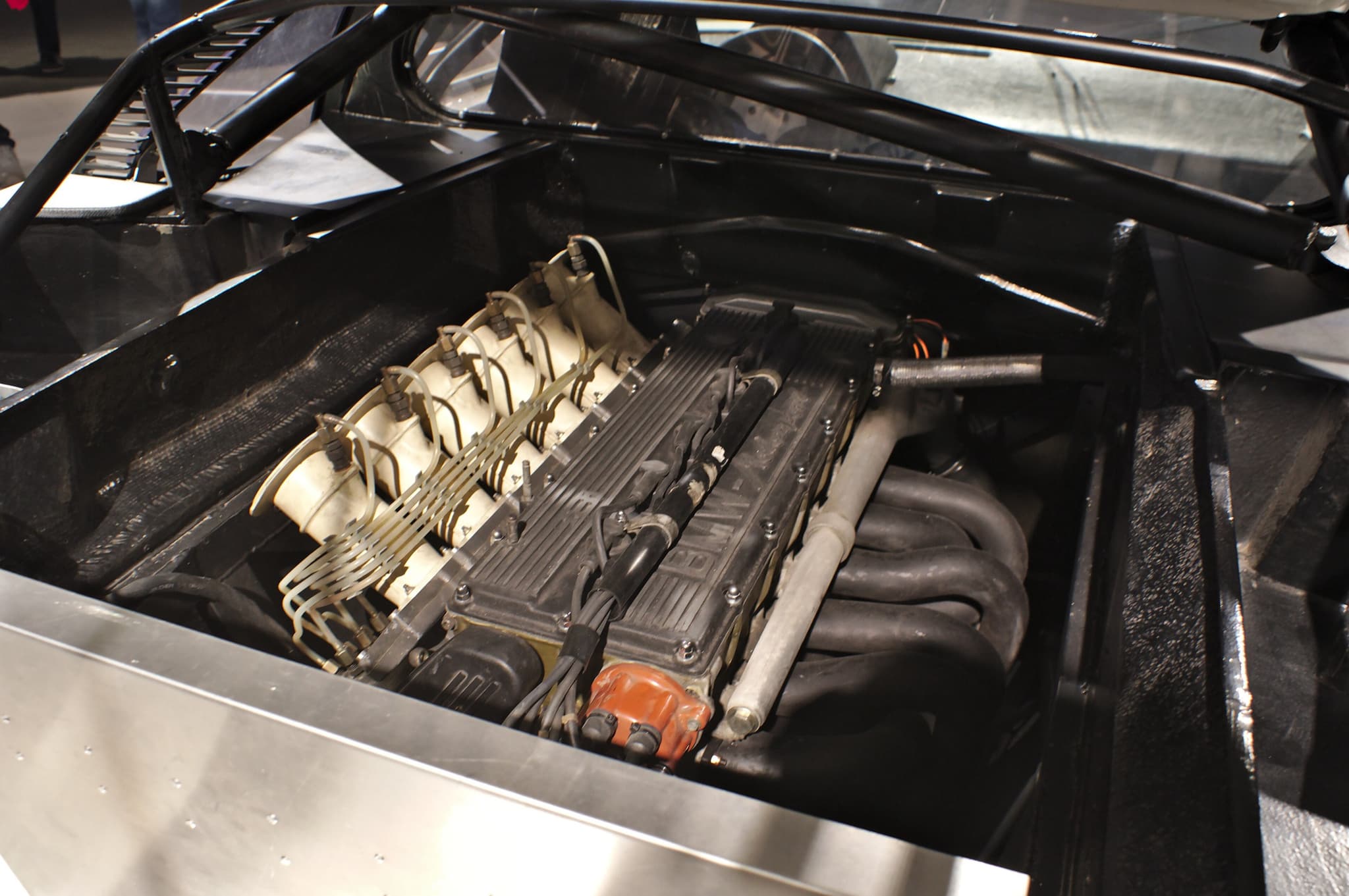
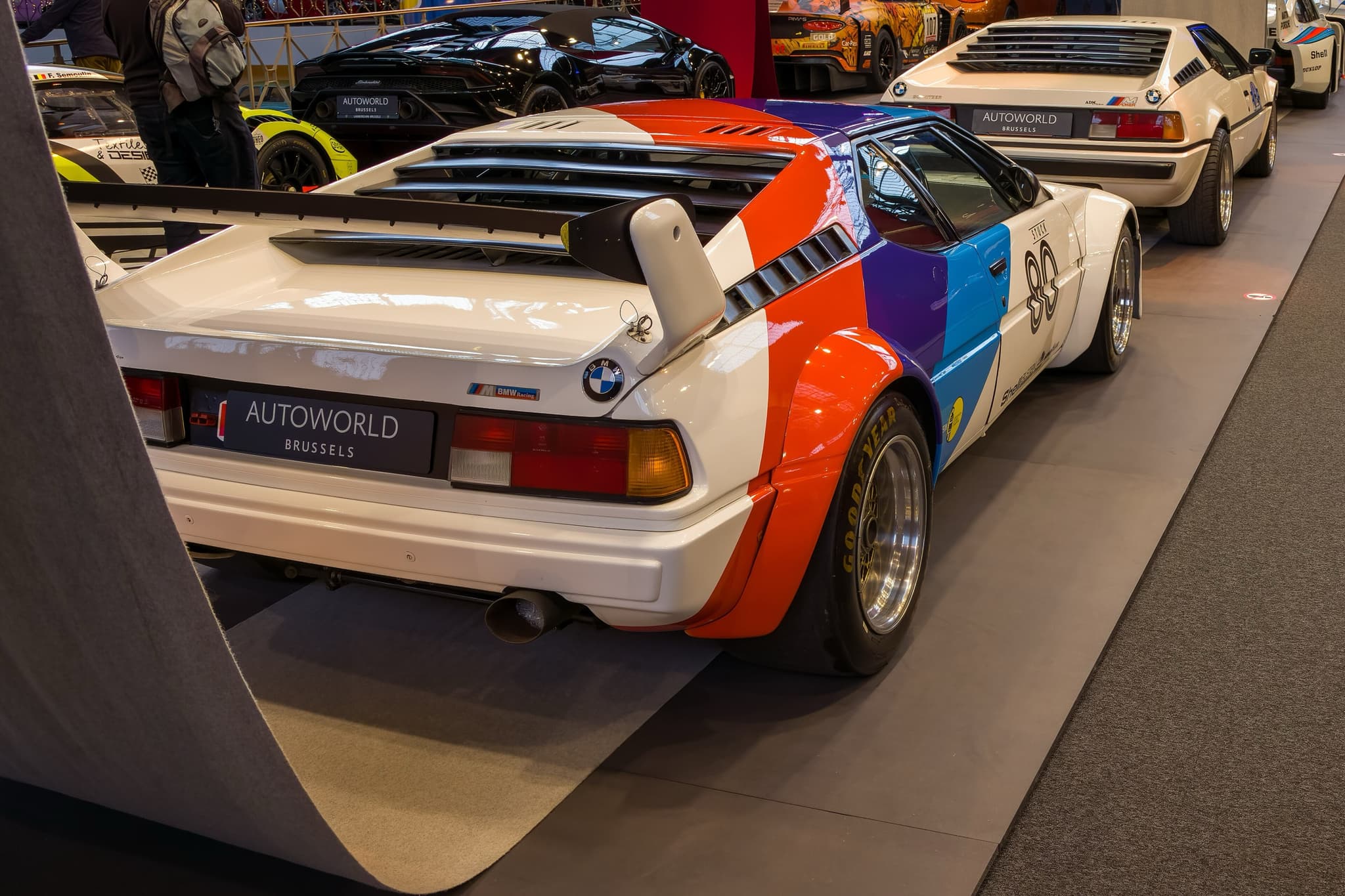
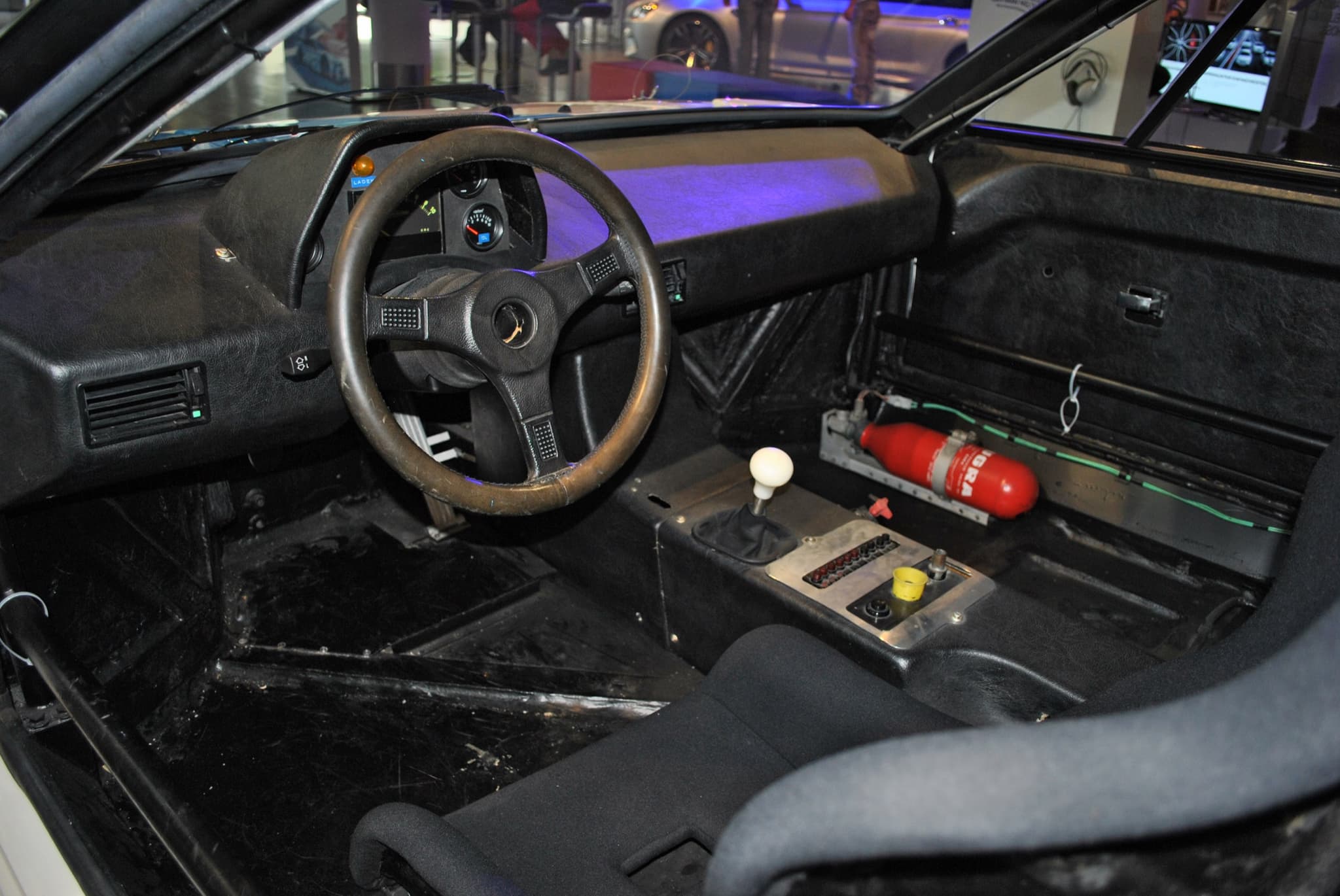
The Procar kept the production M1's steel space frame and glass-fibre body, and BMW's own technical description of the Group 4 car says what changed around them. The engine was bored out with its stroke unchanged and fed through slide throttles in place of the road car's butterflies, with an oil cooler in the nose. The brakes were ATE's, with swing calipers on ventilated discs and twin master cylinders whose balance the driver could adjust; the suspension had magnesium hub carriers and Bilstein dampers. Outside there were wide arches over wider wheels, a deep square front spoiler, a tall rear wing and louvres over the rear window. BMW Motorsport sold it ready to race. The specification below gives its figures.
BMW worked to keep the cars equal. Every car went back to BMW after it was built, Motor Sport reported, "for testing, setting up and presumably policing for equality", and Alan Henry wrote that the rev limiters were set 500 rpm below the engine's intended limit, at 8,500 rpm, to keep them reliable. All ran on Goodyear tyres. Goodyear chose a cheaper construction than the one Marc Surer, BMW's development driver, had set the cars up on, and they were hard to drive at first; Henry later summed up their character as "a surplus of power over adhesion". A.H., who drove one at Donington in the summer of 1979, wrote in 1984 that "The ProCars were out-and-out racers, bearing little resemblance to the docile, flexible and essentially usable road version".
Christian Danner, who raced a Cassani car in 1980, remembered how far the scrutineers let teams go:
Scrutineering wasn't that strict … Our Cassani car wasn't 100 per cent straight. We just cut the corners off the square front spoiler, so ours was kind of round. That reduced the drag a lot
Who built them
BMW's plan of December 1978 shared the work out. Ron Dennis's Project Four would build "a minimum of a dozen" customer cars at Woking, Tom Walkinshaw two at Kidlington, for Dieter Quester and Derek Bell, and Osella the rest in Turin, and BMW Motorsport, Osella, Heidegger and Mader would prepare about 100 engines for them. In the event Project Four built most of the racing M1s, and Dennis remembered why the work paid so well:
The BMW project was very lucrative because of the failure of Lamborghini, who were the other party making the cars … We'd made 25, and they'd made one.
Dennis was remembering nearly four decades on, and he does not say who "they" were. The works cars were run by Bob Sparshott's team, which racingsportscars lists in 1980 as "BS Fabrications"; at Hockenheim that year the works entry reads "Procar Association", and A.H. wrote in 1984 that the Procar Association had bought the cars from BMW and run the 1980 series. Derek Bell, announced in December 1978 with a car of his own from Walkinshaw, appears in no Procar race in racingsportscars' lists.source 4source 5source 7source 3source 12
How many, and which serials
The BMW M1 Register's table lists the racing cars serial by serial. It marks a run of rows PROCAR, numbered from 0 to 40, with number 35 used twice and one serial left unnumbered; the first, PROCAR 0, is 4301017, and the last numbers, 36 to 40, belong to serials of early 1980. Their Italdesign dates run from 10 October 1978 to 19 March 1980, and the Register enters 34 as white, five as primer, one red and one blue. Four early ones carry an internal note, "ZS-T-1", whose meaning no source read explains; the unnumbered serial, 4301050, has no Italdesign date and was in primer. Two earlier serials, 4301004 and 4301005, are marked "PROCAR Test", and the first of them is the car Andy Warhol painted. On 25 of the PROCAR rows the BMW column carries the same date, 9 May 1979; the Register does not say what that column records.
BMW's plan had been 26 cars for the first season, five of them works cars. racingsportscars lists 361 entries in the Procar races, 182 in 1979 and 179 in 1980, under 27 different serials, and one of them, 4301126, the Register lists as a road car, Serie 61, which Cassani entered in 1980. Some identities are not settled: racingsportscars records Toine Hezemans's car as "4301075 or 033". The production readings below give BMW's own figure for the cars "in Procar trim" beside the Register's count, and how many were made sets both against the other totals.source 13source 3source 4source 1
Works cars, private entries and liveries
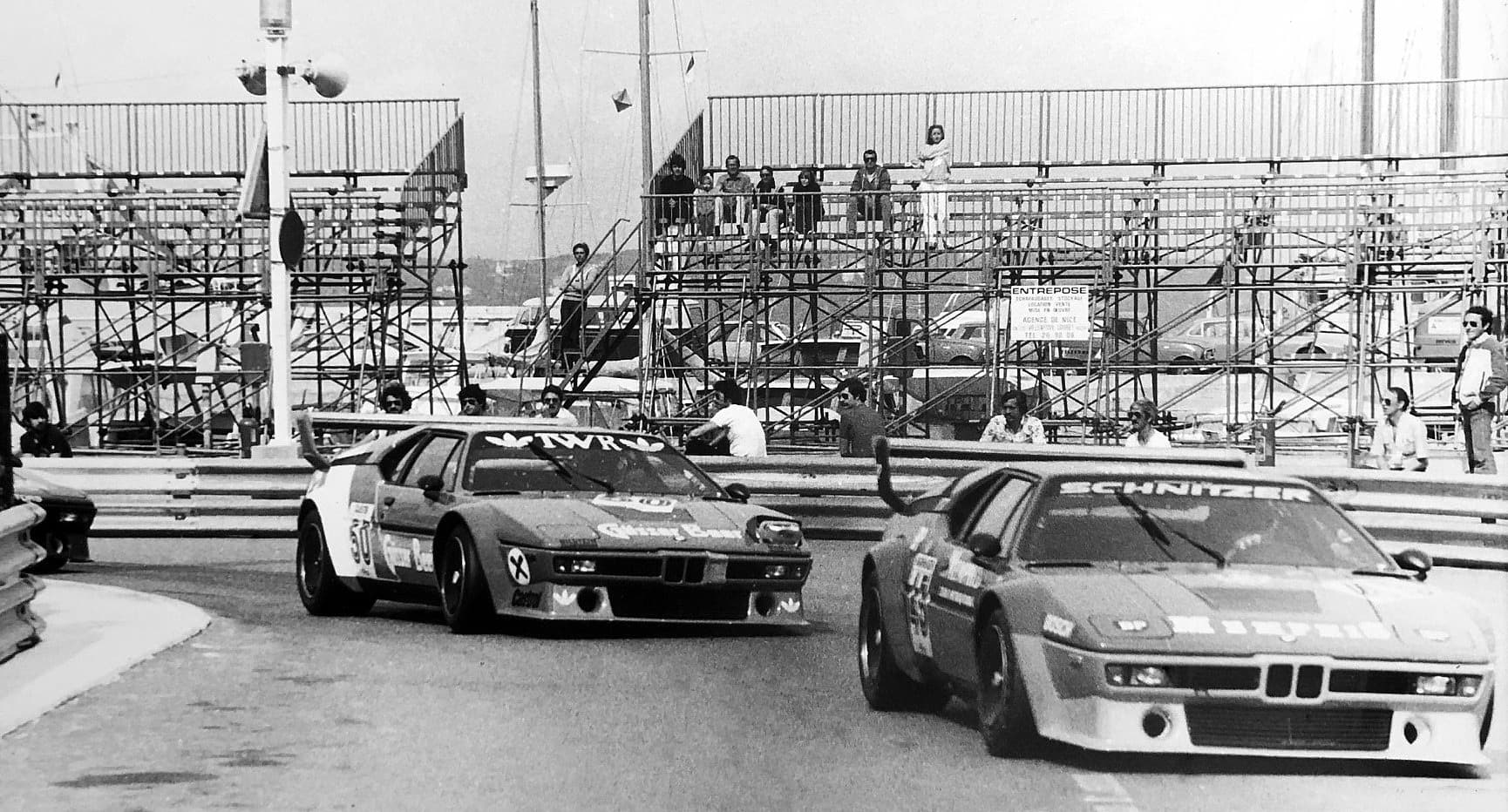
The works cars went to the five fastest Grand Prix drivers in Friday's practice, and in 1979 they started from the first five places on the grid; in 1980 a place at the front was no longer guaranteed. Ferrari's and Renault's drivers could not take part, because their teams were contracted to Michelin and Procar ran on Goodyear. At Zolder, BMW recalled in 2008, the two fastest in practice, Ferrari's Villeneuve and Renault's Jabouille, could not take their seats. Lauda found his own way in: Project Four entered a car for him, No. 5, serial 4301028, so that his Grand Prix practice times still put him at the front while he raced an M1 of his own. In 1980 Project Four entered the same car for Stuck.
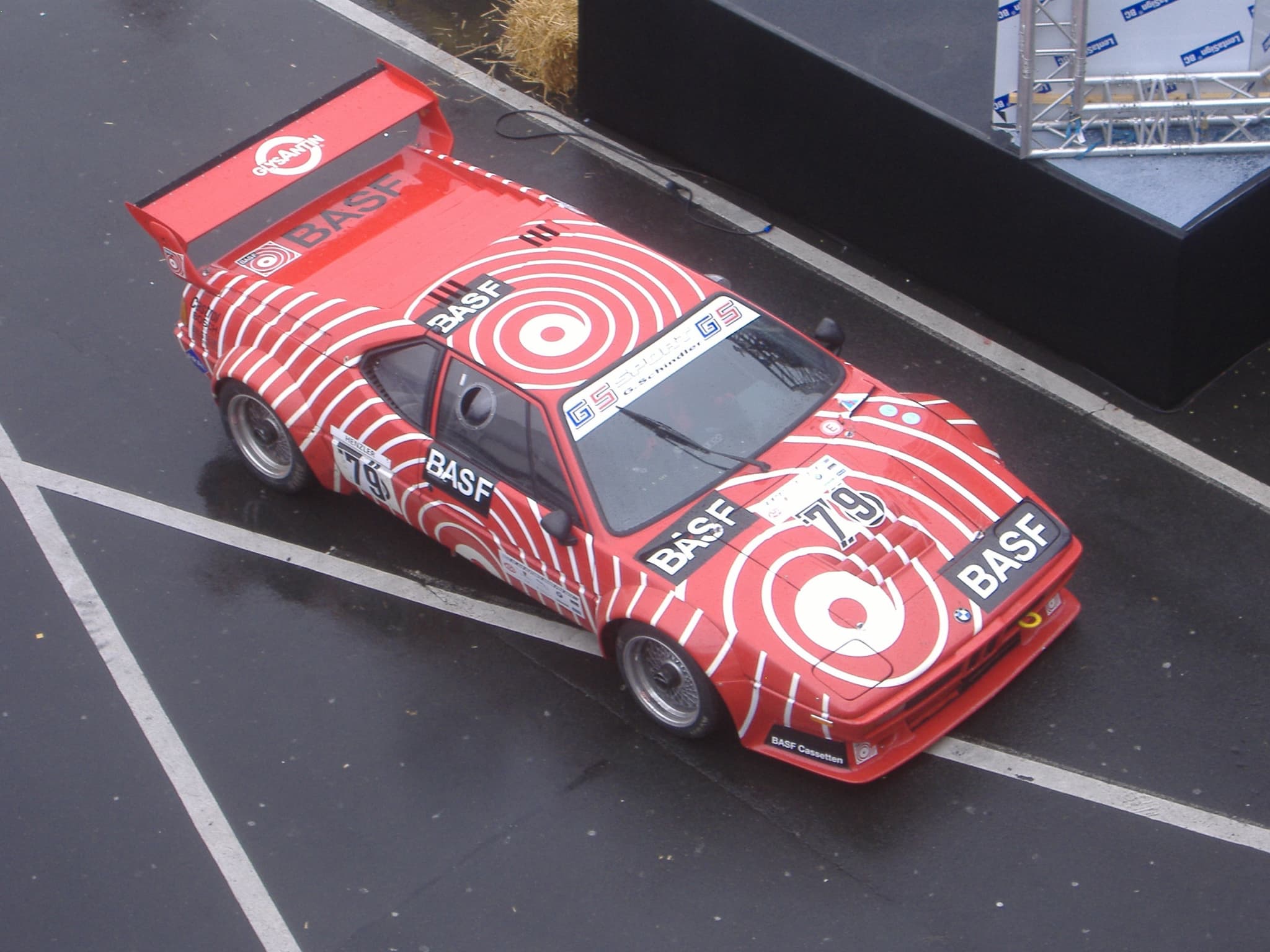
The private teams brought their sponsors' colours. Cassani's cars carried Uher and later H.I.S. jeans, GS-Sport's BASF Cassetten and Denim, and others Airpress wind deflectors, Memphis, Warsteiner and Castrol Austria. Among the preparers were Osella, Schnitzer, Eggenberger, Sauber, Heidegger, TWR and Helmut Marko's team, with Konrad, Krebs, Ecurie Arvor and Winkelhock's own team in 1979 and BMW Nederland, BMW Italia with Merzario and Zol'Auto in 1980. Surer thought the Grand Prix drivers had the advantage over them:
As an F1 driver you had the advantage of being used to a mid-engined car … A lot of typical touring car specialists were not so good in this car. It took them a long time to adapt to this nervousness.
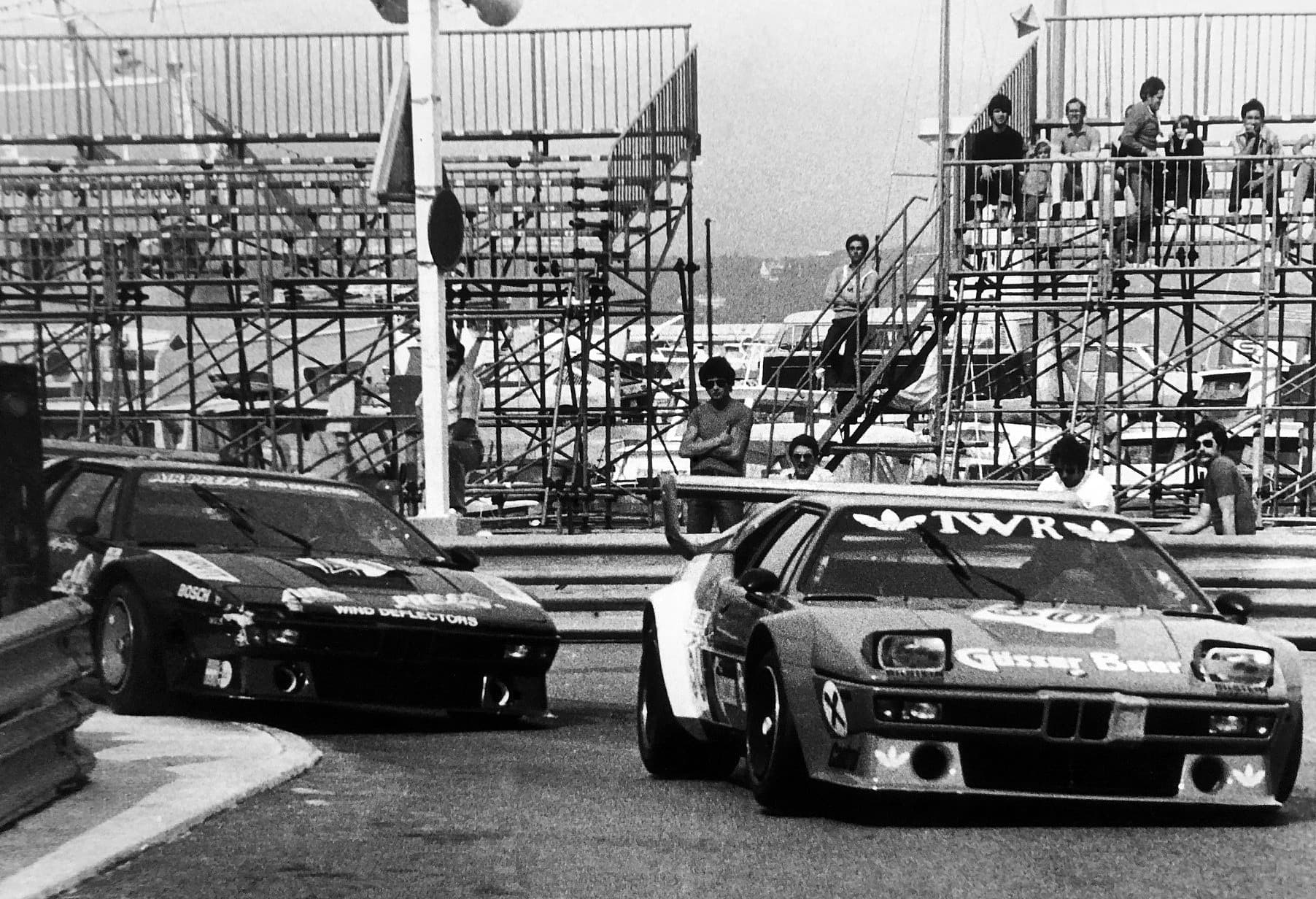
The series in brief
In 1979 there were eight championship rounds, from Zolder on 12 May to Monza on 9 September, and a race outside the championship at Donington Park on 3 June. De Angelis won at Zolder, Lauda at Monaco, Silverstone and Hockenheim, Nelson Piquet at Dijon and Donington, Laffite at the Österreichring and Stuck at Zandvoort and Monza. Lauda took the title with 78 points from Stuck's 73 and Regazzoni's 61. Over the two seasons, by Motor Sport's count in 2017, seven world champions and 35 Grand Prix starters drove in the series.
In 1980 there were nine rounds, among them Donington on 26 April and two races away from the Grands Prix, at the Avus and the Norisring. Stuck won at Monaco and the Norisring for Project Four, and Piquet won the last three races and the title, with 90 points from Alan Jones's 77 and Stuck's 71. There was no third season. The principal sponsor, Goodyear, withdrew, and BMW Motorsport's effort went to Formula 1, where its turbocharged engine was to power Brabham's cars.source 2source 14source 15source 5
The Procars after Procar
From December 1980 the M1 was recognised in Group 4, and the Procars became its racing cars. racingsportscars finds 35 different BMW serials in all its M1 results, from 1979 to 2003, and almost all of them are serials the Register marks PROCAR. Lauda's car, 4301028, went to Steve O'Rourke's EMKA team, which ran it at Le Mans in 1981 and 1982, retiring both times, took second place in the Silverstone 6 Hours of 1981 and third in the Brands Hatch 1000 km that year. De Angelis's Zolder winner, 4301040, became Red Lobster Racing's car in America and won the IMSA GTO championship of 1981 with Dave Cowart and Kenper Miller; B de T Racing raced it until 1983. 4301026, which Eggenberger had run for Helmut Kelleners, won the Kyalami 1000 km on 3 November 1979 with Eddie Keizan and Kelleners. Piquet's works car of 1979, 4301018, raced in IMSA with Dennis Wilson in 1981 and 1982; the second PROCAR 35, 4301269, ran for BMW North America and BMW Motorsport in IMSA in 1980 and 1981. And 4301098, a GS-Sport car in BASF colours in 1980, was the car in which Helmut Henzler won a first-division round of the German championship at Wunstorf on 21 June 1981, on his way to that year's Rennsport Trophäe.
Stuck's 1979 car, 4301062, which won at Zandvoort and Monza that year and at the Avus in 1980, has more entries than any other M1 serial, 76 of them. It was Kurt König's car in the German championship's Group 4 class in 1981 and 1982, and under Helmut Gall it won the Group B class at Le Mans twice, 14th overall in 1984 and 15th in 1985, after the M1's Group B recognition of 1 March 1983. One Procar never ran in Procar at all: PROCAR 30, 4301077, went to Japan, where Naoki Nagasaka raced it in most seasons from 1979 to 1984 and won with it at Fuji and Suzuka. And PROCAR 0, 4301017, the first of them, raced in Austria and Czechoslovakia in Sepp Manhalter's hands until 1990. In 1984 A.H. wrote that "the few remaining racing versions … eke out a twilight existence as also-rans in major sports car events".source 3source 14source 16source 17source 12source 18
Survivors, museums and revivals
BMW kept Procars of its own. For the M1's 30th anniversary in July 2008 it ran two Procar races at the German Grand Prix meeting at Hockenheim, with 10 Group 4 cars, some privately owned and some from its museum. Lauda, Surer, Danner, Dieter Quester and Kelleners were among the drivers, Surer in the BMW Switzerland car he had raced in Procar, and Neerpasch drove the Warhol car with Frank Stella beside him. On the Saturday Neerpasch had clutch trouble at the start, the planned parade became a race, and Lauda won it after Surer let him by on the last lap; on the Sunday the cars ran a parade behind a rolling start. Christian Klien, who drove one of them, was surprised: "The car is 30 years old, but it had really good handling, it was really well balanced." Procars ran again at the Austrian Grand Prix of 2016.source 7source 5source 19
Specification
Production
Sources for Production, Procar
- Price new
- One good source.Ex works, ready to race; date and tax not stated. BMW AG (BMW Group PressClub USA), "Icons for Connoisseurs – Thirty Years of the BMW M1" (press release), 27 Mar 2008source 1
- Built
- Good sources agree.The Procar series. Motor Sport (database), "1979 BMW M1 Procar" and "1980 BMW M1 Procar" (championship races and standings)source 2; Motor Sport, "Retrospective: BMW Procar" ("Race of champions"), Jan 2017, p. 98source 5
- Designers
- One good source.The M1 built to Group 4 rules. CAR, "Brain and brawn in BMW's best", Mar 1979source 20
- Built at
- One good source.BMW's plan, December 1978. Clive Richardson ("C.R."), "BMW's Racing Plans", Motor Sport, Jan 1979, p. 54source 4
| Price new | 150,000 DM |
|---|---|
| Built | 1979–1980 |
| Designers | Giorgetto Giugiaro (body); Gian Paolo Dallara (chassis development) |
| Built at | Project Four, Woking; Tom Walkinshaw, Kidlington; Osella, Turin; BMW Motorsport, Munich (testing and set-up) |
Engine
Sources for Engine, Procar
- Engine
- One good source.Racing version. BMW AG (BMW Group PressClub USA), "Icons for Connoisseurs – Thirty Years of the BMW M1" (press release), 27 Mar 2008source 1
- Capacity
- One good source.Procar, 1979. touringcarracing.net, Season car pages, "1978 Cars" to "1981 Cars" (group)source 9
- Engine position
- One good source.BMW AG (BMW Group PressClub USA), "Icons for Connoisseurs – Thirty Years of the BMW M1" (press release), 27 Mar 2008source 1
- Valve gear
- Good sources agree.Procar, 1979. touringcarracing.net, Season car pages, "1978 Cars" to "1981 Cars" (group)source 9; BMW AG (BMW Group PressClub USA), "Icons for Connoisseurs – Thirty Years of the BMW M1" (press release), 27 Mar 2008source 1
- Bore × stroke
- Good sources agree.Procar, 1979. touringcarracing.net, Season car pages, "1978 Cars" to "1981 Cars" (group)source 9; BMW AG (BMW Group PressClub USA), "Icons for Connoisseurs – Thirty Years of the BMW M1" (press release), 27 Mar 2008source 1
- Fuel system
- Good sources agree.Slide throttles. BMW AG (BMW Group PressClub USA), "Icons for Connoisseurs – Thirty Years of the BMW M1" (press release), 27 Mar 2008source 1; touringcarracing.net, Season car pages, "1978 Cars" to "1981 Cars" (group)source 9
- Cylinder layout
- One good source.BMW AG (BMW Group PressClub USA), "Icons for Connoisseurs – Thirty Years of the BMW M1" (press release), 27 Mar 2008source 1
- Cylinders
- Good sources agree.BMW AG (BMW Group PressClub USA), "Icons for Connoisseurs – Thirty Years of the BMW M1" (press release), 27 Mar 2008source 1; touringcarracing.net, Season car pages, "1978 Cars" to "1981 Cars" (group)source 9
- Aspiration
- One good source.BMW AG (BMW Group PressClub USA), "Icons for Connoisseurs – Thirty Years of the BMW M1" (press release), 27 Mar 2008source 1
- Lubrication
- One good source.Oil cooler in the nose. BMW AG (BMW Group PressClub USA), "Icons for Connoisseurs – Thirty Years of the BMW M1" (press release), 27 Mar 2008source 1
| Engine | M88 |
|---|---|
| Capacity | 3,498 cc |
| Engine position | Mid |
| Valve gear | DOHC, 4 valves per cylinder |
| Bore × stroke | 94.0 x 84.0 mm |
| Fuel system | Mechanical Fuel Injection |
| Cylinder layout | Inline |
| Cylinders | 6 |
| Aspiration | Naturally Aspirated |
| Lubrication | Dry Sump |
Performance
Sources for Performance, Procar
- Power
- One good source.At 9,000 rpm. BMW AG (BMW Group PressClub USA), "Icons for Connoisseurs – Thirty Years of the BMW M1" (press release), 27 Mar 2008source 1
- Torque
- One good source.At 7,000 rpm. BMW AG (BMW Group PressClub USA), "Icons for Connoisseurs – Thirty Years of the BMW M1" (press release), 27 Mar 2008source 1
- Top speed
- One good source.About; on the longest gearing. BMW AG (BMW Group PressClub USA), "Icons for Connoisseurs – Thirty Years of the BMW M1" (press release), 27 Mar 2008source 1
- Red line
- Good sources agree.Racing redline. Jeremy Walton ("J.W."), "Road Impressions: BMW M1", Motor Sport, Apr 1981, p. 83source 21; Alan Henry, "Procar: When current F1 champs went tin-top racing" ("Procar – the ultimate one-make racer"), Motor Sport, Jul 1997, p. 94source 10
| Power | 345 kW |
|---|---|
| Torque | 390 Nm |
| Top speed | 310 km/h |
| Red line | 9,000 rpm |
Running gear
Sources for Running gear, Procar
- Gearbox
- Good sources agree.ZF five-speed. BMW AG (BMW Group PressClub USA), "Icons for Connoisseurs – Thirty Years of the BMW M1" (press release), 27 Mar 2008source 1; touringcarracing.net, Season car pages, "1978 Cars" to "1981 Cars" (group)source 9
- Gears
- Good sources agree.BMW AG (BMW Group PressClub USA), "Icons for Connoisseurs – Thirty Years of the BMW M1" (press release), 27 Mar 2008source 1; touringcarracing.net, Season car pages, "1978 Cars" to "1981 Cars" (group)source 9
- Layout
- One good source.BMW AG (BMW Group PressClub USA), "Icons for Connoisseurs – Thirty Years of the BMW M1" (press release), 27 Mar 2008source 1
- Front brakes
- One good source.ATE, swing calipers; twin master cylinders, adjustable balance. BMW AG (BMW Group PressClub USA), "Icons for Connoisseurs – Thirty Years of the BMW M1" (press release), 27 Mar 2008source 1
- Rear brakes
- One good source.ATE, swing calipers. BMW AG (BMW Group PressClub USA), "Icons for Connoisseurs – Thirty Years of the BMW M1" (press release), 27 Mar 2008source 1
- Front suspension
- One good source.Magnesium hub carriers, Bilstein dampers. BMW AG (BMW Group PressClub USA), "Icons for Connoisseurs – Thirty Years of the BMW M1" (press release), 27 Mar 2008source 1
- Rear suspension
- One good source.Magnesium hub carriers, Bilstein dampers. BMW AG (BMW Group PressClub USA), "Icons for Connoisseurs – Thirty Years of the BMW M1" (press release), 27 Mar 2008source 1
- Tyres
- One good source.BMW AG (BMW Group PressClub USA), "Icons for Connoisseurs – Thirty Years of the BMW M1" (press release), 27 Mar 2008source 1
- Wheels
- Good sources agree.BMW AG (BMW Group PressClub USA), "Icons for Connoisseurs – Thirty Years of the BMW M1" (press release), 27 Mar 2008source 1; touringcarracing.net, Season car pages, "1978 Cars" to "1981 Cars" (group)source 9
| Gearbox | Manual |
|---|---|
| Gears | 5 |
| Layout | RWD |
| Front brakes | Ventilated disc |
| Rear brakes | Ventilated disc |
| Front suspension | Independent, double wishbones, adjustable anti-roll bar |
| Rear suspension | Independent, double wishbones, adjustable anti-roll bar |
| Tyres | Goodyear, 10.0/23.5-16 front, 12.5/25.0-16 rear |
| Wheels | 11 x 16 in front, 12.5 x 16 in rear |
Body and chassis
Sources for Body and chassis, Procar
- Body
- One good source.The homologated M1. ONS / FIA (FIA Historic Database), ONS/FIA homologation form (Testblatt) no. 670, BMW M 1, Group 4 (and its transfer to Group B), 1980source 11
- Body material
- One good source.The homologated M1. ONS / FIA (FIA Historic Database), ONS/FIA homologation form (Testblatt) no. 670, BMW M 1, Group 4 (and its transfer to Group B), 1980source 11
- Doors
- One good source.BMW AG (BMW Group PressClub USA), "Icons for Connoisseurs – Thirty Years of the BMW M1" (press release), 27 Mar 2008source 1
- Chassis material
- One good source.The homologated M1. ONS / FIA (FIA Historic Database), ONS/FIA homologation form (Testblatt) no. 670, BMW M 1, Group 4 (and its transfer to Group B), 1980source 11
- Chassis
- One good source.The homologated M1. ONS / FIA (FIA Historic Database), ONS/FIA homologation form (Testblatt) no. 670, BMW M 1, Group 4 (and its transfer to Group B), 1980source 11
| Body | Coupe |
|---|---|
| Body material | Fibreglass |
| Doors | 2 |
| Chassis material | Tubular steel |
| Chassis | Space frame |
Dimensions and weight
Sources for Dimensions and weight, Procar
- Kerb weight
- Good sources agree.BMW's Group 4 figure; kerb or dry not stated. BMW AG (BMW Group PressClub USA), "Icons for Connoisseurs – Thirty Years of the BMW M1" (press release), 27 Mar 2008source 1; touringcarracing.net, Season car pages, "1978 Cars" to "1981 Cars" (group)source 9
- Wheelbase
- One good source.The homologated M1, Group 4. ONS / FIA (FIA Historic Database), ONS/FIA homologation form (Testblatt) no. 670, BMW M 1, Group 4 (and its transfer to Group B), 1980source 11
| Kerb weight | 1,020 kg |
|---|---|
| Wheelbase | 2,560 mm |
Production
Production: how far the sources agree
- 43, marked PROCAR in the Register (0 to 40, 35 twice, one unnumbered); two more are marked 'PROCAR Test'
- One good source.
- 46, in Procar trim
- Not yet confirmed.
Sources
Sources are given as plain text; their addresses are on the sources page.
- Primarymade at the time, by the maker or by people who were there
- Referenceserious later work: clubs, specialists, magazines, books
- Databaseresults and listings, entry by entry
- BMW AG (BMW Group PressClub USA), "Icons for Connoisseurs – Thirty Years of the BMW M1" (press release), 27 Mar 2008, Procar section: the first race, Saturday 12 May 1979, Zolder; Procar section: Neerpasch with Ecclestone and Mosley; "Technical Description BMW M1 Group four": engine, slide throttles, brakes, suspension, wheels and tyres; the price ex works; final section, the cars "in Procar trim"; Procar section, Zolder 1979; text, Procar section; 'Technical Description BMW M1 Group four'; text, final section. Primary
- Motor Sport (database), "1979 BMW M1 Procar" and "1980 BMW M1 Procar" (championship races and standings), 1979, Zolder: the winner; 1979 and 1980: rounds, winners and standings; 1979 and 1980 championship tables. Database
- racingsportscars.com, "BMW M1 – All Results", Zolder 1979, the winner's entrant and serial; Norisring, 24 June 1979, the German championship entries; Cassani's entries of 1980, Danner among the drivers; the works entrants of 1980, "BS Fabrications" and "Procar Association"; no Procar entry for Derek Bell; the Procar entries of 1979 and 1980 and their serials; 4301126; the "or" entries; entrants and their sponsors, 1979–80; 4301028, No. 5 and No. 40; the later entries of 4301028, 4301040, 4301026, 4301018, 4301269, 4301098, 4301062, 4301077 and 4301017; the serials in all M1 results, 1979–2003. Database
- Clive Richardson ("C.R."), "BMW's Racing Plans", Motor Sport, Jan 1979, p. 54, p. 54, "these identical Group 4 M1s"; p. 54, the press conference "last month", the eight Grands Prix, the 26 cars and the quotation; p. 54, the cars returned to BMW "for testing, setting up"; p. 54, Project Four, Walkinshaw (the Quester and Bell cars) and Osella; the engines; p. 54, 26 cars for 25 places, five works cars; p. 54. Primary
- Motor Sport, "Retrospective: BMW Procar" ("Race of champions"), Jan 2017, p. 98, p. 98, the series and its drivers; p. 98, Mosley on Neerpasch; "hadn't built them quickly enough"; Ecclestone; p. 98, Surer's set-up, the Goodyear tyres, Danner on the spoiler and the scrutineers; p. 98, Project Four "had built most of the M1 race cars"; Dennis's words; Sparshott's works cars; p. 98, the works-car rule and 1980; Lauda's arrangement; Surer's words; p. 98, Piquet's last three wins; BMW's Formula 1 engine; p. 98, the seven champions and 35 Grand Prix starters; p. 98, the demonstration at the Austrian Grand Prix, 2016; p. 98. Reference
- Denis Jenkinson, "Reflections in the Woods", Motor Sport, Jun 1979, Zolder, 12 May 1979: 19 entries, 17 starters, seven finishers. Primary
- Adam Cooper, "One for the pros", Motor Sport, Oct 2008, p. 54, p. 54, Neerpasch's reason; p. 54, Project Four's customer cars; p. 54, the five fastest of Friday practice; p. 54, the 2008 Hockenheim races: the cars, the drivers, Surer's car, the clutch, the finish, the Sunday parade and Klien's words. Reference
- touringcarracing.net, Deutsche Rennsport Meisterschaft season texts, 1979–1981, 1979: the Procar's "ONS National" homologation and its rear wing. Database
- touringcarracing.net, Season car pages, "1978 Cars" to "1981 Cars" (group), "1979 Cars", BMW M1 Procar (Works); '1979 Cars', BMW M1 Procar. Database
- Alan Henry, "Procar: When current F1 champs went tin-top racing" ("Procar – the ultimate one-make racer"), Motor Sport, Jul 1997, p. 94, p. 94, the rev limiters; Goodyear; "a surplus of power over adhesion"; p. 94, Michelin and Goodyear; Lauda "a non-seeded runner"; p. 94. Reference
- ONS / FIA (FIA Historic Database), ONS/FIA homologation form (Testblatt) no. 670, BMW M 1, Group 4 (and its transfer to Group B), 1980, form p. 1, the steel frame and glass-fibre body of the recognised car; form, pp. 1–3; form p. 1. Primary
- Alan Henry ("A.H."), "M1 Magic", Motor Sport, Dec 1984, p. 76, p. 76, A.H.: the Procar at Donington, summer 1979; p. 76, A.H.: the Procar Association; p. 76, A.H.: "a twilight existence". Primary
- BMW M1 Register, "VIN Table", the rows marked PROCAR and "PROCAR Test": numbers, serials, dates, colours and the "ZS-T-1" note; category column. Reference
- racingsportscars.com, Race, results and car-data pages with BMW M1 entries, 1979–86 (group), Donington Procar race, 3 June 1979; Silverstone 6 Hours and Brands Hatch 1000 km 1981; Kyalami 1000 km 1979; Le Mans 1984 and 1985. Database
- Richard Heseltine, "BMW M1", Motor Sport, Mar 2008, p. 134, p. 134, why there was no series in 1981. Reference
- International Motor Racing Research Center (racingarchives.org), from Octane Press, IMSA 1969–1989 (excerpt, "BMW"), Red Lobster Racing's 1981 GTO championship. Reference
- ONS / FISA (FIA Historic Database), FISA/ONS homologation form no. B-240, BMW M 1, Group B, 1983, form p. 1, Group B from 1 March 1983. Primary
- touringcarracing.net, DRM 1981: race pages and "1981 DRM Class" (group), Wunstorf, 21 June 1981; the 1981 Rennsport Trophäe classification. Database
- BMW Group (PressClub), "Homage to Andy Warhol on four wheels: His BMW Art Car with co-driver Frank Stella live at the Hockenheimring during the Formula 1 Grand Prix" (press release), 18 Jul 2008, the laps of honour at Hockenheim, July 2008. Primary
- CAR, "Brain and brawn in BMW's best", Mar 1979, text. Primary
- Jeremy Walton ("J.W."), "Road Impressions: BMW M1", Motor Sport, Apr 1981, p. 83, p. 83. Primary