BMW M1
BMW's mid-engined supercar of 1978–81, the E26 to its makers: a racing coupé conceived by BMW Motorsport, built for the road by Italian firms and Baur of Stuttgart, raced by Grand Prix drivers in the Procar series and painted by Andy Warhol for Le Mans.
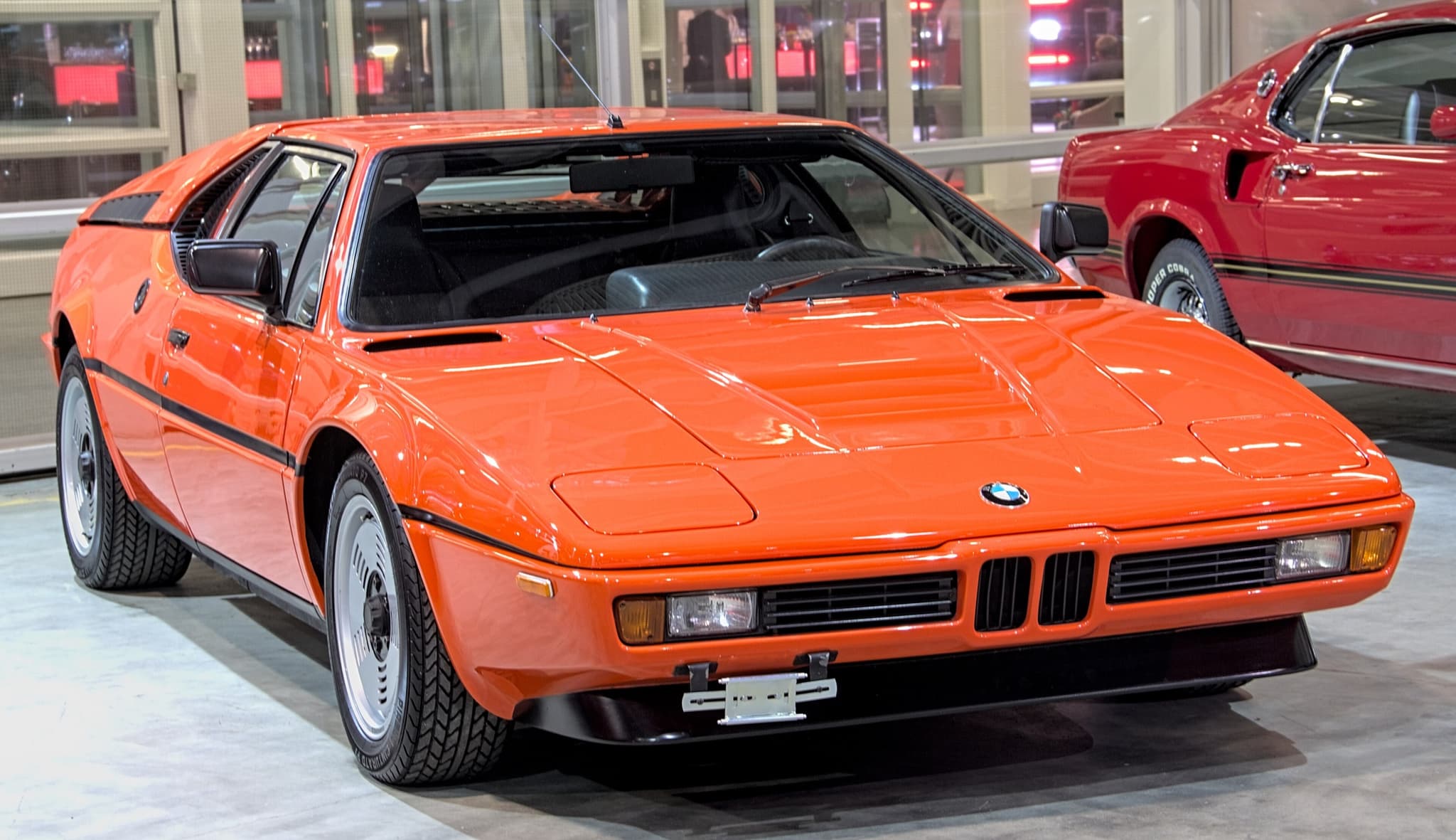
In October 1978 a white coupé with its engine behind the seats stood on the stand of BMW Motorsport GmbH at the Paris Motor Show. BMW called it the M1, for the first car its motor-sport company had developed and built, and the car on the stand had only a dummy engine: the BMW M1 Register lists that show car, serial 4301009, with "Attrappe" in its engine column. Customers' cars followed in 1979. They were BMW's first mid-engined production cars, all built to one left-hand-drive specification, and the last of them were finished by June 1981.
The M1 was a racing car first. BMW Motorsport wanted a coupé that could beat Porsche's turbocharged cars in sports-car racing, and the road car existed because the rules said a racing car had to be built in hundreds before it could race.source 1source 2source 3source 4source 5
Born to race
The idea was Jochen Neerpasch's. He ran BMW Motorsport GmbH, the company BMW had set up for its racing in 1972, and in April 1976 auto motor und sport reported that the company had weighed a Formula 1 engine against a mid-engined coupé for the new World Championship for Makes, and had chosen the coupé. Almost a year on, his proposal for 400 road cars went to BMW's board. To race in Group 4, a car had first to be built in numbers: in BMW's own account of the rule, 400 in 24 consecutive months. CAR, whose first experience of the finished car came with Hans-Joachim Stuck at the wheel, put the order of things in one sentence in March 1979: "The road-going M1, BMW are anxious to point out, is a development of the car they conceived for racing – rather than the racer being a spin-off from the road car."
In 1976 BMW gave the job to Lamborghini. Giorgetto Giugiaro's Ital Design would style the body; Lamborghini would develop the chassis, build the prototypes and assemble the cars, with BMW supplying the engine. Martin Braungart was BMW Motorsport's engineer on the project, and Gian Paolo Dallara, then a consultant to Lamborghini, took part in developing its chassis. Lamborghini built prototypes, but it could not pay for production, and BMW's board would not put money into Italy. In 1978 BMW took the project back. The cars were built instead by a chain of firms. Marchesi in Modena welded the frames, T.I.R. near Modena moulded the glass-fibre bodies, Ital Design joined the two and fitted the trim, Baur in Stuttgart did the mechanical assembly, and BMW Motorsport checked the finished cars in Munich before delivery. The history follows each link in that chain.
Sales began in February 1979, almost a year late by CAR's reckoning, and the delay left BMW with racing M1s and no class to race them in, because Group 4 recognition waited on the road cars. BMW's answer was a series of its own, the Procar. The FIA's recognition form, No. 670, put the M1 into Group 4 only from 1 December 1980.source 6source 1source 3source 4source 7source 8
The car
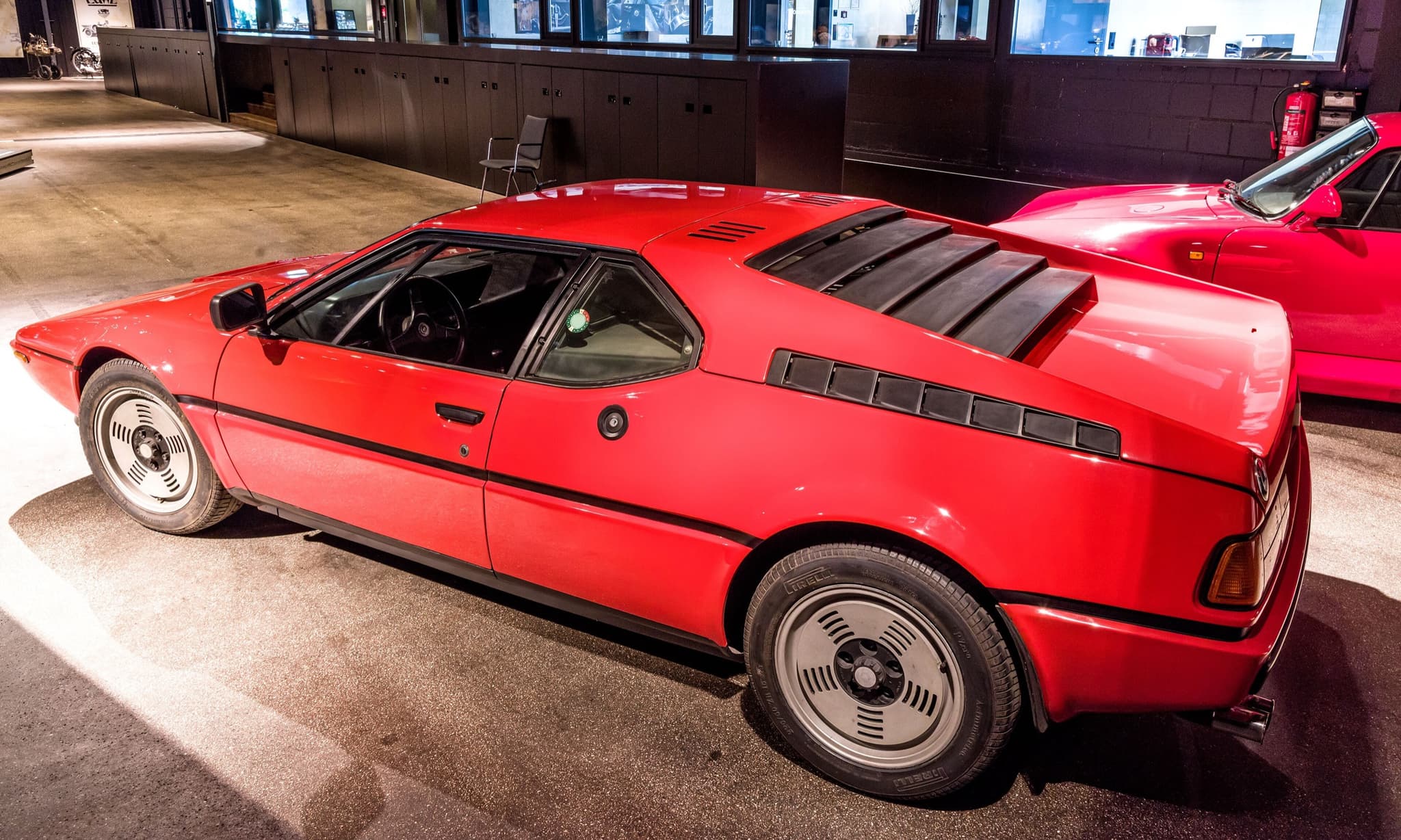
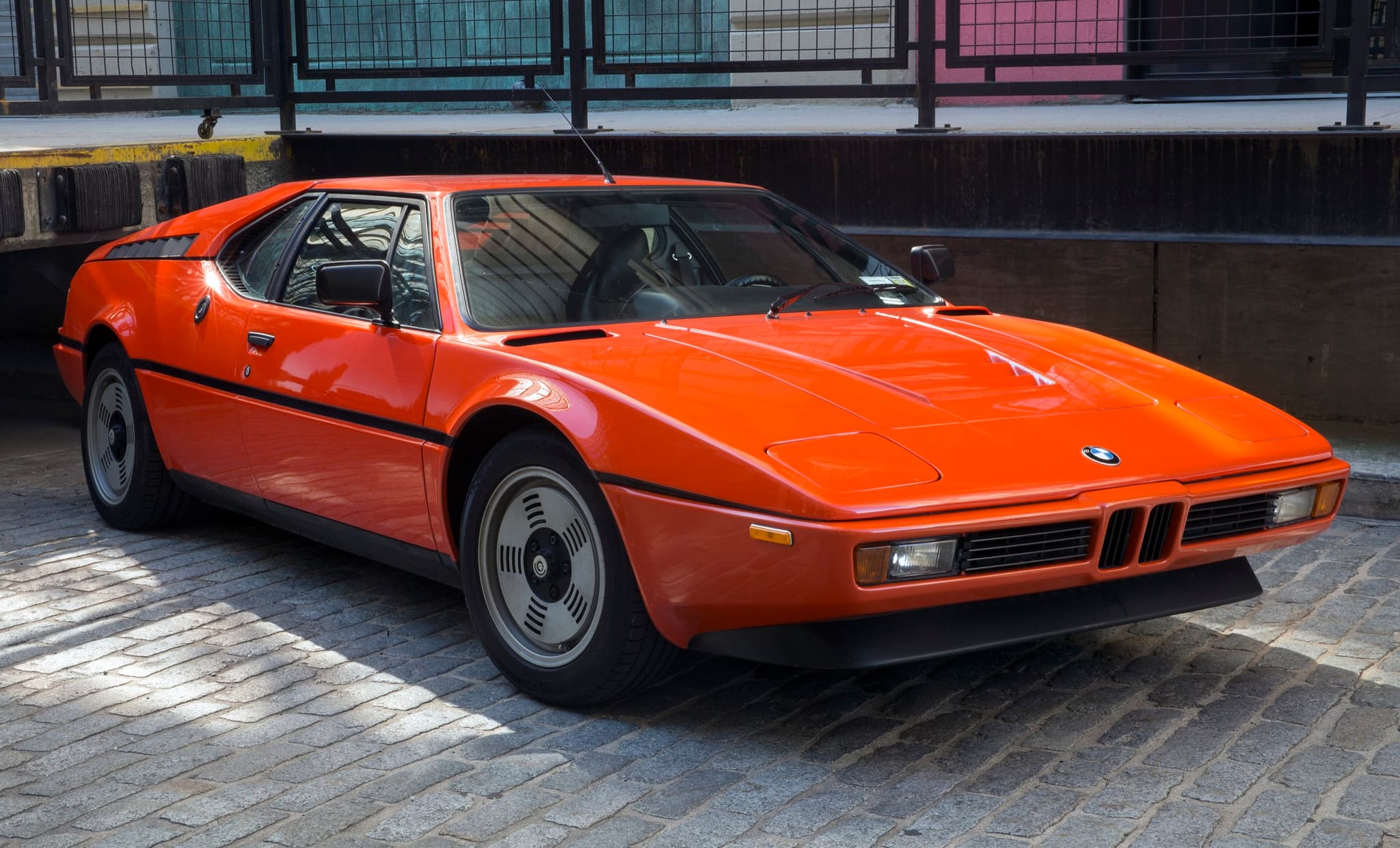
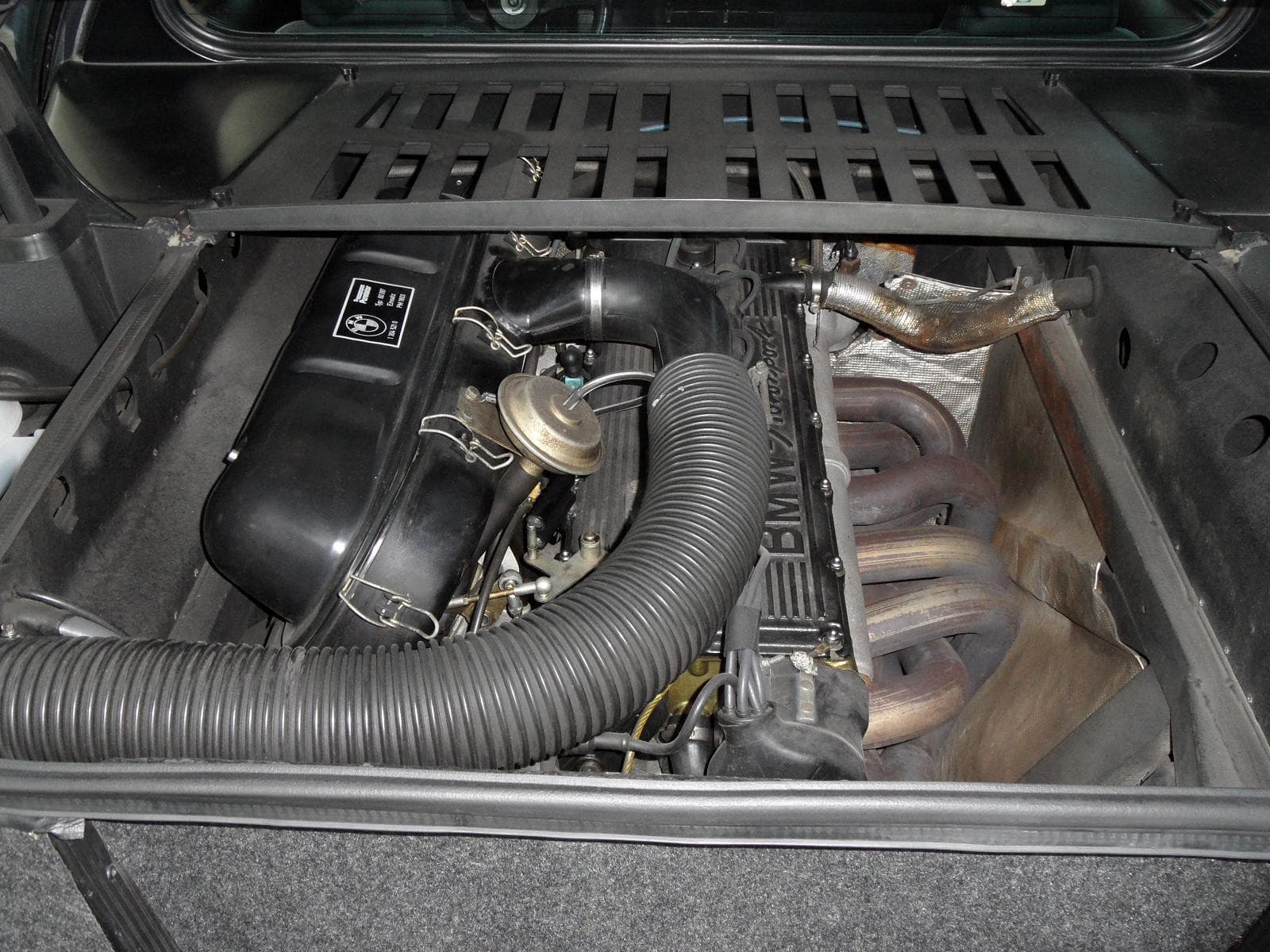
Every road M1 was built to the same specification, and every one was left-hand drive. Its M88 engine is a straight six with twin overhead camshafts, four valves per cylinder and Kugelfischer mechanical injection, developed from BMW's production six and the cylinder heads of the racing CSL by a team under Paul Rosche, BMW Motorsport's head of design for the M1's engines from 1975. It has dry-sump lubrication, and the fuel is carried in two tanks. It sits behind the two seats, mounted lengthways, and drives the rear wheels through a ZF five-speed gearbox (transmission) with first gear out on a dog-leg. The frame is a space frame of steel tubes, and the body is glass fibre, bonded and riveted to it. On the FIA's form, BMW Motorsport GmbH is the maker of all three: car, chassis and engine. CAR gave the body's drag coefficient as 0.38. Outside there are pop-up headlamps and cast Campagnolo wheels; inside, a speedometer reading to 280 km/h (174 mph) and BMW's own switchgear, which Jeremy Walton of Motor Sport listed among the parts it took from BMW's other cars. By the Register's count, white was the commonest colour for road cars, then orange, red and blue, and almost every one had a black interior.
Walton found it built to BMW's normal standards of fit and finish, and thought it a car to use every day. A.H. of Motor Sport, driving one in Britain in 1984, found the ZF gearbox "a notchy joy to use when compared, say, with the cumbersome change on a Ferrari 308", and thought the cockpit fitted its driver like a bespoke suit. In the West German price list of 1 August 1979 the M1 cost more than Porsche's 930 Turbo and less than Ferrari's 512 BB, and the history sets it against those and the other supercars of its day. By the numbers, at the top of the page, gives its figures; the specifications give every reading with its source, and the engine and the interior are described in detail. The road car is one of several versions: beside the racing cars stood a road-going conversion, the AHG Studie, which a BMW dealer group in Bielefeld built with Procar-style bodywork and three-piece BBS wheels.source 1source 4source 9source 7source 10source 11source 8source 3source 2source 12
How many were made
The totals in print disagree, and none of their writers says what was counted; the figure at the top of the page is the total most often printed. What can be counted is the serial sequence. The BMW M1 Register's table runs from 4301001 to 4301460 and sorts the serials into road cars numbered as a series, cars marked PROCAR, works, press and test cars, a car BMW crashed in July 1978 for its type approval, spare bodies, bare test frames and two numbers that were never built. The six spare bodies left Italdesign in February 1981, for BMW and for firms such as Schnitzer and the dealer group AHG of Bielefeld. BMW itself gave a lower total in 2008 than the one most often printed, and other writers higher ones. The Register also records where each road car was first delivered: nearly half went to West Germany, then Italy, Switzerland, Britain and France, and only three went first to the United States, where BMW never officially sold the M1. How many were made sets each total beside its source and adds up the Register's rows.source 2source 5source 1source 13
The Procar
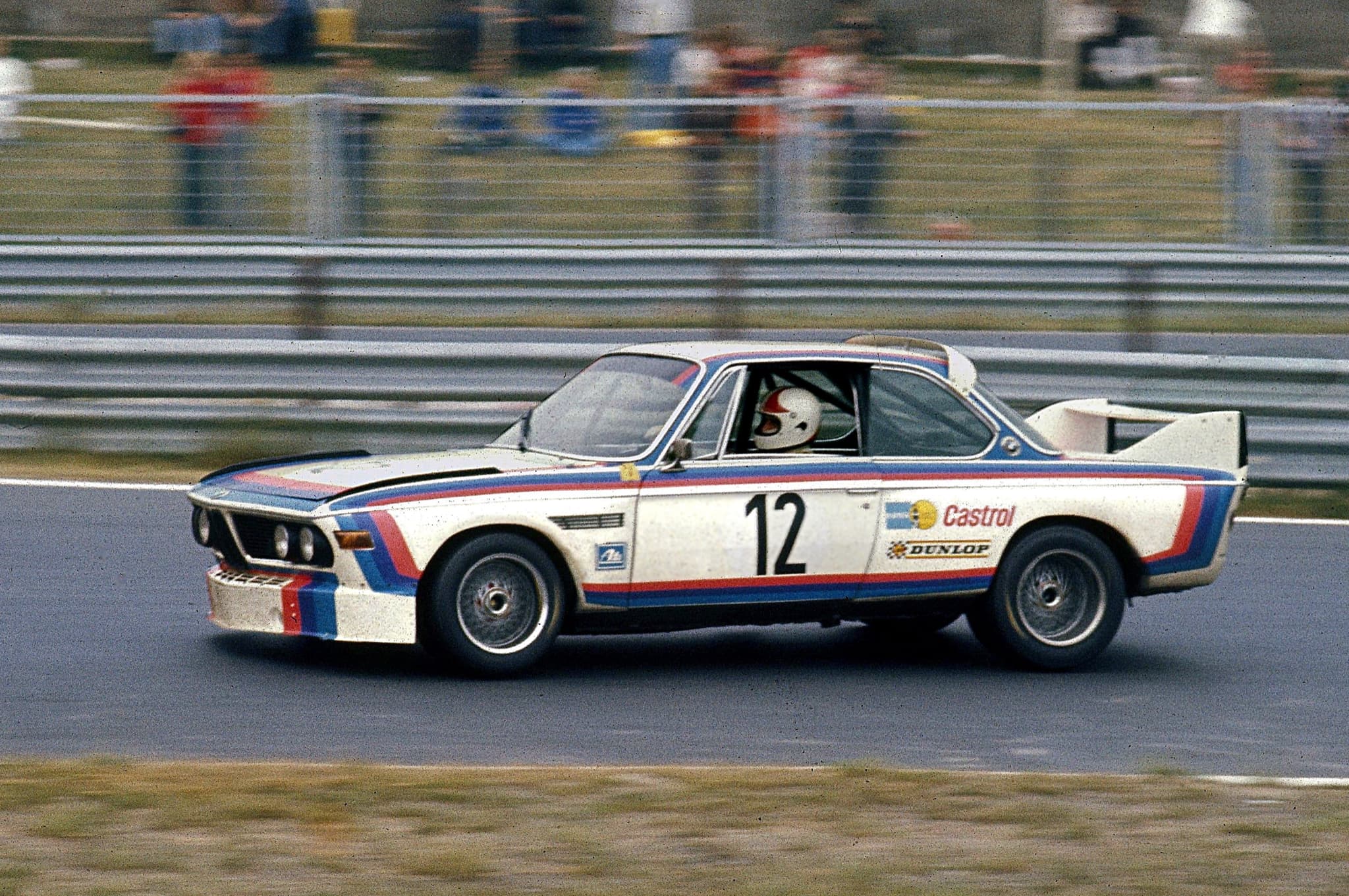
With nowhere to race, Neerpasch made a race. With Bernie Ecclestone and Max Mosley he set up Procar: M1 against M1, before the European Grands Prix of 1979 and 1980. BMW kept five cars for whichever Grand Prix drivers were quickest on Friday. Ferrari's and Renault's drivers stayed out, because their teams ran on Michelin tyres and Procar on Goodyears. The rest of the grid were touring-car and sports-car drivers in private entries, many in cars built by Ron Dennis's Project Four at Woking, and every car ran to one specification, on Goodyear tyres, with a rev limiter set below the engine's limit.
Elio de Angelis won the first, at Zolder on 12 May 1979. Niki Lauda, in a car Project Four entered for him as No. 5 so that he could race his own M1 and still use his practice times, won at Monaco, Silverstone and Hockenheim and took the first championship by five points from Stuck. Nelson Piquet won the last three races of 1980 and the second title; by then the works drivers no longer started from the front of the grid as of right. A third season never came: Goodyear left, and BMW turned to Formula 1 with Brabham.source 14source 15source 16source 17source 18source 1source 8source 19
The Art Car
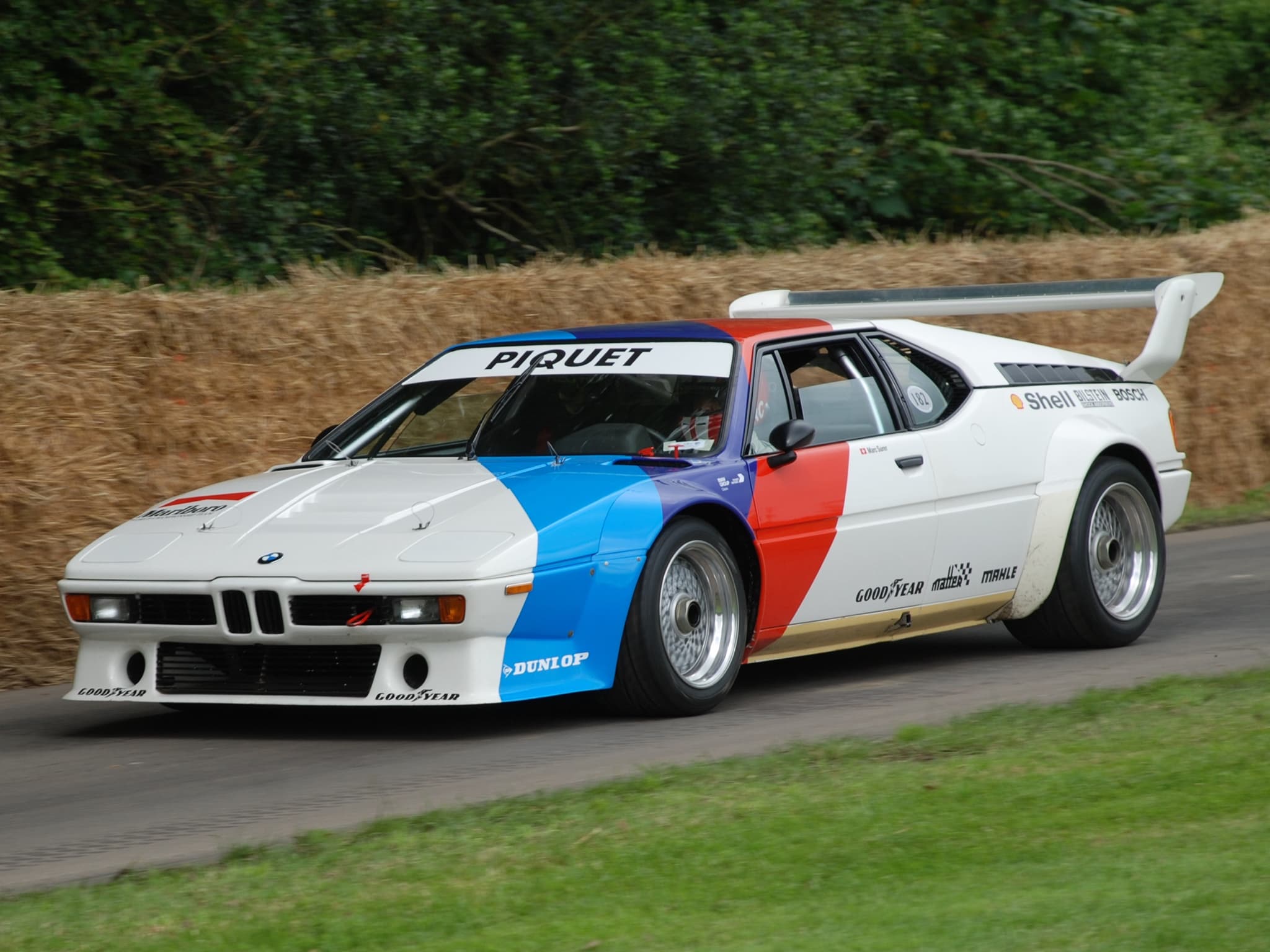
In June 1979 a Procar painted by Andy Warhol ran at Le Mans. It was the fourth of BMW's Art Cars, a line begun by the racing driver and auctioneer Hervé Poulain, who had Alexander Calder paint the CSL he raced at Le Mans in 1975; Frank Stella and Roy Lichtenstein followed. Warhol had first designed a 320 for Le Mans in 1978, which was not built, and was offered the new M1 instead. BMW says he was the first of the artists to paint the car himself, with a film crew watching, and he worked quickly: BMW's own account gives 28 minutes. Its paint weighed about 6 kg (13 lb). As No. 76 it finished sixth, second in its class, in the hands of Poulain, Manfred Winkelhock and Marcel Mignot. The car never raced again. BMW has kept it since, and in August 2025 it became the 37th vehicle on the US National Historic Vehicle Register.source 13source 20source 21source 22source 23source 24
A racing life
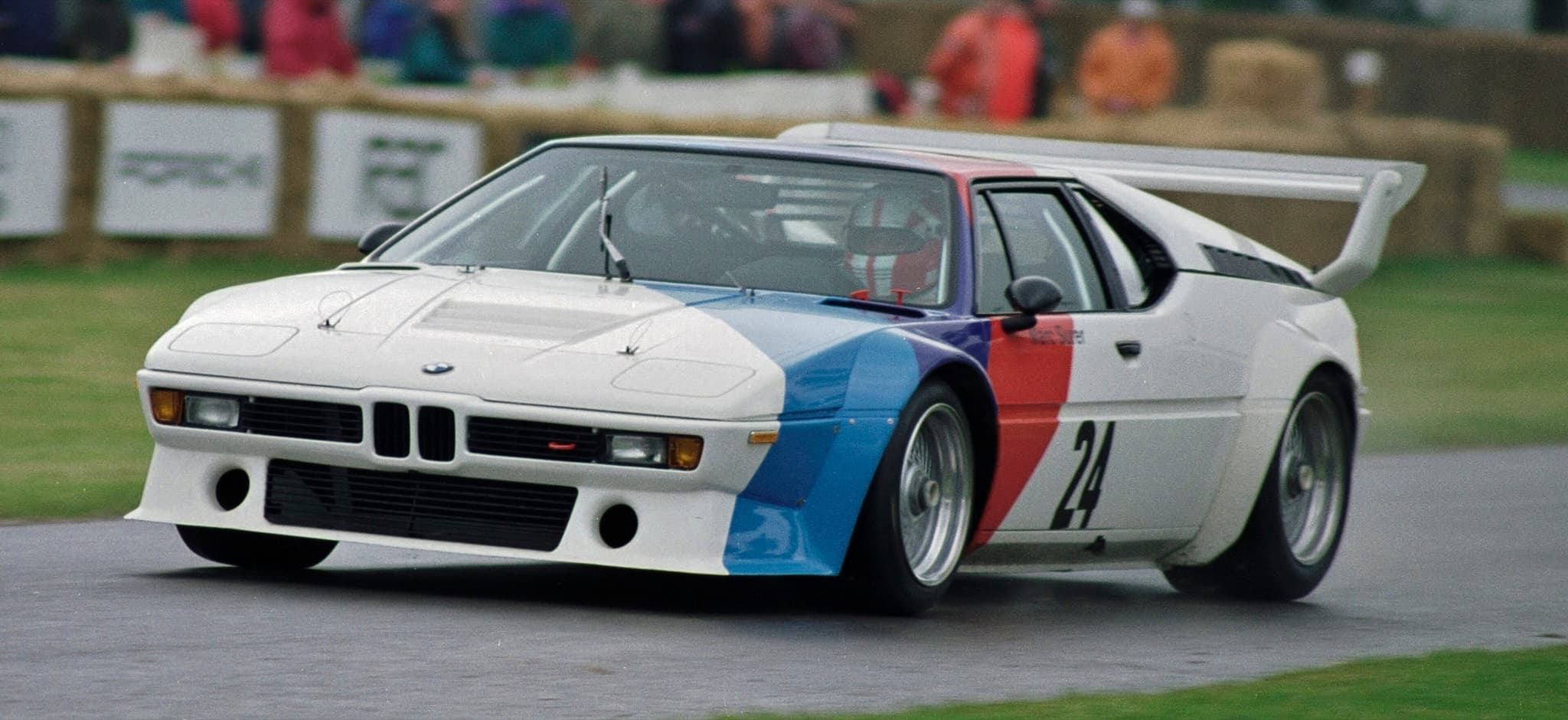
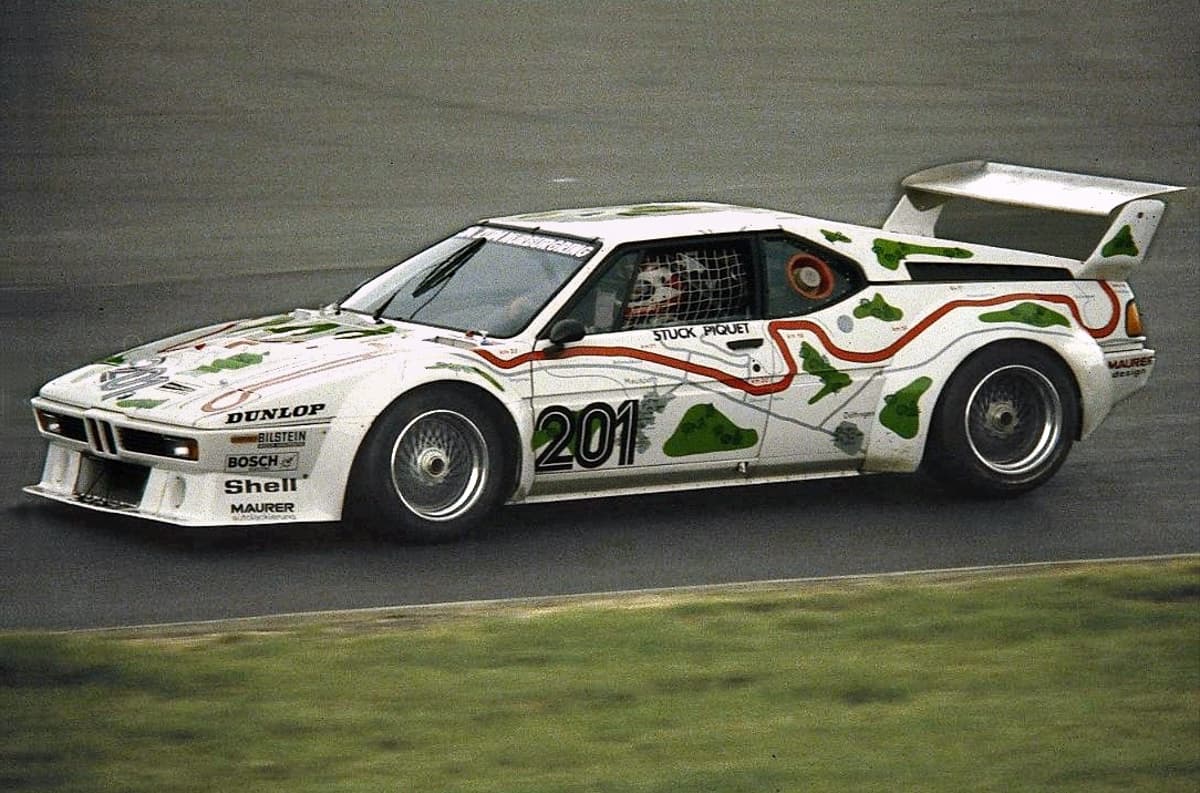
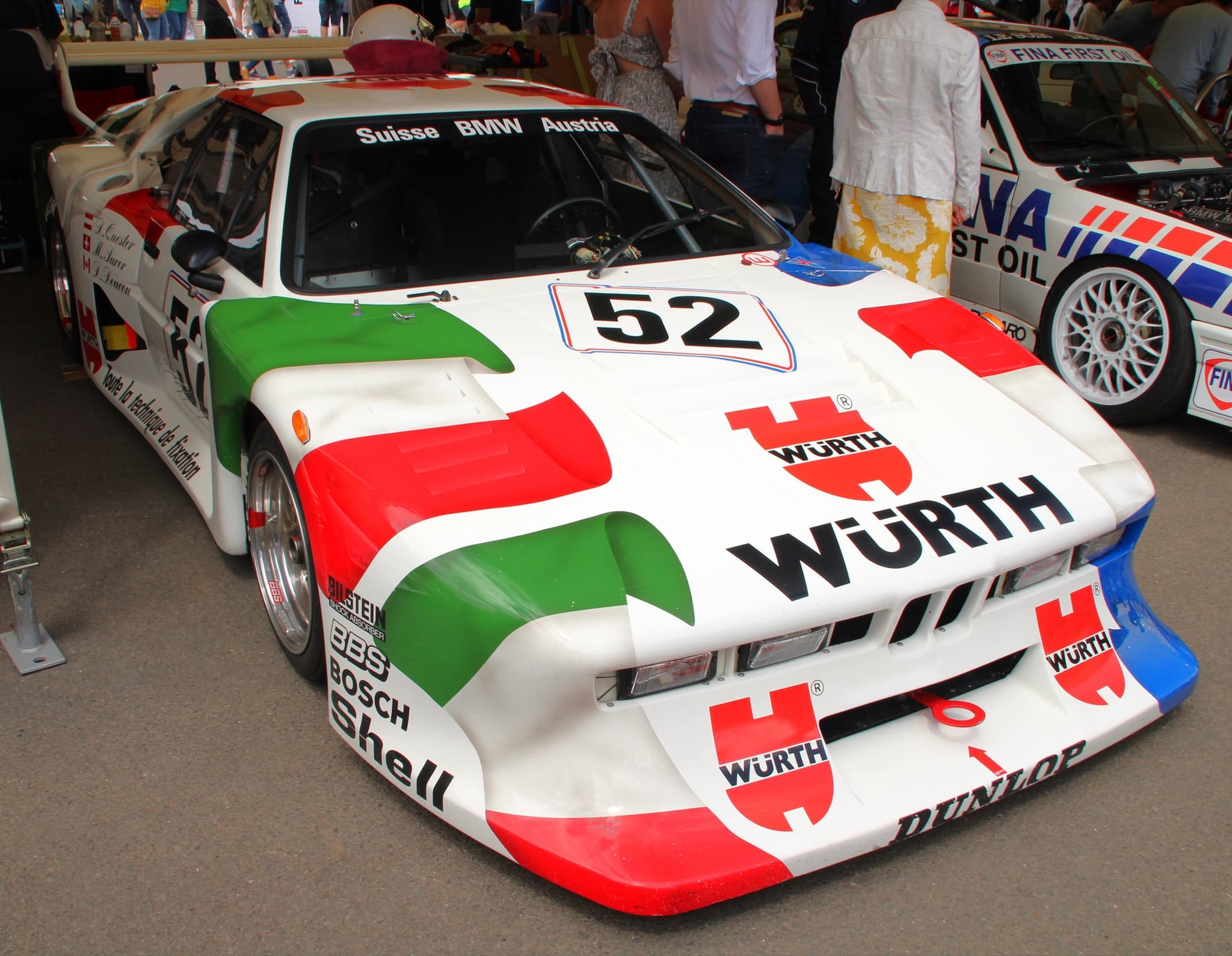
In Germany the Procars could race in the Group 4 class of the national championship from 1979, but Group 4 recognition at the end of 1980 opened the rest of motor racing to the M1, and the Procars became its racing stock. Its best day came at the Nürburgring 1000 km on 24 May 1981, its one win in the World Championship for Makes. Hans-Joachim Stuck and Nelson Piquet shared GS-Sport's BASF-sponsored car, a space-frame Group 5 M1 built by Sauber, and the race was stopped early after Herbert Müller's fatal accident. The same two drivers had finished third there for BMW Motorsport a year before.
That season Schnitzer's twin-turbocharged M1 won two rounds of the German championship's first division for Stuck, at the Norisring and the Salzburgring, Helmut Henzler won the championship's Rennsport Trophäe in GS-Sport's Group 4 M1, and in the United States Red Lobster Racing's M1, the Procar Elio de Angelis had driven to the first Procar win, took the IMSA GTO title for Dave Cowart and Kenper Miller. M1s raced at Le Mans in every year from 1979 to 1986, with 24 entries in the races in all, 21 of which started. The best of them was the Art Car, sixth in 1979, and in 1984 and 1985 Helmut Gall's M1, another former Procar, won the Group B class, under the recognition in Group B the M1 had held since 1 March 1983.
They raced further afield too. In November 1979 M1s finished first and second in the Kyalami 1000 km in South Africa, where the Procars had a class of their own. In Japan Naoki Nagasaka raced one in most seasons from 1979 to 1984 and won with it in the 1000 km races at Fuji and Suzuka in 1982, and in Britain M1s ran in club GT races. BMW France ran one in rallies from 1981 to 1984, and in its last season it won two rounds of the French second-division championship. racingsportscars' record of M1s in races runs on to 2003, through Nordic and Finnish sports-car racing from 1985 to 1991 and Swedish and Canadian GT racing from 1997.source 7source 25source 26source 27source 28source 29source 19source 30source 16source 31
What the press said
The road testers liked it. CAR, in March 1979, called it "a triumphant blend of Teutonic efficiency and Latin flair". Walton drove one around Munich for the magazine, and his verdict, printed in April 1981, was plain:
The answer is a superb road vehicle, worthy of a commercial future as a flagship and a supremely capable performer.
The Grand Prix press was cooler about Procar: Denis Jenkinson, writing in the same magazine after the Monaco race of 1979, called it a "circus-act". The road car had its critics too. In 1984 A.H. reported that some writers had accused it of having the faults of an Italian mid-engined car without the character. The reviews gather the period tests and what they measured.source 4source 32source 9source 3
Before and after
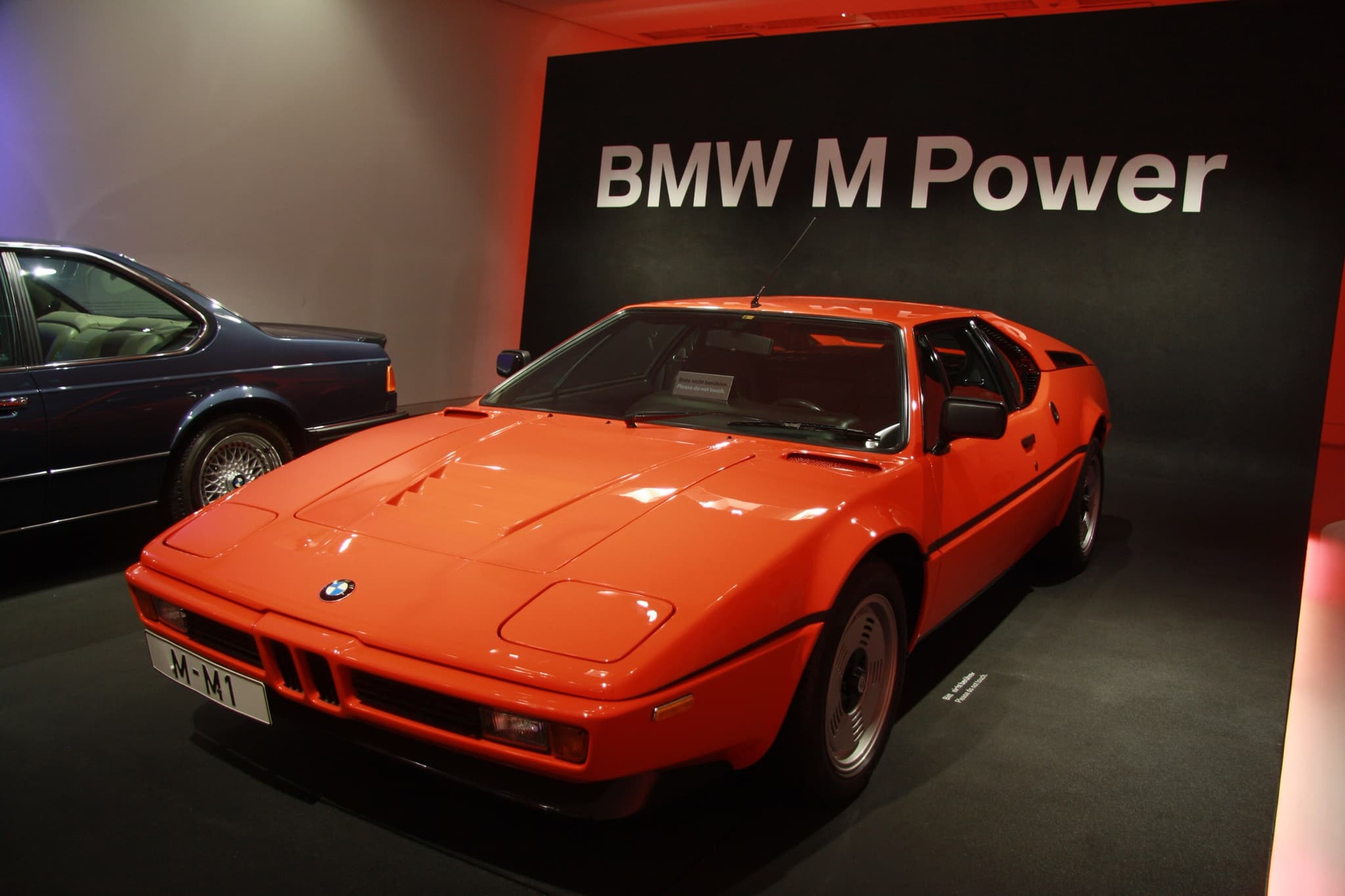
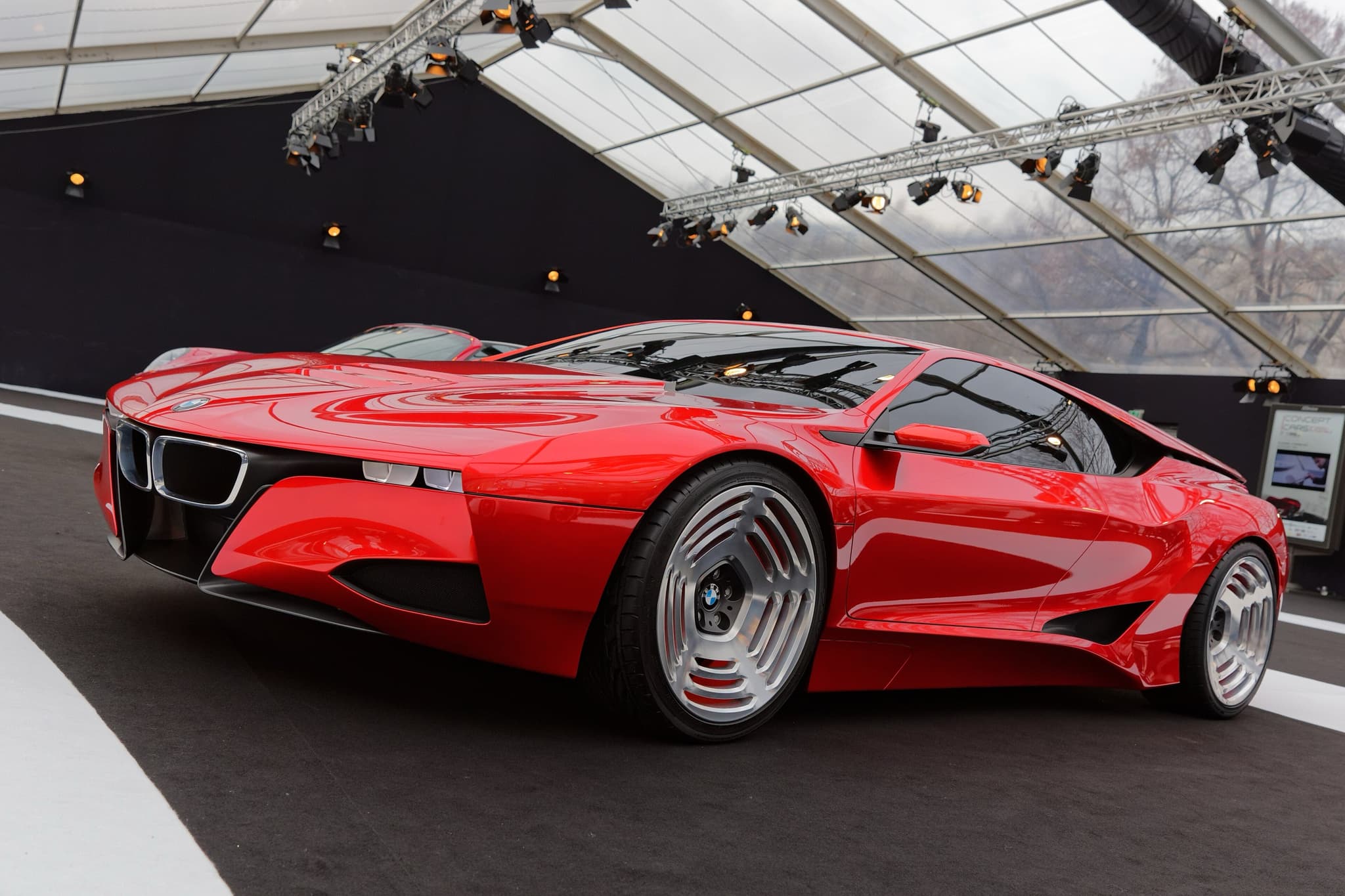
BMW had built a mid-engined car before, but never one to sell. Paul Bracq's Turbo, a gull-winged show car of 1972, gave the M1 its layout and the start of its shape, and CAR saw the likeness in Ital Design's finished car in 1979. In 1976 auto motor und sport expected the new coupé to use the six-cylinder engine of BMW's racing CSLs. Afterwards the M1's engine went on, and BMW's own account has it returning in 1984 in the M635CSi coupé and the M5. The i8 was mid-engined too, and Motor Sport traced its concept back to the M1's design. BMW paid its own tribute in the M1 Hommage design study of 2008; its Vision M NEXT of 2019 took the M1's rear window, and in 2024 it showed a one-off M1 rebuilt by Kith's founder, Ronnie Fieg. The M1 Hommage has all three, and the history the M1's lineage on both sides.source 1source 3source 6source 33source 34source 35source 36
Owning one
The price new is at the top of the page, with the other figures. An M1's identity rests on its chassis number, which carries the serial in its last digits, on its engine number, which the Register lists in a series from M88-04 to M88-490, and on the Register's record of the serial. Britain never had an official import, though BMW (GB) kept M1s of its own. The racing cars need more care still: racingsportscars records some Procars with two possible serials, and at least one car the Register lists as a road car raced as a Procar in 1980. The buyers guide covers identity, the race-car traps and the mechanical points, from the Kugelfischer injection to the glass-fibre body.source 2source 19source 4source 8source 5
By the numbers
- Built
- 1978–1981
- Versions
- 3Road car, Procar and Group 5
Versions
Sources for Versions
- Road car
- 3,453 cc: BMW AG (BMW Group PressClub USA), "Icons for Connoisseurs – Thirty Years of the BMW M1" (press release), 27 Mar 2008source 1; Jeremy Walton ("J.W."), "Road Impressions: BMW M1", Motor Sport, Apr 1981, p. 83source 4; ONS / FIA (FIA Historic Database), ONS/FIA homologation form (Testblatt) no. 670, BMW M 1, Group 4 (and its transfer to Group B), 1980source 7; auto motor und sport, auto katalog 1980, Ausgabe Nr. 23 (Stuttgart, 1979)source 11
- 399 built: BMW AG (BMW Group PressClub USA), "Icons for Connoisseurs – Thirty Years of the BMW M1" (press release), 27 Mar 2008source 1; Richard Heseltine, "BMW M1", Motor Sport, Mar 2008, p. 134source 8
- Procar
- 3,498 cc: touringcarracing.net, Season car pages, "1978 Cars" to "1981 Cars" (group)source 37
Pictures, top to bottom: Matthew Lamb, CC BY-SA 2.0; MrWalkr, CC BY-SA 4.0.
Notable cars
Built 1981
BMW France's rally M1
Whereabouts unknown
Hans-Joachim Stuck's Cassani Procar, 4301062
Whereabouts unknown
Built 1979
Harald Ertl's LPG record M1
Survives
Built 1978
Niki Lauda's 1979 Procar
Whereabouts unknown
Built 1979
The first M1 to race, 4301063
Whereabouts unknown
Built 1978
Nelson Piquet's 1979 works Procar
Whereabouts unknown
The Red Lobster M1, 4301040
Whereabouts unknown
Built 1981
The Sauber M1 that won the 1981 Nürburgring 1000 km
Survives
Built 1979
The M1 Procar Frank Stella painted for Peter Gregg
Survives
People
"Fomfor"
In the Mosport 6 Hours on 14 August 1983 with Montoya, entered by Fomfor Racing (No. 18): 22nd overall, 8th in IMSA GTO, not running at the finish (the source prints only the name "Fomfor", in quotation marks).
Aase
In the Road America 500 Miles on 2 September 1979 with Busby, entered by Jim Busby Racing (No. 3): 4th overall, 4th in GTX (the source prints the surname only).
Alliot
In the Le Mans 24 Hours in June 1980 with Guérin, entered by Garage du Bac (No. 96): retired (accident) after 125 laps (the source prints the surname only).
Alliot
In the Le Mans 24 Hours on 13–14 June 1981 with Darniche and Cecotto, entered by BMW Italie-France (No. 51): 16th overall, 5th in Group 5 (the source prints the surname only).
Mario Andretti
American racing driver. In works Procars he retired from the first round at Zolder in 1979, was 12th at Donington Park that June, and retired at Zandvoort in 1980.
Elio de Angelis
Italian racing driver. He won the first round of the BMW M1 Procar Championship, at Zolder on 12 May 1979, in Osella's M1 (serial 4301040), and was 10th at Donington Park in it that June.
Bartling
In the Sebring 12 Hours on 21 March 1981 with Deacon and Freberg, entered by David Deacon Racing (No. 40): 64th overall, 22nd in GTO, not running at the finish (the source prints the surname only).
Beckers
In the Daytona 24 Hours in February 1980 with Miller and Cowart, entered by Deren Automotive (No. 25): 47th overall, 15th in GTX, not running at the finish (accident) (the source prints the surname only).
Bell
In the Nürburgring 1000 km on 24 May 1981 with Henzler, entered by EMKA Productions (No. 24): 33rd overall, 10th in Group 5 +2.0 (the source prints the surname only).
Bell
In the Silverstone 6 Hours on 10 May 1981 with O'Rourke and Hobbs, entered by EMKA Productions (No. 40): 2nd overall, 1st in GTX (the source prints the surname only).
Bell
In the Sebring 12 Hours on 22 March 1980 with Cowart and Miller, entered by Red Lobster Racing (No. 25): 30th overall, 10th in GTX (the source prints the surname only).
Bell
In the Brands Hatch 1000 km on 27 September 1981 with Craft, entered by EMKA Productions (No. 22): 3rd overall, 1st in Group 5 +2.0 (the source prints the surname only).
Bieri
In the Mosport 6 Hours on 14 August 1983 with Gysler, entered by Bieri Racing (No. 40): 26th overall, 10th in IMSA GTO, not running at the finish (the source prints the surname only).
Birrane
In the Le Mans 24 Hours on 15–16 June 1985 with Dören and Libert, entered by Helmut Gall (No. 151): 15th overall, 1st in Group B (the source prints the surname only).
designer of the 1972 BMW Turbo
Paul Bracq
Designer at BMW who styled the 1972 Turbo, the gull-winged mid-engined show car from which the M1's shape grew.
project engineer
Martin Braungart
German engineer, the M1's project engineer within BMW Motorsport GmbH, who with Jochen Neerpasch drew up the scheme for the car in 1976 and worked on its Group 5 version with Paul Rosche and Robin Herd of March.
Brun
In the Le Mans 24 Hours on 9–10 June 1979 with Cudini, entered by Walter Brun Racing Organisation (No. 54): the car was entered but did not arrive (the source prints the surname only).
Busby
In the Road America 500 Miles on 2 September 1979 with Aase, entered by Jim Busby Racing (No. 3): 4th overall, 4th in GTX (the source prints the surname only).
Busby
In the Watkins Glen 6 Hours on 7 July 1979 with Winkelhock, entered by BMW of North America and Munich (No. 3): 29th, not running at the finish (off course) (the source prints the surname only).
driver
Bernard Béguin
French rally driver. With Jean-Jacques Lenne he drove BMW France's M1 in 1983 and 1984, as a Group B car: they retired from the 1983 Tour de Corse after a water pipe split, won the Rallye International de Lorraine and the Rallye International de La Baule in May and June 1984, and were 2nd in the Rallye d'Antibes that October.
Bürger
In the Le Mans 24 Hours in June 1980 with Stuck and Lacaud, entered by Dominique Lacaud (No. 84): 15th overall, 5th in IMSA (the source prints the surname only).
Hans-Georg Bürger
German racing driver. He was 3rd in a works Procar at Hockenheim in 1979 and 3rd at the Avus in 1980, and retired from the Kyalami 1000 km of November 1979 with Markus Höttinger. He died in 1980, in an accident in a Formula 2 race at Zandvoort.
Calderari
In the Le Mans 24 Hours on 31 May – 1 June 1986 with Vanoli and Pallavicini, entered by Angelo Pallavicini: the car was entered but did not arrive (the source prints the surname only).
Calderari
In the Le Mans 24 Hours on 15–16 June 1985 with Vanoli and Pallavicini, entered by Angelo Pallavicini (No. 157): retired (engine) after 116 laps (the source prints the surname only).
Cecotto
In the Le Mans 24 Hours on 13–14 June 1981 with Darniche and Alliot, entered by BMW Italie-France (No. 51): 16th overall, 5th in Group 5 (the source prints the surname only).
Johnny Cecotto
Venezuelan racing driver. Driving for GS he was 8th in the last Procar round of 1980, at Imola.
Cowart
In the Daytona 24 Hours in February 1980 with Miller and Beckers, entered by Deren Automotive (No. 25): 47th overall, 15th in GTX, not running at the finish (accident) (the source prints the surname only).
Cowart
In the Daytona Finale 250 Miles on 30 November 1980 with Miller, entered by Red Lobster Racing (No. 25): 6th overall, 6th in GTX (the source prints the surname only).
Cowart
In the Mosport 6 Hours on 17 August 1980 with Miller, entered by Red Lobster Racing (No. 25): the car was entered but did not arrive (the source prints the surname only).
Cowart
In the Mosport 6 Hours on 16 August 1981 with Miller, entered by Red Lobster Racing (No. 25): 5th overall, 1st in IMSA GTO (the source prints the surname only).
Cowart
In the Riverside 5 Hours on 27 April 1980, entered by Red Lobster Racing (No. 25): 55th overall, 18th in GTX, not running at the finish (engine) (the source prints the surname only).
Cowart
In the Road America 500 Miles on 31 August 1980 with Miller, entered by Red Lobster Racing (No. 25): 6th overall, 6th in GTX (the source prints the surname only).
Cowart
In the Sebring 12 Hours on 22 March 1980 with Miller and Bell, entered by Red Lobster Racing (No. 25): 30th overall, 10th in GTX (the source prints the surname only).
Cowart
In the Sebring 12 Hours on 21 March 1981 with Miller, entered by Red Lobster Racing (No. 25): 27th overall, 11th in GTO (the source prints the surname only).
driver
Dave Cowart
American racing driver. With Kenper Miller he raced Red Lobster Racing's M1 (serial 4301040) in IMSA in 1980 and 1981; BMW later wrote that the pair finished the 1981 IMSA GTO championship first and second. In the first heat at Road Atlanta on 21 September 1980, which he drove alone, he was 9th.
Craft
In the Brands Hatch 1000 km on 27 September 1981 with Bell, entered by EMKA Productions (No. 22): 3rd overall, 1st in Group 5 +2.0 (the source prints the surname only).
Cruz
In the Mosport 6 Hours on 16 August 1981 with Garcia and Naon, entered by Montura Racing (No. 54): 8th overall, 2nd in IMSA GTO (the source prints the surname only).
Cudini
In the Le Mans 24 Hours on 9–10 June 1979 with Brun, entered by Walter Brun Racing Organisation (No. 54): the car was entered but did not arrive (the source prints the surname only).
Dagoreau
In the Le Mans 24 Hours on 16–17 June 1984 with de Thoisy and Yvon, entered by Helmut Gall (No. 109): 14th overall, 1st in Group B (the source prints the surname only).
chassis development
Gian Paolo Dallara
Italian engineer, earlier responsible for the Lamborghini Miura's chassis and the Countach, who worked on the M1's chassis as a consultant to Lamborghini. He founded his own firm at Varano de' Melegari in 1972.
Danner
In the Le Mans 24 Hours on 13–14 June 1981 with von Bayern and Oberndorfer, entered by Helmut Marko (No. 71): retired (crankshaft damper) after 49 laps (the source prints the surname only).
Danner
In the Nürburgring 1000 km on 25 May 1980 with Oberndorfer, entered by Cassani Racing - H.I.S. Jeans (No. 202): the car was entered but did not arrive (the source prints the surname only).
Darniche
In the Le Mans 24 Hours on 13–14 June 1981 with Cecotto and Alliot, entered by BMW Italie-France (No. 51): 16th overall, 5th in Group 5 (the source prints the surname only).
driver
Bernard Darniche
French rally driver. With Alain Mahé he drove BMW France's M1 from the Rallye du Var of 1981 into 1982, its Group 4 seasons; they retired from the 1982 Tour de Corse, the car's World Championship debut, and from the 24 Hours of Ypres that June.
Deacon
In the Mosport 6 Hours on 16 August 1981 with Freberg, entered by David Deacon Racing (No. 40): 20th overall, 7th in IMSA GTO (the source prints the surname only).
Deacon
In the Le Mans 24 Hours on 13–14 June 1981 with Surer and Quester, entered by Würth-Lubrifilm Team Sauber (No. 52): retired (engine) after 207 laps (the source prints the surname only).
Deacon
In the Sebring 12 Hours on 21 March 1981 with Freberg and Bartling, entered by David Deacon Racing (No. 40): 64th overall, 22nd in GTO, not running at the finish (the source prints the surname only).
David Deacon
Racing driver. In Deacon Racing's M1 (serial 4301225) he was classified 29th, 9th in IMSA GTO, in the Mosport 6 Hours of 15 August 1982, not running at the finish.
Down
In the Le Mans 24 Hours on 19–20 June 1982 with O'Rourke and Mason, entered by EMKA Productions (No. 62): retired (engine) after 266 laps (the source prints the surname only).
Hermann-Peter Duge
German racing driver. He set the fastest lap of the Group 3 and 4 GT class in the WERA-Meißberg Team's M1 in the Nürburgring 1000 km of 24 May 1981, and retired after 5 laps.
Dören
In the Le Mans 24 Hours on 16–17 June 1984 with Mertes, Jürgensen and Richter, entered by Edgar Dören (No. 102): the car was entered but did not arrive (the source prints the surname only).
Dören
In the Le Mans 24 Hours on 15–16 June 1985 with Birrane and Libert, entered by Helmut Gall (No. 151): 15th overall, 1st in Group B (the source prints the surname only).
Ennequin
In the Le Mans 24 Hours on 19–20 June 1982 with Gasparetti and Gabriel, entered by Total (No. 61): 18th overall, 3rd in Group 5 (the source prints the surname only).
Teo Fabi
Italian racing driver. BMW Italia entered him in an M1 for the Silverstone 6 Hours of 10 May 1981, but the car did not arrive.
Ferrier
In the Silverstone 6 Hours on 10 May 1981 with Servanin and Rousselot, entered by BMW Zol'Auto (No. 34): the car was entered but did not arrive (the source prints the surname only).
Ferrier
In the Le Mans 24 Hours on 13–14 June 1981 with Rousselot and Servanin, entered by BMW Zol'Auto (No. 72): retired (valve, clutch, gearbox) after 212 laps (the source prints the surname only).
Ferrier
In the Brands Hatch 1000 km on 27 September 1981 with Servanin, entered by BMW Zol'Auto (No. 40): the car was entered but did not arrive (the source prints the surname only).
Ferrier
In the Le Mans 24 Hours in June 1980 with Servanin and Rousselot, entered by BMW Zol'Auto (No. 95): retired (engine) after 237 laps (the source prints the surname only).
Emerson Fittipaldi
Brazilian racing driver. In his only Procar race, at Monaco in May 1979, he was 3rd in a works car.
Freberg
In the Sebring 12 Hours on 21 March 1981 with Deacon and Bartling, entered by David Deacon Racing (No. 40): 64th overall, 22nd in GTO, not running at the finish (the source prints the surname only).
Freberg
In the Mosport 6 Hours on 16 August 1981 with Deacon, entered by David Deacon Racing (No. 40): 20th overall, 7th in IMSA GTO (the source prints the surname only).
Gabriel
In the Le Mans 24 Hours on 19–20 June 1982 with Gasparetti and Ennequin, entered by Total (No. 61): 18th overall, 3rd in Group 5 (the source prints the surname only).
Garcia
In the Mosport 6 Hours on 16 August 1981 with Naon and Cruz, entered by Montura Racing (No. 54): 8th overall, 2nd in IMSA GTO (the source prints the surname only).
Garcia
In the Le Mans 24 Hours on 19–20 June 1982 with Stiff and Naon, entered by Tony Garcia (No. 85): retired (accident) after 104 laps (the source prints the surname only).
Gasparetti
In the Le Mans 24 Hours on 19–20 June 1982 with Ennequin and Gabriel, entered by Total (No. 61): 18th overall, 3rd in Group 5 (the source prints the surname only).
Gebhardt
In the Sebring 12 Hours on 21 March 1981 with Surer, entered by BMW Challenge Team (No. 14): 49th overall, 18th in GTO, not running at the finish (engine) (the source prints the surname only).
Bruno Giacomelli
Italian racing driver. He was 2nd to Nelson Piquet in the non-championship Procar race at Donington Park on 3 June 1979, in an Osella entry.
designer
Giorgetto Giugiaro
Italian car designer whose Ital Design styled the M1's body, the sharp-edged shape BMW says grew from its own 1972 Turbo show car. His other work includes the Lotus Esprit, the De Tomaso Mangusta and the original Maserati Ghibli.
Harald Grohs
German racing driver. He took the Group B pole position and fastest lap at Le Mans in 1985 in Vogelsang's M1, which retired after 32 laps with gearbox trouble.
Dan Gurney
American racing driver. He shared E2A with Walt Hansgen at Le Mans in 1960, where it retired after 89 laps with engine failure that began with a fuel-injection fault. Entered in a works BMW M1 for the non-championship Procar race at Donington Park on 3 June 1979, he did not start; the results page gives the reason as "No driver license".
Guérin
In the Le Mans 24 Hours in June 1980 with Alliot, entered by Garage du Bac (No. 96): retired (accident) after 125 laps (the source prints the surname only).
Gysler
In the Mosport 6 Hours on 14 August 1983 with Bieri, entered by Bieri Racing (No. 40): 26th overall, 10th in IMSA GTO, not running at the finish (the source prints the surname only).
Heger
In the Le Mans 24 Hours on 15–16 June 1985 with Harald Grohs and König, entered by Vogelsang (No. 152): retired (gearbox) after 32 laps (the source prints the surname only).
Henzler
In the Nürburgring 1000 km on 24 May 1981 with Bell, entered by EMKA Productions (No. 24): 33rd overall, 10th in Group 5 +2.0 (the source prints the surname only).
Henzler
In the Le Mans 24 Hours on 13–14 June 1981 with Jarier and Stuck, entered by BASF Cassetten Team GS Sport (No. 50): retired (accident damage) after 57 laps (the source prints the surname only).
Heyer
In the Brands Hatch 1000 km on 27 September 1981 with Stuck, entered by BASF Cassetten Team GS Sport (No. 24): retired (accident) after 160 laps (the source prints the surname only).
Heyer
In the Silverstone 6 Hours on 10 May 1981 with Stuck, entered by BASF Team GS Sport (No. 35): retired (gear selector) after 116 laps (the source prints the surname only).
Hans Heyer
German racing driver. Driving for GS in 1980 he was 2nd in the Procar round at Donington Park and 3rd at Imola.
Toine Hezemans
Dutch racing driver. He was 2nd in the first Procar round at Zolder in 1979 and 5th at Donington Park that June.
Hobbs
In the Mosport 6 Hours on 16 August 1981 with Stuck, entered by BMW Motorsport (No. 2): 14th overall, 9th in IMSA GTX (gearbox) (the source prints the surname only).
Hobbs
In the Le Mans 24 Hours on 13–14 June 1981 with Jordan and O'Rourke, entered by EMKA Productions (No. 53): retired (engine) after 236 laps (the source prints the surname only).
Hobbs
In the Silverstone 6 Hours on 10 May 1981 with Bell and O'Rourke, entered by EMKA Productions (No. 40): 2nd overall, 1st in GTX (the source prints the surname only).
David Hobbs
British racing driver. As a Jaguar apprentice he spun the prototype E2A in a test at Silverstone, by his own account; in the Daytona 3 Hours of February 1962 he drove Peter Berry Racing's E-Type, retiring with fuel-system trouble. He drove for the works Spitfire team at Le Mans in 1964 and 1965. In the non-championship BMW M1 Procar race at Donington Park on 3 June 1979 he was 9th, in BMW Switzerland's M1 (serial 4301063).
Denny Hulme
New Zealand racing driver. Entered in a works M1 for the non-championship Procar race at Donington Park on 3 June 1979, he did not start; the results page gives the reason as "No driver license".
James Hunt
British racing driver. In a works M1 he retired from the non-championship Procar race at Donington Park on 3 June 1979 with front-suspension trouble.
Markus Höttinger
Austrian racing driver, run by Helmut Marko's GS Team Marko in the Procar series. In 1979 he was 3rd at Silverstone and Monza and 2nd at the Österreichring; he retired from the Kyalami 1000 km that November with Hans-Georg Bürger.
Jarier
In the Le Mans 24 Hours on 13–14 June 1981 with Stuck and Henzler, entered by BASF Cassetten Team GS Sport (No. 50): retired (accident damage) after 57 laps (the source prints the surname only).
Lars-Viggo Jensen
Danish racing driver. He set the Group B fastest lap at Le Mans in 1984 in Jens Winther's M1, which retired after 96 laps with left front suspension trouble.
Alan Jones
Australian racing driver. In works Procars he was 2nd at Dijon in 1979 and, in 1980, 3rd at Donington Park and 2nd at Brands Hatch and Imola, finishing the 1980 championship 2nd with 77 points; he retired from the non-championship Donington race of 1979.
Jordan
In the Le Mans 24 Hours on 13–14 June 1981 with Hobbs and O'Rourke, entered by EMKA Productions (No. 53): retired (engine) after 236 laps (the source prints the surname only).
Jürgensen
In the Le Mans 24 Hours on 16–17 June 1984 with Dören, Mertes and Richter, entered by Edgar Dören (No. 102): the car was entered but did not arrive (the source prints the surname only).
Kannacher
In the Nürburgring 1000 km on 25 May 1980 with Lässig, entered by Kannacher GT Racing (No. 203): the car was entered but did not arrive (the source prints the surname only).
Keizan
In the Kyalami 1000 km on 3 November 1979 with Kelleners, entered by Eggenberger Racing/Castrol (No. 9): 1st overall, 1st in Category I Class B (the source prints the surname only).
Kelleners
In the Kyalami 1000 km on 3 November 1979 with Keizan, entered by Eggenberger Racing/Castrol (No. 9): 1st overall, 1st in Category I Class B (the source prints the surname only).
Helmut Kelleners
German racing driver. For Eggenberger he was 6th in the Procar race at Donington Park in 1979 and 2nd at Monaco in 1980.
Franz Konrad
Austrian racing driver. He was 13th in the non-championship Procar race at Donington Park on 3 June 1979, in Konrad Motorsport's M1.
Krankenberg
In the Le Mans 24 Hours on 31 May – 1 June 1986 with Witmeur and Libert, entered by MK Motorsport (No. 111): not classified (last lap too slow) (the source prints the surname only).
König
In the Le Mans 24 Hours on 15–16 June 1985 with Heger and Harald Grohs, entered by Vogelsang (No. 152): retired (gearbox) after 32 laps (the source prints the surname only).
König
In the Nürburgring 1000 km on 24 May 1981 with Oberndorfer, entered by Kurt König (No. 38): 14th overall, 1st in GT +2.0 (the source prints the surname only).
Lacaud
In the Le Mans 24 Hours in June 1980 with Stuck and Bürger, entered by Dominique Lacaud (No. 84): 15th overall, 5th in IMSA (the source prints the surname only).
Jacques Laffite
French racing driver. In works Procars he retired from the first round at Zolder in 1979, won at the Österreichring and was 2nd at Zandvoort that year, and was 3rd at Zandvoort in 1980.
Jan Lammers
Dutch racing driver. Driving for BMW Nederland in 1980 he won the opening Procar round at Donington Park and was 2nd at the Avus and the Norisring; he retired at Monaco.
driver
Niki Lauda
Austrian racing driver. He won the first BMW M1 Procar Championship, in 1979, with 78 points to Hans-Joachim Stuck's 73: he won at Monaco, Silverstone and Hockenheim and was 2nd at Monza in the Project Four car run by Ron Dennis, after retiring from the opening round at Zolder.
co-driver
Jean-Jacques Lenne
French rally co-driver. He partnered Bernard Béguin in BMW France's M1 in 1983 and 1984, including their wins in the Rallye International de Lorraine and the Rallye International de La Baule in 1984.
Libert
In the Le Mans 24 Hours on 15–16 June 1985 with Dören and Birrane, entered by Helmut Gall (No. 151): 15th overall, 1st in Group B (the source prints the surname only).
Libert
In the Le Mans 24 Hours on 31 May – 1 June 1986 with Witmeur and Krankenberg, entered by MK Motorsport (No. 111): not classified (last lap too slow) (the source prints the surname only).
Lässig
In the Nürburgring 1000 km on 25 May 1980 with Kannacher, entered by Kannacher GT Racing (No. 203): the car was entered but did not arrive (the source prints the surname only).
Lässig
In the Nürburgring 1000 km on 24 May 1981 with Hermann-Peter Duge, entered by WERA-Meißberg Team (No. 37): retired after 5 laps (the source prints the surname only).
co-driver
Alain Mahé
French rally co-driver. He partnered Bernard Darniche in BMW France's M1 in 1981 and 1982, including the 1982 Tour de Corse and the 24 Hours of Ypres that June.
Mason
In the Le Mans 24 Hours on 19–20 June 1982 with O'Rourke and Down, entered by EMKA Productions (No. 62): retired (engine) after 266 laps (the source prints the surname only).
Jochen Mass
German racing driver. Sharing Ron Dennis's M1 with Watson, he took pole position for the Kyalami 1000 km of 3 November 1979 and finished 4th, 3rd in the class for BMW M1 Procars.
Mercer
In the Le Mans 24 Hours on 16–17 June 1984 with Winther and Lars-Viggo Jensen, entered by Jens Winther (No. 101): retired (left front suspension) after 96 laps (the source prints the surname only).
Mertes
In the Le Mans 24 Hours on 16–17 June 1984 with Dören, Jürgensen and Richter, entered by Edgar Dören (No. 102): the car was entered but did not arrive (the source prints the surname only).
Mignot
In the Le Mans 24 Hours in June 1980 with Pironi and Quester, entered by BMW France (No. 83): 14th overall, 4th in IMSA (the source prints the surname only).
Marcel Mignot
French racing driver. With Hervé Poulain and Manfred Winkelhock he drove Andy Warhol's M1 Art Car to 6th overall and 2nd in its IMSA class in the Le Mans 24 Hours of June 1979.
Miller
In the Mosport 6 Hours on 16 August 1981 with Cowart, entered by Red Lobster Racing (No. 25): 5th overall, 1st in IMSA GTO (the source prints the surname only).
Miller
In the Daytona 24 Hours in February 1980 with Cowart and Beckers, entered by Deren Automotive (No. 25): 47th overall, 15th in GTX, not running at the finish (accident) (the source prints the surname only).
Miller
In the Daytona Finale 250 Miles on 30 November 1980 with Cowart, entered by Red Lobster Racing (No. 25): 6th overall, 6th in GTX (the source prints the surname only).
Miller
In the Mosport 6 Hours on 17 August 1980 with Cowart, entered by Red Lobster Racing (No. 25): the car was entered but did not arrive (the source prints the surname only).
Miller
In the Road America 500 Miles on 31 August 1980 with Cowart, entered by Red Lobster Racing (No. 25): 6th overall, 6th in GTX (the source prints the surname only).
Miller
In the Sebring 12 Hours on 22 March 1980 with Cowart and Bell, entered by Red Lobster Racing (No. 25): 30th overall, 10th in GTX (the source prints the surname only).
Miller
In the Sebring 12 Hours on 21 March 1981 with Cowart, entered by Red Lobster Racing (No. 25): 27th overall, 11th in GTO (the source prints the surname only).
driver
Kenper Miller
American racing driver. With Dave Cowart he raced Red Lobster Racing's M1 (serial 4301040) in IMSA in 1980 and 1981; BMW later wrote that the pair finished the 1981 IMSA GTO championship first and second. In the second heat at Road Atlanta on 21 September 1980, which he drove alone, he was 11th and 7th in GTX.
Montoya
In the Mosport 6 Hours on 14 August 1983 with "Fomfor", entered by Fomfor Racing (No. 18): 22nd overall, 8th in IMSA GTO, not running at the finish (the source prints the surname only).
Diego Montoya
Racing driver. He entered an M1 for the Mosport 6 Hours of 15 August 1982, but the car did not arrive.
Naon
In the Le Mans 24 Hours on 19–20 June 1982 with Garcia and Stiff, entered by Tony Garcia (No. 85): retired (accident) after 104 laps (the source prints the surname only).
Naon
In the Mosport 6 Hours on 16 August 1981 with Garcia and Cruz, entered by Montura Racing (No. 54): 8th overall, 2nd in IMSA GTO (the source prints the surname only).
Tiff Needell
British racing driver. In a works Procar he was 9th at Silverstone on 13 July 1979.
conceived the M1, created the Procar series
Jochen Neerpasch
German racing driver and manager, head of BMW Motorsport GmbH, who conceived the M1 as a racing coupé that needed 400 road cars for homologation and, when those were late, created the Procar series so that the racing cars had somewhere to race. He had left BMW by the time the series ended. In July 2008 he drove Andy Warhol's M1 at Hockenheim for the M1's 30th anniversary, with Frank Stella beside him.
O'Rourke
In the Le Mans 24 Hours on 13–14 June 1981 with Hobbs and Jordan, entered by EMKA Productions (No. 53): retired (engine) after 236 laps (the source prints the surname only).
O'Rourke
In the Le Mans 24 Hours on 19–20 June 1982 with Down and Mason, entered by EMKA Productions (No. 62): retired (engine) after 266 laps (the source prints the surname only).
O'Rourke
In the Silverstone 6 Hours on 10 May 1981 with Bell and Hobbs, entered by EMKA Productions (No. 40): 2nd overall, 1st in GTX (the source prints the surname only).
Oberndorfer
In the Le Mans 24 Hours on 13–14 June 1981 with Danner and von Bayern, entered by Helmut Marko (No. 71): retired (crankshaft damper) after 49 laps (the source prints the surname only).
Oberndorfer
In the Nürburgring 1000 km on 25 May 1980 with Danner, entered by Cassani Racing - H.I.S. Jeans (No. 202): the car was entered but did not arrive (the source prints the surname only).
Oberndorfer
In the Nürburgring 1000 km on 24 May 1981 with König, entered by Kurt König (No. 38): 14th overall, 1st in GT +2.0 (the source prints the surname only).
Pallavicini
In the Le Mans 24 Hours on 18–19 June 1983 with Leopold von Bayern and Winther, entered by Angelo Pallavicini (No. 90): retired (gearbox) after 180 laps (the source prints the surname only).
Pallavicini
In the Le Mans 24 Hours on 15–16 June 1985 with Calderari and Vanoli, entered by Angelo Pallavicini (No. 157): retired (engine) after 116 laps (the source prints the surname only).
Pallavicini
In the Le Mans 24 Hours on 31 May – 1 June 1986 with Calderari and Vanoli, entered by Angelo Pallavicini: the car was entered but did not arrive (the source prints the surname only).
Riccardo Patrese
Italian racing driver. In a works Procar he was 9th in the last round of 1980, at Imola.
Piquet
In the Nürburgring 1000 km on 25 May 1980 with Stuck, entered by BMW Motorsport (No. 201): 3rd overall, 1st in IMSA GTX/GTP +2000 (the source prints the surname only).
driver
Nelson Piquet
Brazilian racing driver. In a works M1 he won the non-championship Procar race at Donington Park and the Dijon round in 1979, and in 1980 he won the BMW M1 Procar Championship with 90 points, winning the last three rounds at the Österreichring, Zandvoort and Imola. With Hans-Joachim Stuck he won the Nürburgring 1000 km on 24 May 1981 in the Sauber-built Group 5 M1, the race stopped after 17 laps; Stuck called it the only M1 to win an FIA long-distance race.
Pironi
In the Le Mans 24 Hours in June 1980 with Mignot and Quester, entered by BMW France (No. 83): 14th overall, 4th in IMSA (the source prints the surname only).
Didier Pironi
French racing driver. In works Procars he was 3rd at Dijon and the Österreichring in 1979, and in 1980 3rd at Brands Hatch and the winner at Hockenheim, by less than a second from Manfred Schurti after a battle with Hans-Joachim Stuck; he was 9th at Monaco that year.
Hervé Poulain
French racing driver. He entered Andy Warhol's M1 Art Car in the Le Mans 24 Hours of June 1979 and shared it with Marcel Mignot and Manfred Winkelhock; it finished 6th overall and 2nd in its IMSA class.
Alain Prost
French racing driver. He drove a works Procar at Brands Hatch on 12 July 1980, his only Procar race, and finished 6th.
Quester
In the Nürburgring 1000 km on 24 May 1981 with Surer, entered by Sauber Racing Switzerland (No. 14): 13th overall, 8th in Group 5 +2.0 (exhaust pipe) (the source prints the surname only).
Quester
In the Le Mans 24 Hours on 13–14 June 1981 with Surer and Deacon, entered by Würth-Lubrifilm Team Sauber (No. 52): retired (engine) after 207 laps (the source prints the surname only).
Quester
In the Le Mans 24 Hours in June 1980 with Pironi and Mignot, entered by BMW France (No. 83): 14th overall, 4th in IMSA (the source prints the surname only).
Quester
In the Silverstone 6 Hours on 10 May 1981 with Surer, entered by Sauber Racing Switzerland (No. 19): the car was entered but did not arrive (the source prints the surname only).
Dieter Quester
Austrian racing driver. He was 7th in the non-championship Procar race at Donington Park on 3 June 1979.
Clay Regazzoni
Swiss racing driver. In a works Procar he was 3rd in the first round at Zolder and 2nd at Monaco in 1979, and 3rd in that year's championship with 61 points; his entry for the Donington race did not arrive.
Carlos Reutemann
Argentine racing driver. In works Procars he was 8th at Silverstone in 1979 and, in 1980, won at Brands Hatch and was 3rd at the Österreichring. Max Mosley and Bernie Ecclestone remembered him as the driver who always kept his car undamaged.
Richter
In the Le Mans 24 Hours on 16–17 June 1984 with Dören, Mertes and Jürgensen, entered by Edgar Dören (No. 102): the car was entered but did not arrive (the source prints the surname only).
engine designer
Paul Rosche
German engineer who led the design of the M1's M88 engine at BMW Motorsport, then the 1.5-litre turbocharged Formula 1 engine of Nelson Piquet's 1983 title and the 6.0-litre V12 that won Le Mans in 1995 and 1999. He was with BMW from 1957 to 1999.
Rousselot
In the Le Mans 24 Hours in June 1980 with Ferrier and Servanin, entered by BMW Zol'Auto (No. 95): retired (engine) after 237 laps (the source prints the surname only).
Rousselot
In the Le Mans 24 Hours on 13–14 June 1981 with Servanin and Ferrier, entered by BMW Zol'Auto (No. 72): retired (valve, clutch, gearbox) after 212 laps (the source prints the surname only).
Rousselot
In the Silverstone 6 Hours on 10 May 1981 with Servanin and Ferrier, entered by BMW Zol'Auto (No. 34): the car was entered but did not arrive (the source prints the surname only).
Manfred Schurti
Racing driver from Liechtenstein. In 1980 he won the Procar round at the Avus in Manfred Cassani's M1 (serial 4301062) and was 2nd at Hockenheim for Sauber Racing Switzerland, less than a second behind Didier Pironi.
Wolfgang Schütz
German racing driver. He retired with engine trouble from the non-championship Procar race at Donington Park on 3 June 1979.
Servanin
In the Brands Hatch 1000 km on 27 September 1981 with Ferrier, entered by BMW Zol'Auto (No. 40): the car was entered but did not arrive (the source prints the surname only).
Servanin
In the Le Mans 24 Hours in June 1980 with Ferrier and Rousselot, entered by BMW Zol'Auto (No. 95): retired (engine) after 237 laps (the source prints the surname only).
Servanin
In the Le Mans 24 Hours on 13–14 June 1981 with Rousselot and Ferrier, entered by BMW Zol'Auto (No. 72): retired (valve, clutch, gearbox) after 212 laps (the source prints the surname only).
Servanin
In the Silverstone 6 Hours on 10 May 1981 with Rousselot and Ferrier, entered by BMW Zol'Auto (No. 34): the car was entered but did not arrive (the source prints the surname only).
artist
Frank Stella
American artist who painted BMW's second Art Car, a 3.0 CSL, in 1976, and in 1979 an M1 Procar for the racer Peter Gregg, outside the series. In July 2008 he rode in Andy Warhol's M1 at Hockenheim with Jochen Neerpasch at the wheel.
Stiff
In the Le Mans 24 Hours on 19–20 June 1982 with Garcia and Naon, entered by Tony Garcia (No. 85): retired (accident) after 104 laps (the source prints the surname only).
Stuck
In the Brands Hatch 1000 km on 27 September 1981 with Heyer, entered by BASF Cassetten Team GS Sport (No. 24): retired (accident) after 160 laps (the source prints the surname only).
Stuck
In the Kyalami 1000 km on 3 November 1979 with Manfred Winkelhock, entered by Cassani Racing (No. 8): 2nd overall, 2nd in Category I Class B (the source prints the surname only).
Stuck
In the Le Mans 24 Hours in June 1980 with Bürger and Lacaud, entered by Dominique Lacaud (No. 84): 15th overall, 5th in IMSA (the source prints the surname only).
Stuck
In the Le Mans 24 Hours on 13–14 June 1981 with Jarier and Henzler, entered by BASF Cassetten Team GS Sport (No. 50): retired (accident damage) after 57 laps (the source prints the surname only).
Stuck
In the Mosport 6 Hours on 16 August 1981 with Hobbs, entered by BMW Motorsport (No. 2): 14th overall, 9th in IMSA GTX (gearbox) (the source prints the surname only).
Stuck
In the Nürburgring 1000 km on 25 May 1980 with Piquet, entered by BMW Motorsport (No. 201): 3rd overall, 1st in IMSA GTX/GTP +2000 (the source prints the surname only).
Stuck
In the Silverstone 6 Hours on 10 May 1981 with Heyer, entered by BASF Team GS Sport (No. 35): retired (gear selector) after 116 laps (the source prints the surname only).
race and development driver
Hans-Joachim Stuck
German racing driver, contracted to BMW as a race and development driver when the M1 was tested. In the Procar Championship he was 2nd to Niki Lauda in 1979 with 73 points, winning at Zandvoort and Monza in Manfred Cassani's car, and 3rd in 1980 with 71, winning at Monaco and the Norisring in Project Four's. With Nelson Piquet he won the Nürburgring 1000 km of 24 May 1981 in GS-Sport's BASF-sponsored, Sauber-built Group 5 M1.
Surer
In the Silverstone 6 Hours on 10 May 1981 with Quester, entered by Sauber Racing Switzerland (No. 19): the car was entered but did not arrive (the source prints the surname only).
Surer
In the Sebring 12 Hours on 21 March 1981 with Gebhardt, entered by BMW Challenge Team (No. 14): 49th overall, 18th in GTO, not running at the finish (engine) (the source prints the surname only).
Surer
In the Nürburgring 1000 km on 24 May 1981 with Quester, entered by Sauber Racing Switzerland (No. 14): 13th overall, 8th in Group 5 +2.0 (exhaust pipe) (the source prints the surname only).
Surer
In the Le Mans 24 Hours on 13–14 June 1981 with Deacon and Quester, entered by Würth-Lubrifilm Team Sauber (No. 52): retired (engine) after 207 laps (the source prints the surname only).
Surer
In the Kyalami 1000 km on 3 November 1979 with van Rooyen, entered by Team Gunston/BMW Dealer Team/Schnitzer Racing Team (No. 10): retired (gearbox) (the source prints the surname only).
development driver
Marc Surer
Swiss racing driver, BMW's development driver, who established the Procars' base set-up. In the 1980 Procar Championship he was 3rd at the Norisring for Sauber Racing Switzerland and 2nd at Zandvoort for BMW Schweiz.
Vanoli
In the Le Mans 24 Hours on 15–16 June 1985 with Calderari and Pallavicini, entered by Angelo Pallavicini (No. 157): retired (engine) after 116 laps (the source prints the surname only).
Vanoli
In the Le Mans 24 Hours on 31 May – 1 June 1986 with Calderari and Pallavicini, entered by Angelo Pallavicini: the car was entered but did not arrive (the source prints the surname only).
Tom Walkinshaw
British racing driver. He was 8th in the non-championship Procar race at Donington Park on 3 June 1979, in Toleman Group's M1.
artist
Andy Warhol
American artist who painted BMW's fourth Art Car, an M1, in 1979, the first artist in the series to paint the car himself. It raced once, finishing sixth at Le Mans that June, and is in BMW's collection.
Watson
In the Kyalami 1000 km on 3 November 1979 with Jochen Mass, entered by Ron Dennis (No. 7): 4th overall, 3rd in Category I Class B (the source prints the surname only).
John Watson
British racing driver. In a works M1 he was 11th in the non-championship Procar race at Donington Park on 3 June 1979.
Winkelhock
In the Watkins Glen 6 Hours on 7 July 1979 with Busby, entered by BMW of North America and Munich (No. 3): 29th, not running at the finish (off course) (the source prints the surname only).
Manfred Winkelhock
German racing driver. In the Procar series of 1979 he was 3rd at Donington Park and at Zandvoort; with Hervé Poulain and Marcel Mignot he drove Andy Warhol's M1 Art Car to 6th overall at Le Mans in June 1979, and he was 2nd in the Kyalami 1000 km that November in Manfred Cassani's M1.
Winther
In the Le Mans 24 Hours on 18–19 June 1983 with Leopold von Bayern and Pallavicini, entered by Angelo Pallavicini (No. 90): retired (gearbox) after 180 laps (the source prints the surname only).
Winther
In the Le Mans 24 Hours on 16–17 June 1984 with Mercer and Lars-Viggo Jensen, entered by Jens Winther (No. 101): retired (left front suspension) after 96 laps (the source prints the surname only).
Witmeur
In the Le Mans 24 Hours on 31 May – 1 June 1986 with Krankenberg and Libert, entered by MK Motorsport (No. 111): not classified (last lap too slow) (the source prints the surname only).
Yvon
In the Le Mans 24 Hours on 16–17 June 1984 with de Thoisy and Dagoreau, entered by Helmut Gall (No. 109): 14th overall, 1st in Group B (the source prints the surname only).
de Thoisy
In the Le Mans 24 Hours on 16–17 June 1984 with Yvon and Dagoreau, entered by Helmut Gall (No. 109): 14th overall, 1st in Group B (the source prints the surname only).
van Rooyen
In the Kyalami 1000 km on 3 November 1979 with Surer, entered by Team Gunston/BMW Dealer Team/Schnitzer Racing Team (No. 10): retired (gearbox) (the source prints the surname only).
von Bayern
In the Le Mans 24 Hours on 13–14 June 1981 with Danner and Oberndorfer, entered by Helmut Marko (No. 71): retired (crankshaft damper) after 49 laps (the source prints the surname only).
Leopold von Bayern
German racing driver. He took the Group B pole position at Le Mans in 1983 in Angelo Pallavicini's M1, which retired after 180 laps with gearbox trouble.
Sources
Sources are given as plain text; their addresses are on the sources page.
- Primarymade at the time, by the maker or by people who were there
- Referenceserious later work: clubs, specialists, magazines, books
- Databaseresults and listings, entry by entry
- Uncheckedencyclopaedias and enthusiast sites: cited beside a good source, named in the sentence, or marked Unchecked
- BMW AG (BMW Group PressClub USA), "Icons for Connoisseurs – Thirty Years of the BMW M1" (press release), 27 Mar 2008, the Paris show of autumn 1978, the white car on BMW Motorsport GmbH's stand and the meaning of the name; "Project E 26"; BMW's account of the Group 4 rule; the public steps of 1977–78 and the ZDF appearance; Baur's part; "Specifications BMW M1 – production model": the engine, its dry sump, the two fuel tanks, the gearbox, frame and wheels; final section, BMW's own total; Procar section: the first race, Saturday 12 May 1979; the 1972 Turbo by Paul Bracq; the M635CSi and M5 of 1984; text; 'Specifications BMW M1 – production model' table; text, final section. Primary
- BMW M1 Register, "VIN Table", row 4301009, "Paris Exhibition", engine "Attrappe"; the Baur dates of the first and last road cars; exterior and interior colours of the road cars (our count); the serials 4301001 to 4301460, the Register's categories, the spare bodies and the first-delivery column (counts only); the TÜV crash-test car, July 1978; serials, engine numbers M88-04 to M88-490, and categories. Reference
- CAR, "Brain and brawn in BMW's best", Mar 1979, the start of sales, February 1979; the division of work with Ital Design and Lamborghini; Dallara; the board's ruling on Italy; the start of sales "almost a year late"; the quotation; the drag coefficient, Cd 0.38; "a triumphant blend of Teutonic efficiency and Latin flair"; the resemblance to the Turbo show car. Primary
- Jeremy Walton ("J.W."), "Road Impressions: BMW M1", Motor Sport, Apr 1981, p. 83, p. 83, left-hand drive only; p. 83, the order to Lamborghini in 1976 and the build chain; p. 83, the "M88-coded" six, the dog-leg first, the headlamps and BMW switchgear; fit and finish; p. 83, the test around Munich and the quotation; p. 83, left-hand drive only; the Kugelfischer injection; p. 83. Primary
- Roger Bell, "Discovering BMW's lost leader", Motor Sport, Jul 1997, p. 88, p. 88, the racer needed to beat Porsche's turbos; p. 88, the total most often printed; p. 88, the M1s of BMW (GB) Ltd; p. 88. Reference
- Karl Mauer, "Der Erfolg heiligt die Mittel", auto motor und sport, Heft 9, 24 Apr 1976, pp. 44–45, the choice of the coupé over a Formula 1 engine; BMW Motorsport GmbH since 1972; p. 45, the CSL's six for the coupé. Primary
- ONS / FIA (FIA Historic Database), ONS/FIA homologation form (Testblatt) no. 670, BMW M 1, Group 4 (and its transfer to Group B), 1980, form p. 1, "Homologation gültig ab 1 DEC 1980"; form p. 1, the steel frame, the glass-fibre ("GFK") body and BMW Motorsport GmbH as maker; form p. 1, Group 4 from 1 December 1980; form p. 1. Primary
- Richard Heseltine, "BMW M1", Motor Sport, Mar 2008, p. 134, p. 134, the year's study and the proposal to the Vorstand; p. 134, the Jaeger speedometer to 280 km/h; p. 134, Goodyear's withdrawal and no series in 1981; p. 134, "never officially imported"; p. 134. Reference
- Alan Henry ("A.H."), "M1 Magic", Motor Sport, Dec 1984, p. 76, p. 76, A.H.: the gearchange against the Ferrari 308's; the cockpit; p. 76, "some writers". Primary
- BMW Group (PressClub Global), "BMW Group mourns the loss of Paul Rosche" (press release), 16 Nov 2016, Rosche as head of M1 engine design from 1975. Primary
- auto motor und sport, auto katalog 1980, Ausgabe Nr. 23 (Stuttgart, 1979), pp. 173–178, the West German prices of 1 August 1979; p. 173; data tables, pp. 196–197. Primary
- Sandro Vitale, Article on Paul Walker's BMW M1 AHG Studie, auto motor und sport (online), 21 Jan 2021 (later updated), the AHG Studie: the dealer group and its bodywork. Reference
- Hagerty Drivers Foundation (National Historic Vehicle Register), "1979 BMW M1 Art Car No. 4, Andy Warhol", "never officially sold in the U.S."; the Art Car programme, Poulain's idea, Warhol's 320 design of 1978, the painting and the car's later life; narrative. Reference
- Motor Sport, "Retrospective: BMW Procar" ("Race of champions"), Jan 2017, p. 98, p. 98, Neerpasch's idea, Mosley and Ecclestone, the works cars, Lauda's arrangement, Project Four and BMW's Formula 1 engine. Reference
- Adam Cooper, "One for the pros", Motor Sport, Oct 2008, p. 54, p. 54, the works-car rule and Project Four's customer cars. Reference
- Clive Richardson ("C.R."), "BMW's Racing Plans", Motor Sport, Jan 1979, p. 54, p. 54, the eight Grands Prix and the builders; p. 54, the Group 4 section of the German championship from the start of 1979. Primary
- Alan Henry, "Procar: When current F1 champs went tin-top racing" ("Procar – the ultimate one-make racer"), Motor Sport, Jul 1997, p. 94, p. 94, Goodyear tyres, the Michelin teams and the rev limiters. Reference
- Motor Sport (database), "1979 BMW M1 Procar" and "1980 BMW M1 Procar" (championship races and standings), the 1979 and 1980 races and standings. Database
- racingsportscars.com, "BMW M1 – All Results", Lauda's Project Four car, No. 5; 4301040 in Procar and with Red Lobster; 4301077 in Japan; British club races; the results to 2003; the entries recorded under two possible serials; 4301126 raced as a Procar. Database
- BMW Group India (PressClub), "Rolling Sculptures: BMW brings Andy Warhol's Art Car to India" (press release), Jan 2020, the order of the first four Art Cars. Primary
- BMW Group Middle East (PressClub), "For the first time in the region: BMW Group Middle East brings Andy Warhol's iconic BMW M1 Art Car to Art Dubai 2025" (press release), Apr 2025, BMW's figure of 28 minutes; its first and only race. Primary
- Automobile Club de l'Ouest (24h-lemans.com), "BMW Art Cars at the 24 Hours of Le Mans – BMW M1 by Andy Warhol: absolute icon", 16 Jan 2026, the drivers, No. 76, sixth overall and second in the IMSA class; the paint, nearly 6 kg. Reference
- J.C.T., "Les Vingt-Quatre Heures du Mans", Motor Sport, July 1979, p. 31, p. 31, "it still finished sixth". Primary
- Hagerty Drivers Foundation, "Andy Warhol Automotive Artwork Added to National Historic Vehicle Register", 14 Aug 2025, the 37th vehicle on the National Historic Vehicle Register, August 2025. Reference
- racingsportscars.com, Race, results and car-data pages with BMW M1 entries, 1979–86 (group), Nürburgring 1000 km 1980 and 1981 (No. 12, "BMW M1 Sauber", BASF Cassetten/Team GS-Sport); Le Mans 1979–86; Kyalami 1000 km 1979; Le Mans entries 1979–86, 24 in the races, 21 starters. Database
- Motor Sport, "Hans on…", Nov 2006, p. 58, p. 58, the 1981 win. Reference
- Simon Taylor, "Lunch with… Hans Stuck", Motor Sport, Dec 2011, p. 89, p. 89, the race stopped after Herbert Müller's accident. Reference
- touringcarracing.net, DRM 1981: race pages and "1981 DRM Class" (group), Norisring and Salzburgring, Division 1; the 1981 Rennsport Trophäe classification. Database
- International Motor Racing Research Center (racingarchives.org), from Octane Press, IMSA 1969–1989 (excerpt, "BMW"), Red Lobster Racing's 1981 GTO championship. Reference
- eWRC-results, Driver profiles: Bernard Béguin and Bernard Darniche (group), the BMW France rally entries, 1981–84; the 1984 wins. Database
- ONS / FISA (FIA Historic Database), FISA/ONS homologation form no. B-240, BMW M 1, Group B, 1983, form p. 1, Group B from 1 March 1983. Primary
- Denis Jenkinson, "Reflections in the Builder's Dust", Motor Sport, Jul 1979, p. 99, p. 99, the Monaco Procar race, a "circus-act". Primary
- Motor Sport, "BMW M1: road car buying guide", Oct 2021, p. 145, p. 145, the i8; p. 145. Unchecked
- BMW Group (BMW of North America, PressClub USA), "Heritage as inspiration: BMW M1 Homage" (press release), 28 Apr 2008, the M1 Hommage, April 2008. Primary
- BMW Group (PressClub Middle East), "BMW Vision M NEXT. Boost your moment – the future of driving dynamics at BMW." (press release), 25 Jun 2019, the Vision M NEXT, 25 June 2019. Primary
- BMW Group (PressClub Canada), "BMW and Kith continue their cooperation and present the BMW XM in an exclusive edition" (press release), 6 Dec 2024, the one-off M1 for Ronnie Fieg, December 2024. Primary
- touringcarracing.net, Season car pages, "1978 Cars" to "1981 Cars" (group), '1979 Cars', BMW M1 Procar. Database