BMW M1 Engine
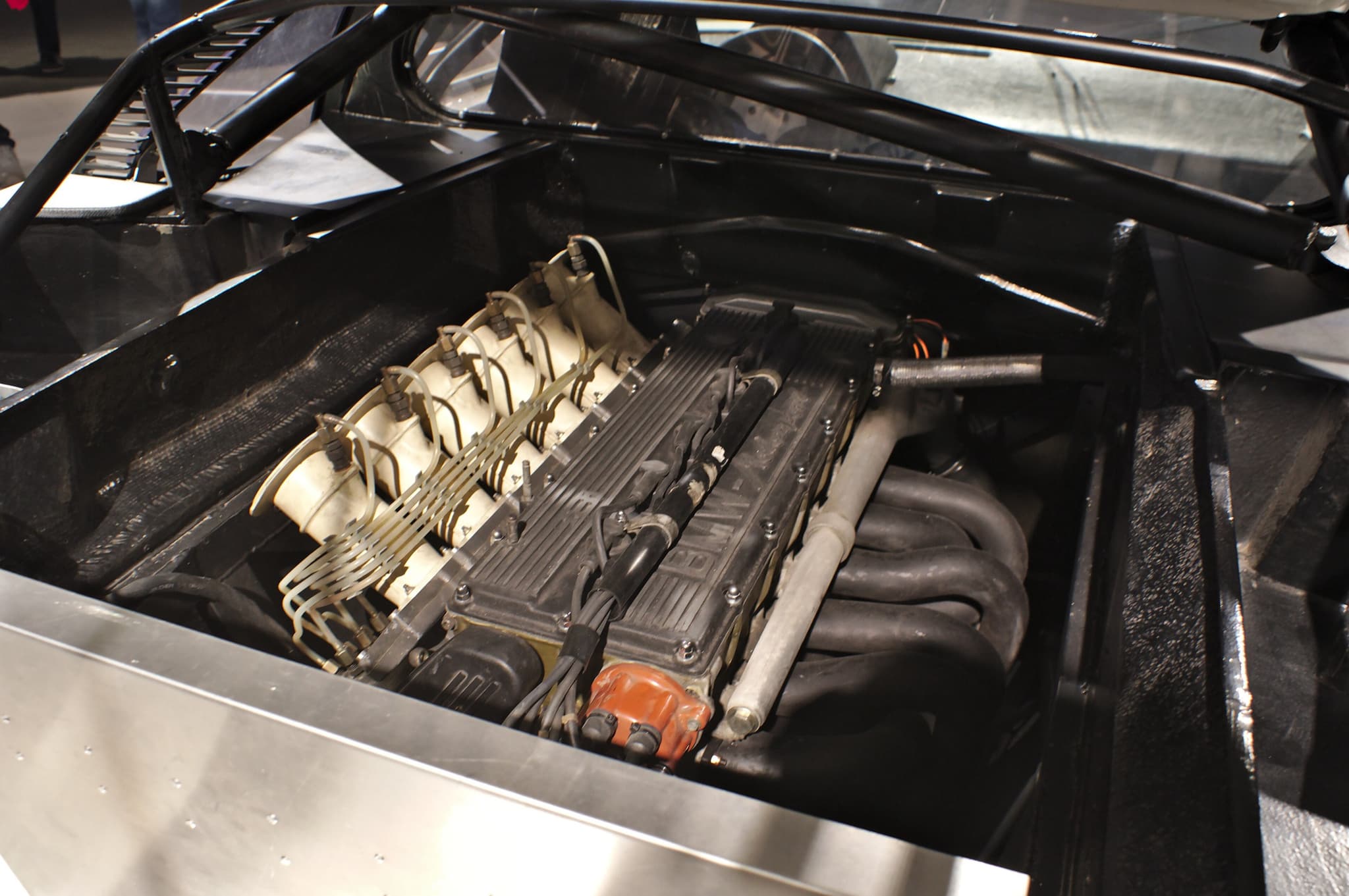
The M1's engine is the M88, a straight six with four valves per cylinder, Kugelfischer mechanical injection and a dry sump, developed by Paul Rosche's team at BMW Motorsport from BMW's production six and the cylinder heads of its racing CSLs. It powered the road cars and the Procars, and went on in the M635CSi and the M5.
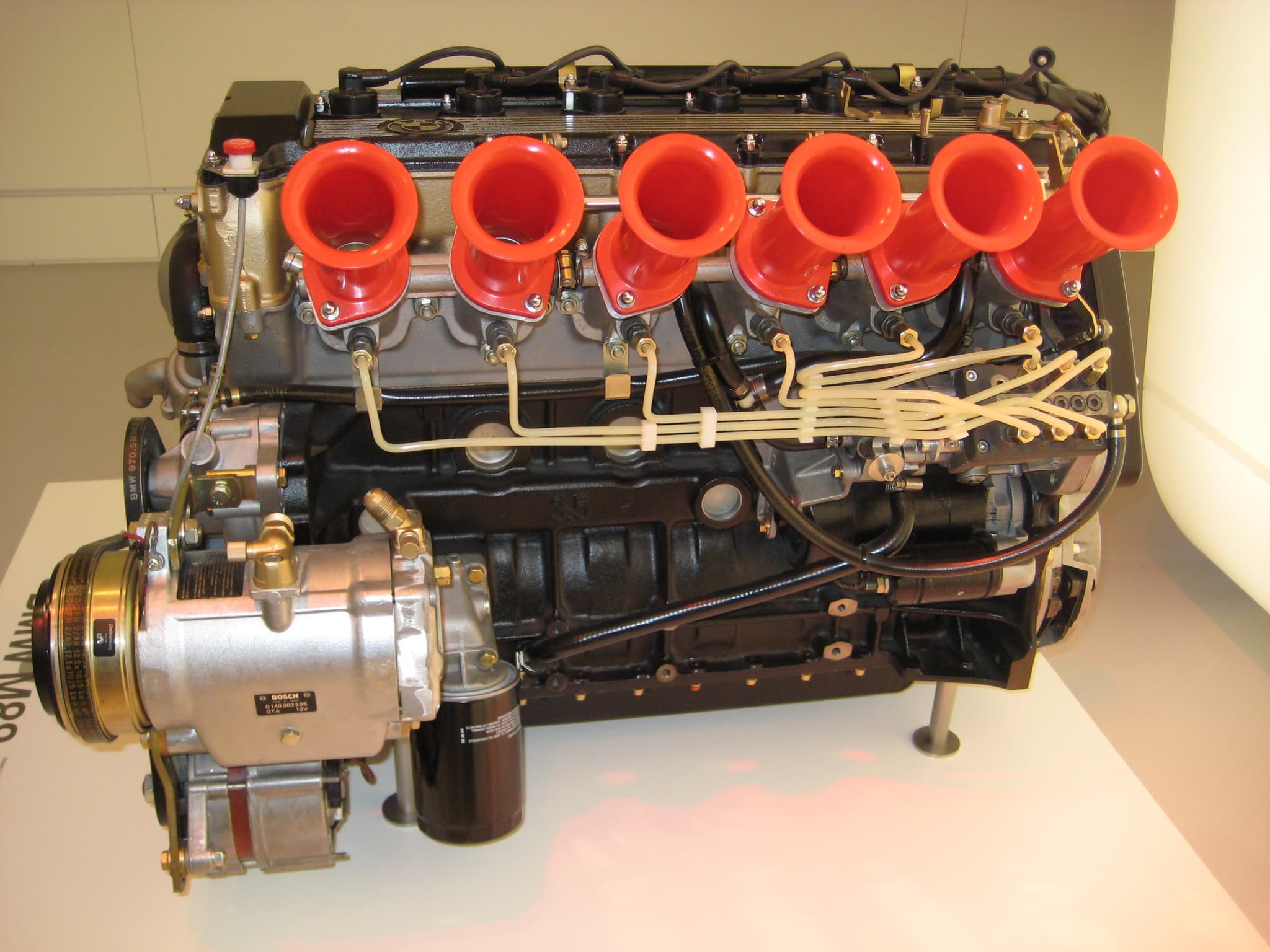
Before BMW Motorsport chose a six for the M1, it looked at 10 cylinders. Its studies for a Formula engine had produced a V10, the M81, and the team considered it for the coupé before deciding on a new straight six, on the strength of what BMW had learned from its sixes in the racing CSLs. That six, which BMW called the M88, is the M1's engine in every form that BMW built: the road car had it, the Procar raced it, March's and Sauber's Group 5 cars kept it without turbochargers, and after the M1 BMW put it into the M635CSi and the M5.source 1source 2source 3
A straight six
The M88's six cylinders stand in a single row, upright, with the engine mounted lengthways ahead of the rear axle and the gearbox (transmission) in line behind it. In BMW's saloons (sedans) the big six leaned to one side; in the M1 it stood straight, as it had in racing, and the dry sump, Roger Bell wrote, "allowed the tall, upright engine to be sunk deep into the chassis". Jeremy Walton, testing the car for Motor Sport in 1981, saw little room for doubt over the layout: with the CSL's four-valve six already proven, "there was little choice but to use a straight six motor of known pedigree". Richard Heseltine wrote in 2008 that the proposal put to BMW's board in 1976 had named a V10, and that it was dropped to save money. Not every driver was pleased with the choice. Christian Danner, who raced a Procar in 1980, remembered:
The only trouble was it didn't have a 12-cylinder engine, which people had expected. The sole racing unit they had available was that straight six, which is a really stupid engine.
Paul Rosche and BMW Motorsport
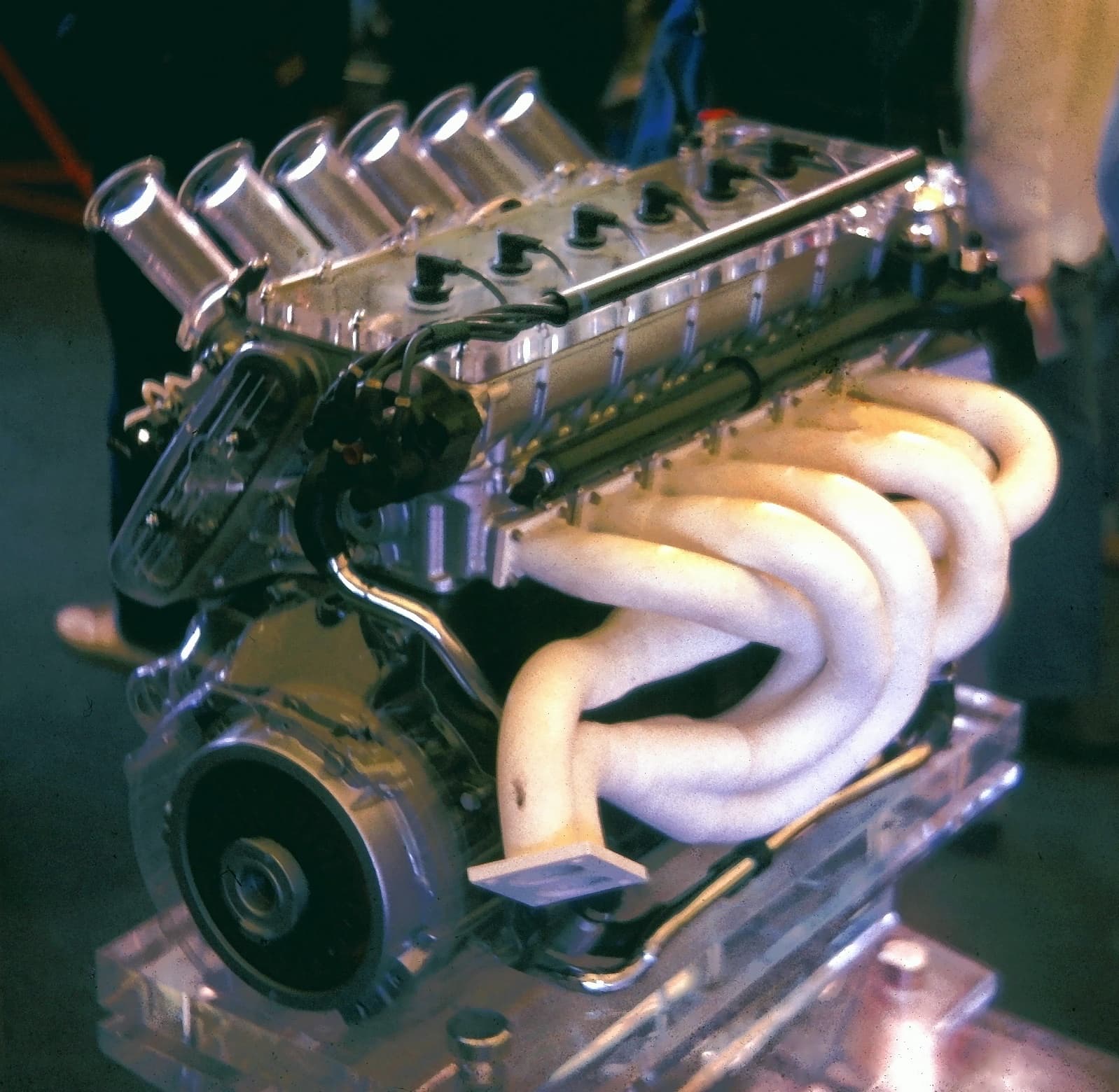
The engines came from BMW in Munich, and Baur, which assembled the cars in Stuttgart, fitted them with the rest of the mechanical parts. The man in charge of them was Paul Rosche, whom Motor Sport named in January 1979 as the man in charge of BMW's racing engines. BMW's notice of his death, in November 2016, gives his birth in Munich in 1934 and his title at BMW Motorsport from 1975: head of design of the M1's production and racing engines. Walton put the work down to a team:
In fact engineer Paul Rosche and a small Motorsport team effectively developed a new version of the famous BMW big six.
A.H., writing in the same magazine in 1984, added that Rosche was "the man who went on to build the four-cylinder turbocharged Formula I engine".source 2source 7source 8source 9source 1source 10
Where it came from
The block's dimensions came from BMW's production cars, and Walton spelled out what that meant:
It has the 93.4 mm. bore and 84 mm. stroke you find within the two valve 3,453 c.c. 635 CSi or 735i, or M535i, but fundamentally differs from any other BMW road six.
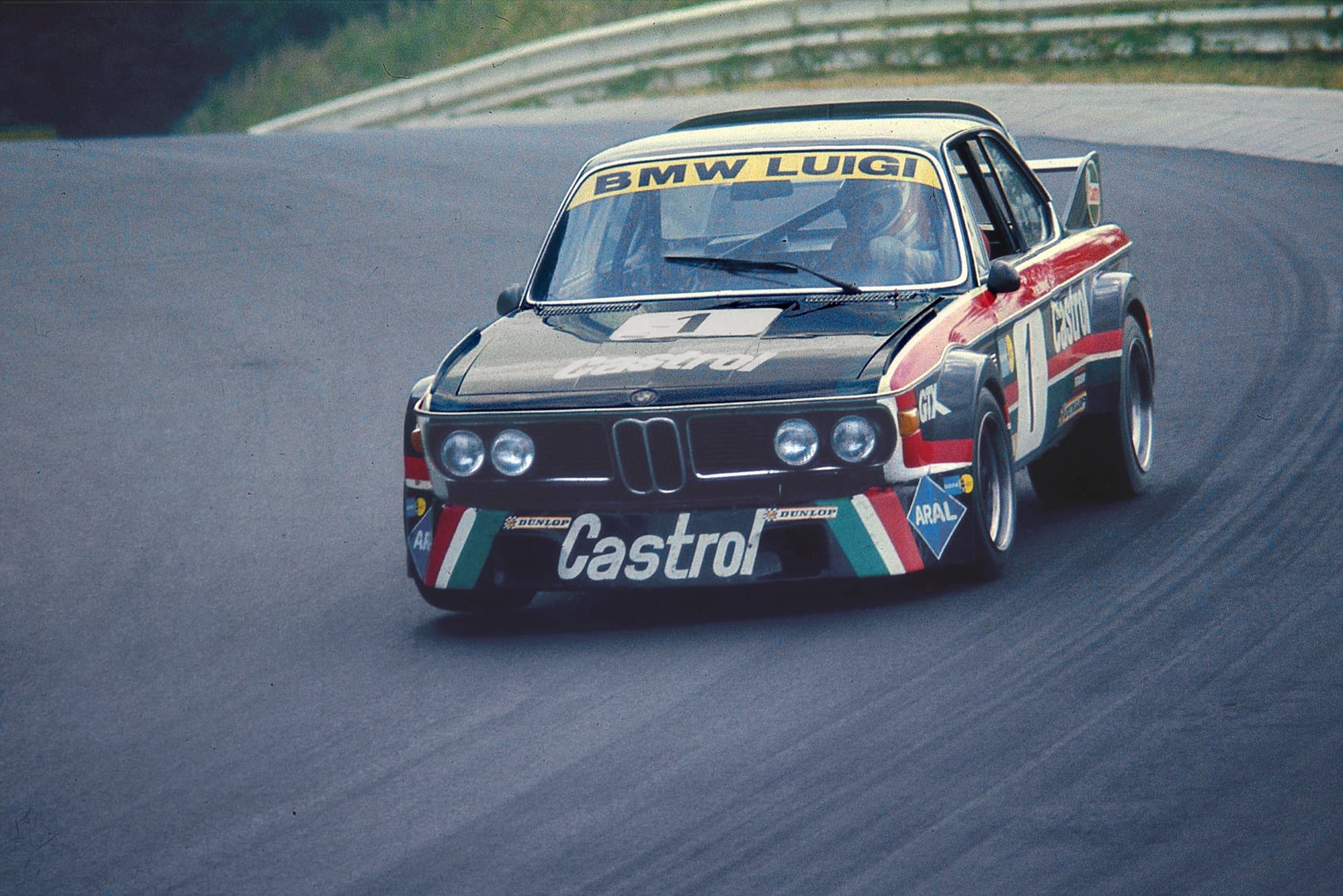
The top end came from racing. Walton wrote that the four-valve head had been developed "in 3.2 litre 1976 guise for the classic CSL coupe driven three times by Ronnie Peterson"; with a turbocharger, that engine put Peterson and Nilsson's CSL on the front row at Silverstone in May 1976. The M1, Walton added, was to have had a turbocharged version from the start. Heseltine names the six it was developed from as the M49, and wrote in 2007 that the CSL had taken six European touring car titles by 1979.source 2source 11source 1source 5source 12
How it works
Inside, the M88 has a new steel crankshaft and connecting rods, Mahle pistons, and a cylinder head in two pieces: the lower one holds the combustion chambers and the water jacket, the upper one the camshaft bearings and the bucket tappets. A double roller chain drives the two overhead camshafts, and Walton explained why that mattered to a racing engineer:
This is not a full race four valve top end, for the double overhead camshafts are chain-driven, not gear driven as is BMW's Formula 2 and six cylinder racing practice, besides the obvious valve size and camshaft timing differences.
Fuel goes in through Kugelfischer mechanical injection and six individual throttles of 46 mm, in three twin-throttle manifolds with two inlet ports of 26 mm for each cylinder. A Magneti-Marelli contactless ignition, triggered from the flywheel, fires it. The dry sump has a triple scavenge pump beside the crankcase, and the pressure pump sits in the oil tank. Walton set its output against BMW's other big sixes of the day: the same capacity gave 218 bhp in two-valve form in the 635CSi, and the turbocharged 3.2-litre six of the 745i 252 bhp. On the road it pulls from low speeds, and Heseltine found that it "comes on cam" at 3,500 rpm. Bell found the M1's engine "a model of muscular flexibility"; Walton heard "a very hearty blare from behind the driver's head", and A.H. "a pleasant metallic ring to its exhaust note". The specifications give its power and torque.source 2source 8source 1source 4source 5
The race engines
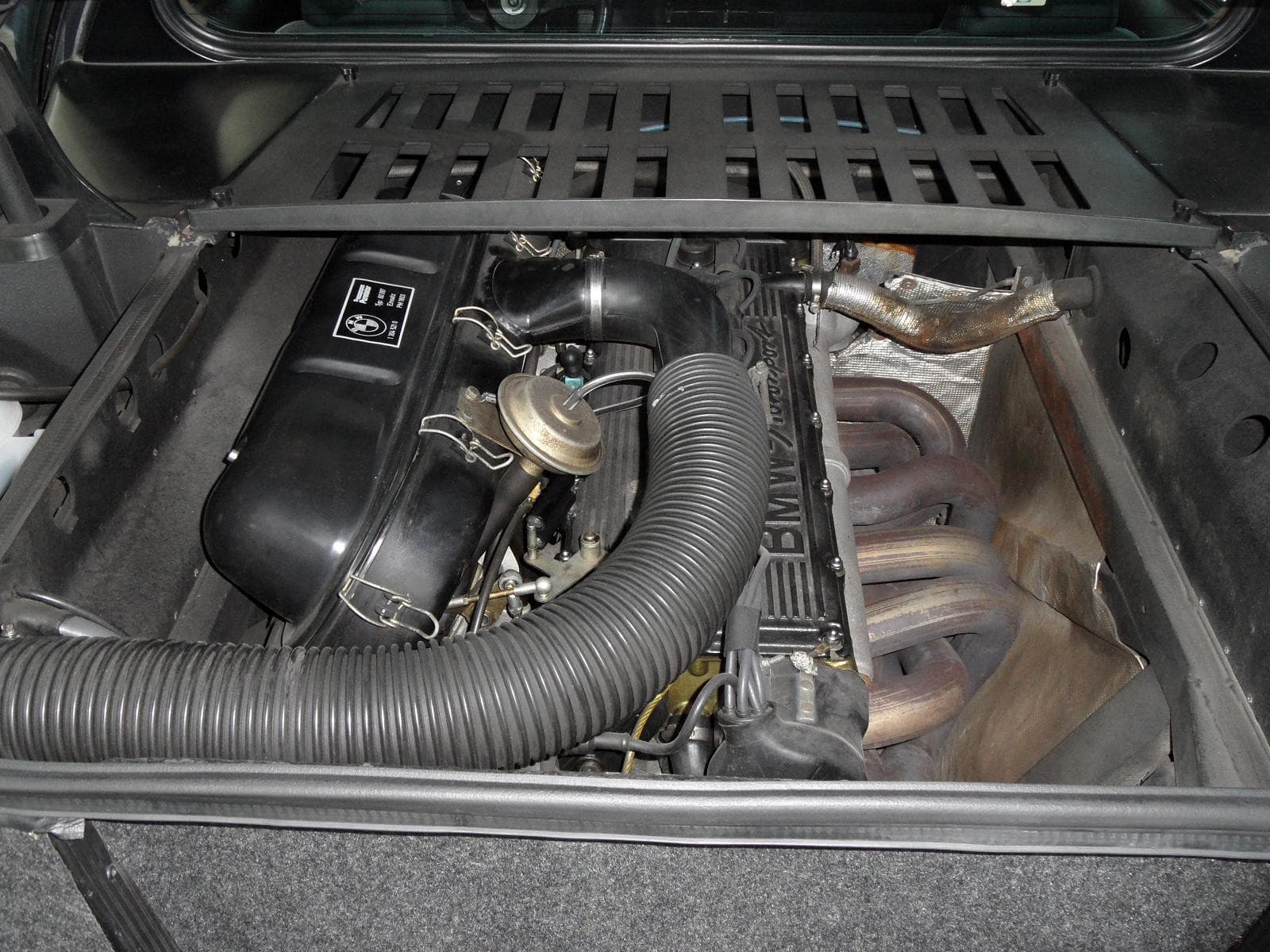
For the Procar BMW Motorsport bored the six out and gave it new camshafts, bigger valves, forged pistons, reworked ports and slide throttles where the road engine had butterflies, and an oil cooler went into the nose. In December 1978 BMW planned about 100 of these engines for the first season's cars, shared among its own engine shop, Osella, Heidegger and Mader. Danner, who raced one, found the racing six heavy, with "masses that you had to move to get revs", so that "it took forever for the revs to come up", though "It had good torque".
The turbocharged engines came later and from other hands. BMW's plan of 1978 was for Rosche's 3.2-litre turbocharged six in the March Group 5 car, but the March car raced with the normally aspirated engine, and the turbocharged racing M1 in the sources read is Schnitzer's of 1981, whose six had two KKK turbochargers and was bored smaller than the road engine. BMW's account of 2008 gives the first Group 5 M1s normally aspirated engines of almost 500 bhp, with up to 800 Nm and a Hewland gearbox, and says later engines with two turbochargers gave "up to 1,000 bhp"; its Group 5 description gives up to 850 bhp for a turbocharged 3.2-litre six. It names no car for any of these figures. On 17 October 1981 Harald Ertl's M1 set a speed record at Ehra-Lessien running on liquefied petroleum gas, with two KKK turbochargers and, by Motor Sport's later account, "something in the region of 410bhp".source 1source 7source 6source 13source 14
After the M1
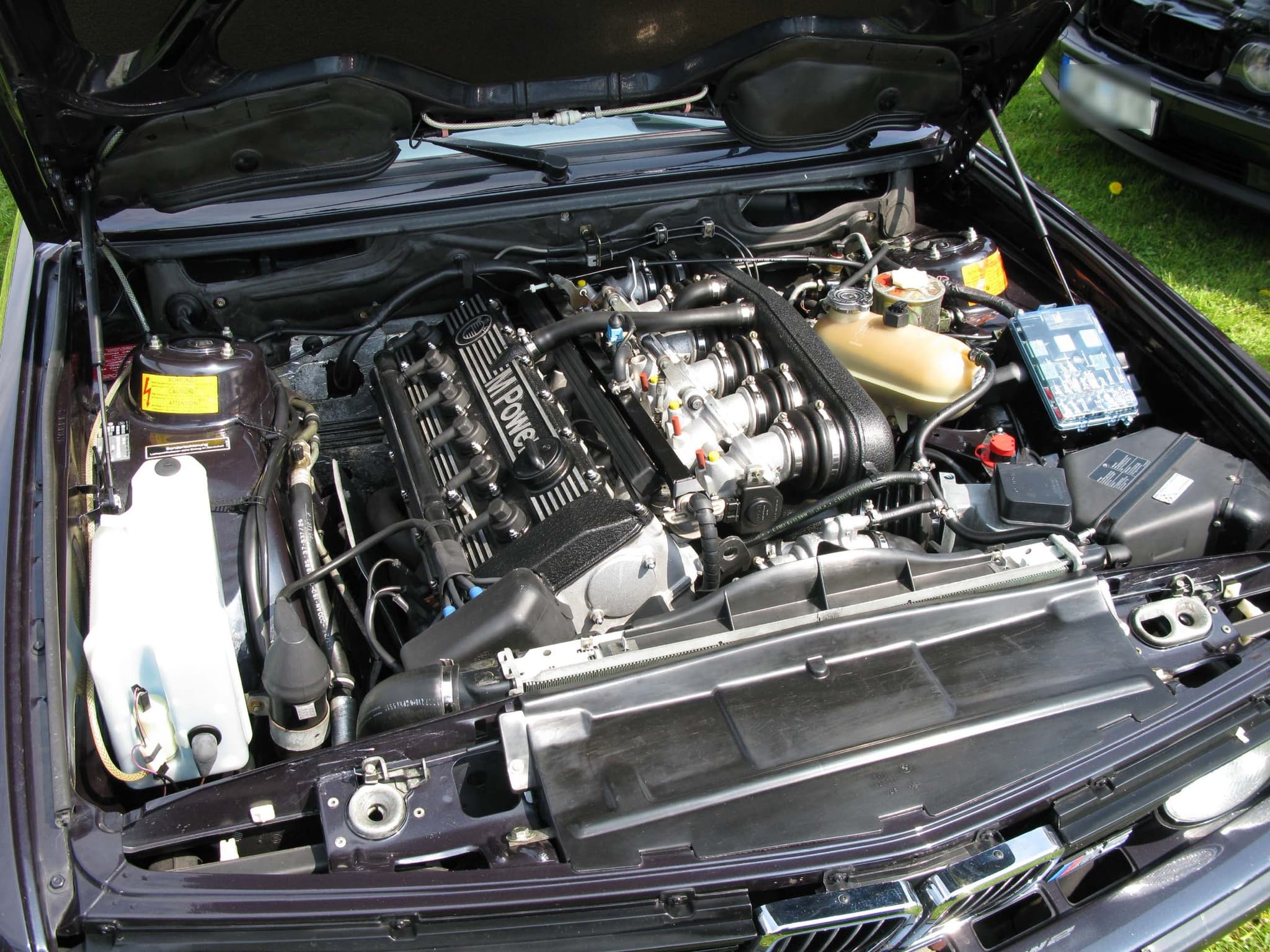
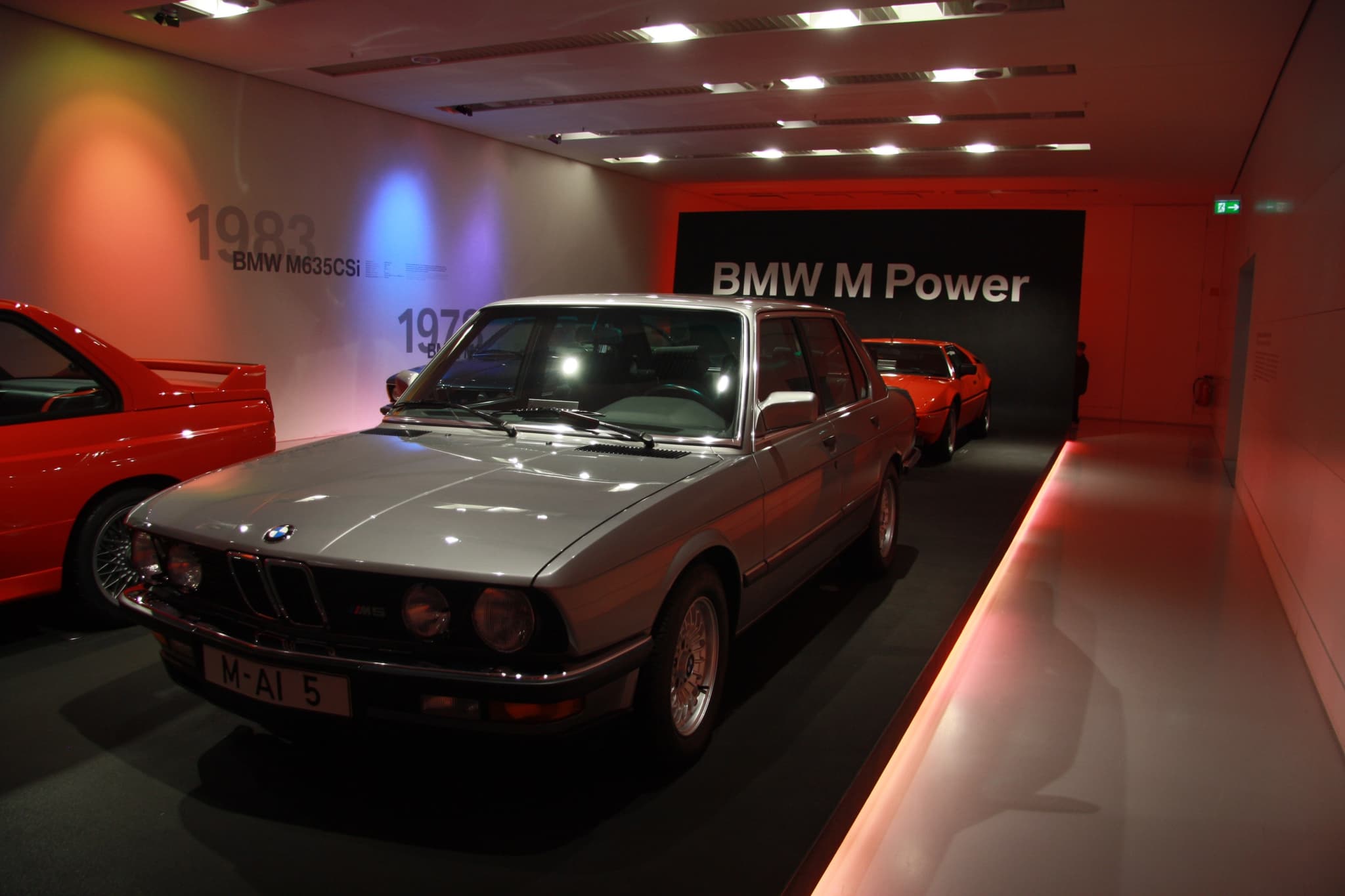
The four-valve six outlived the M1. In 1984 BMW Motorsport put it into two cars of BMW's range, the M635CSi coupé and the M5 saloon, as BMW recalled in 2008, and the same history says that the M5 marked the birth of the "Businessman's Express". Motor Sport, previewing the coupé for the Frankfurt show of September 1983, called its engine "similar to that fitted in the M1", and found Bosch Motronic injection on it when it drove the car in 1984; its road test of the M5 in 1986 was glad of the engine:
Happily, the four-valves per-cylinder 3.5-litre engine has continued to find a home beneath the bonnet of the fastest remaining BMW saloons and coupés.
In South Africa BMW built a 745i with the same 24-valve six from 1984 to 1986, in place of the turbocharged engine used elsewhere.source 1source 15source 16source 17source 18
The engine numbers
The BMW M1 Register's table enters an engine number for most serials, from M88-04 to M88-490, and how many were made explains them, duplicates included. How many M88s were built, no source read says.source 19
Sources
Sources are given as plain text; their addresses are on the sources page.
- Primarymade at the time, by the maker or by people who were there
- Referenceserious later work: clubs, specialists, magazines, books
- Databaseresults and listings, entry by entry
- BMW AG (BMW Group PressClub USA), "Icons for Connoisseurs – Thirty Years of the BMW M1" (press release), 27 Mar 2008, the engine section: the M81 ten-cylinder studied, the choice of a new straight six, "Code-named the M88"; the M635CSi and M5 of 1984; the engine section: fitted lengthwise ahead of the rear axle; the M81 V10 at 144°; Baur fitted the mechanical systems; the engine section: based on the production six, with the four-valve head of the CSL racing engines; the engine section: the two-piece head, the camshaft chain, the injection and throttles, the ignition and the dry sump; "Technical Description BMW M1 Group four / Group five"; the Group 5 text; the M635CSi and the M5 of 1984; the "Businessman's Express". Primary
- Jeremy Walton ("J.W."), "Road Impressions: BMW M1", Motor Sport, Apr 1981, p. 83, p. 83, "this M88-coded unit"; p. 83, the upright six; "a straight six motor of known pedigree"; p. 83, the quotation; p. 83, the bore and stroke, the quotation; the four-valve head of 1976; the turbocharged six planned for the M1; p. 83, the crankshaft, rods and pistons; the chain drive, the quotation; the comparison with the 635CSi and the 745i; the sound. Primary
- racingsportscars.com, Race, results and car-data pages with BMW M1 entries, 1979–86 (group), the March and Sauber Group 5 cars' engines. Database
- Roger Bell, "Discovering BMW's lost leader", Motor Sport, Jul 1997, p. 88, p. 88, the dry sump and the upright engine; p. 88, the Marelli ignition; "a model of muscular flexibility". Reference
- Richard Heseltine, "BMW M1", Motor Sport, Mar 2008, p. 134, p. 134, the V10 in the proposal of 1976, dropped on cost; p. 134, the M49; p. 134, the engine on the road. Reference
- Motor Sport, "Retrospective: BMW Procar" ("Race of champions"), Jan 2017, p. 98, p. 98, Christian Danner, the quotation; p. 98, Danner on the racing six. Reference
- Clive Richardson ("C.R."), "BMW's Racing Plans", Motor Sport, Jan 1979, p. 54, p. 54, Rosche in charge of BMW's racing engines; p. 54, the engine builders and the turbocharged plan. Primary
- Alan Henry ("A.H."), "M1 Magic", Motor Sport, Dec 1984, p. 76, p. 76, Rosche and the Formula 1 engine; p. 76, the Mahle pistons; the exhaust note. Primary
- BMW Group (PressClub Global), "BMW Group mourns the loss of Paul Rosche" (press release), 16 Nov 2016, his birth in Munich, his move to BMW Motorsport in 1975 and his death. Primary
- CAR, "Brain and brawn in BMW's best", Mar 1979, the engines direct from BMW in Munich. Primary
- Motor Sport, "The British Silhouette Round Goes To The Home Team … Just", Jun 1976, p. 56, p. 56, the turbocharged CSL on the front row at Silverstone, May 1976. Primary
- Richard Heseltine, "BMW 3.0 CSL", Motor Sport, Jan 2007, p. 64, p. 64, the CSL's six European titles, 1973–79. Reference
- touringcarracing.net, Season car pages, "1978 Cars" to "1981 Cars" (group), "1981 Cars", Schnitzer's M1 Turbo and the Sauber M1. Database
- Graham Keilloh, "The land speed record-breaking BMW M1", Motor Sport (motorsportmagazine.com), 12 Apr 2019 (online), the record car's engine and the record of 17 October 1981. Reference
- Motor Sport, "BMW Supercar", Sep 1983, p. 48, p. 48, the M635CSi's engine "similar to that fitted in the M1". Primary
- M.L.C., "BMW's M-powered Coupe", Motor Sport, Mar 1984, p. 56, p. 56, the Bosch Motronic injection. Primary
- Motor Sport, "Road Test: BMW M5", Oct 1986, p. 64, p. 64, the quotation. Primary
- Aaron Severson, "Turbo Before Its Time: 1980–1986 BMW 745i (E23)", page 2, Ate Up With Motor, page 2, the South African 745i. Reference
- BMW M1 Register, "VIN Table", the engine column, all rows. Reference