BMW M1 Interior
Inside the BMW M1: two seats, left-hand drive in every car, a plain black fascia and switches from BMW's saloons, as the testers of 1981 to 2008 found them; the Procar's stripped cockpit; and the details outside, from the pop-up headlamps to the two roundels on the tail.
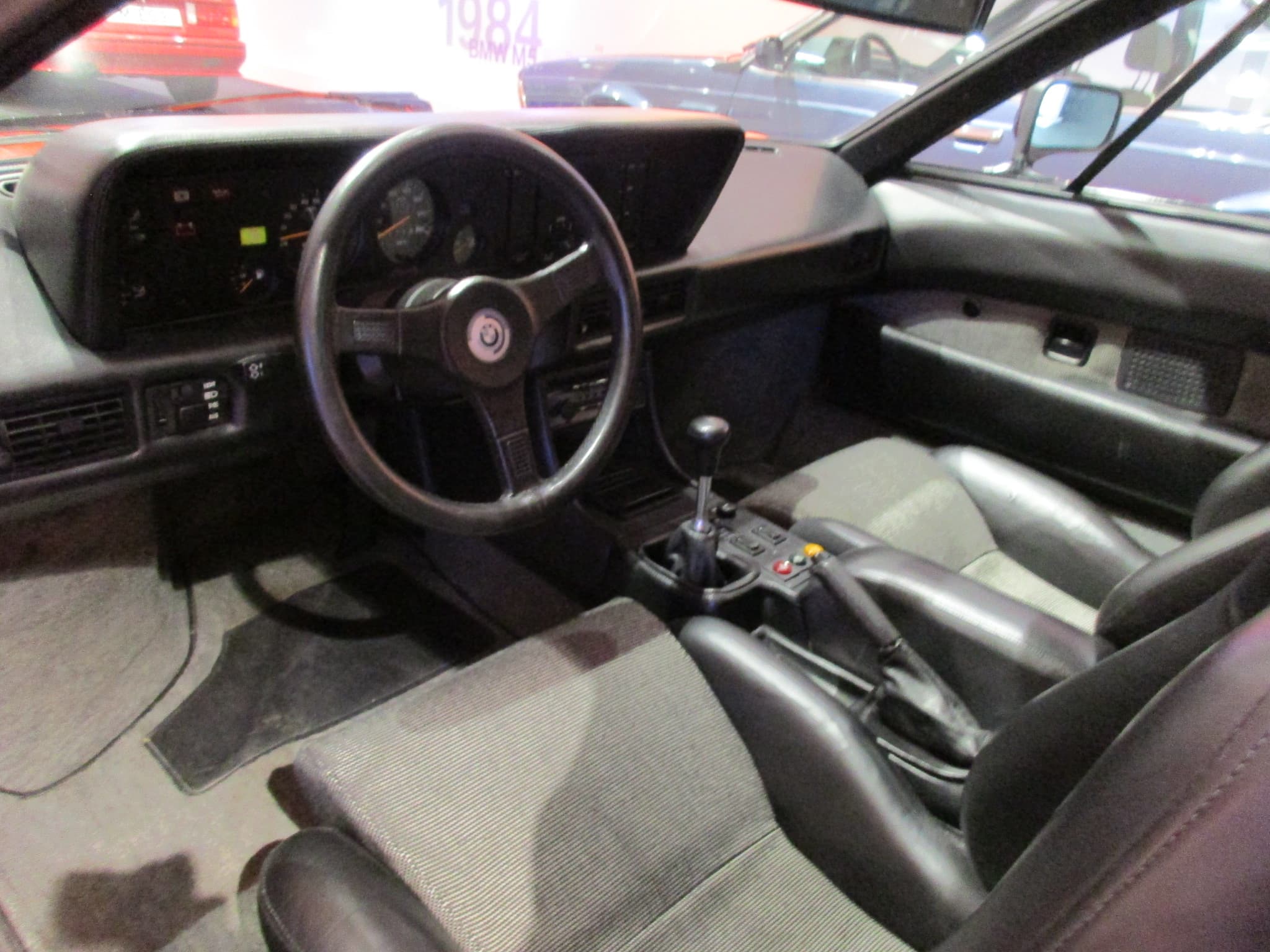
Jeremy Walton drove BMWs as a matter of course, and when he sat in an M1 for Motor Sport in 1981 he found that anyone who did the same "would recognise most of the furniture in this new home". The cabin is built for two, with the steering on the left in every car, and many of its switches came from BMW's saloons (sedans).source 1source 2source 3source 4
Getting in and sitting down
The door is long and the sill narrow, and Heseltine noticed first "the narrow sill which makes entry much easier than in most cars of this type". Inside, the front wheel arch pushes into the footwell, so the pedals sit towards the middle of the car, though Bell found them "properly aligned for heel-and-toe downshifting" and Walton had a firm rest for his left foot beside the clutch. Room is short at the top: A.H., in 1984, found "only just sufficient room for a six-foot-plus frame", with the top of the windscreen (windshield) "a matter of a few inches away from one's forehead". Bell needed fewer words:
You sit askew, legs pushed towards the centre by wheelarch intrusion, head brushing the roof.
The view forward is good, the front of the car falling out of sight. Behind, through the slats over the rear window, Walton found it "poorish", and the electric door mirrors helped with the view over his shoulder.source 4source 3source 1source 2
Seats and trim
The testers' cars had cloth seats with leather, or something like it, at the sides. Walton was not impressed by his:
Reclined in seats that look rather average in chequered cloth and heavy duty simulated leather surround, the M1 does not over-awe the occupants.
Bell's car, BMW (GB)'s own, had "half-leather trim", and Heseltine wrote that the seats were "originally offered in houndstooth cloth or leather". The museum car at the top of this page has black leather bolsters with striped cloth centres. With the engine and transaxle behind, Heseltine found "there isn't much room for rearwards adjustment". The trim drew polite verdicts. "Trim is neat, but not fabulous," wrote Walton; A.H. found it "businesslike and adequate without being in the least bit flashy", and Heseltine, after admiring the outside, that "the cabin proves a bit of a let-down".source 1source 3source 4source 2
Wheel, instruments and switches
The steering wheel is a flat three-spoke with a horn push in each spoke, on a column that adjusts for reach. Behind it, in the black fascia, two large dials stand side by side, the speedometer and the rev counter, and four smaller gauges in a black-and-white style that Walton had seen nowhere else in BMW's range, each with its needle pivoted at the side and reading upwards: oil pressure, oil temperature, water temperature and fuel. A green digital clock completes the set. Heseltine liked the speedometer better than its place:
A stylish Jaeger speedo that runs to 280km/h in increments of 40km/h is groovy; seeing all of it would be better.
Bell, too, found "the rather muddled and partially obscured instrument binnacle". The switches around the driver were BMW's own, the three-position light switch, the column stalks and the ventilation controls among them, all of them familiar to Walton from BMW's saloons.source 1source 5source 4source 3
Equipment
The testers' cars had electric windows and electric mirrors on both doors, and Walton's a Becker Mexico radio and cassette player; Bell, in 1997, counted "even a decent radio" among the car's "concessions to comfort". Air conditioning was available, as both Walton and BMW say, and Walton thought it might be needed: it "could well be necessary in a European summer behind that enormous windscreen". Whether it was standard on every car or an extra, no source read says.source 1source 3source 5
Luggage space
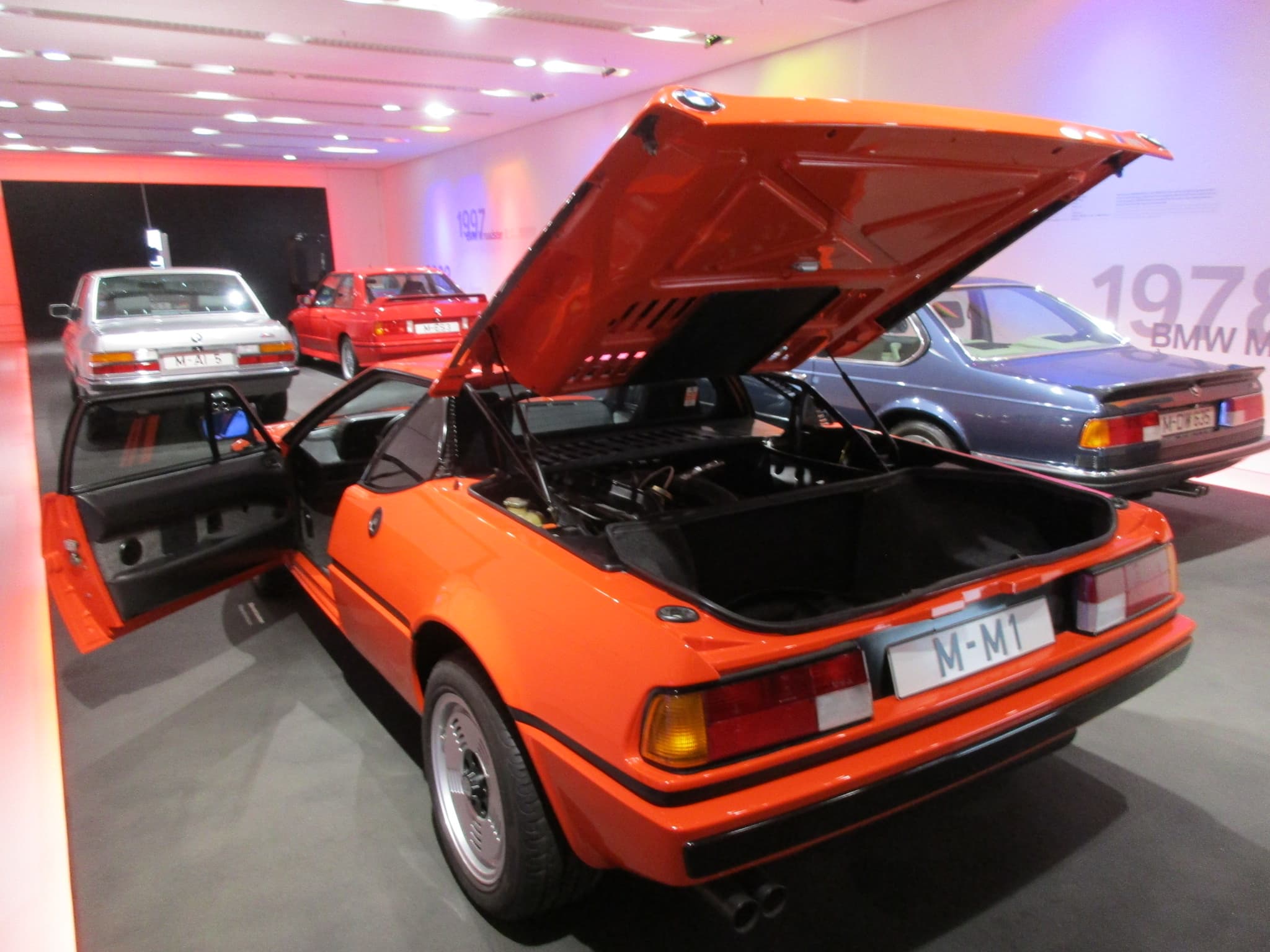
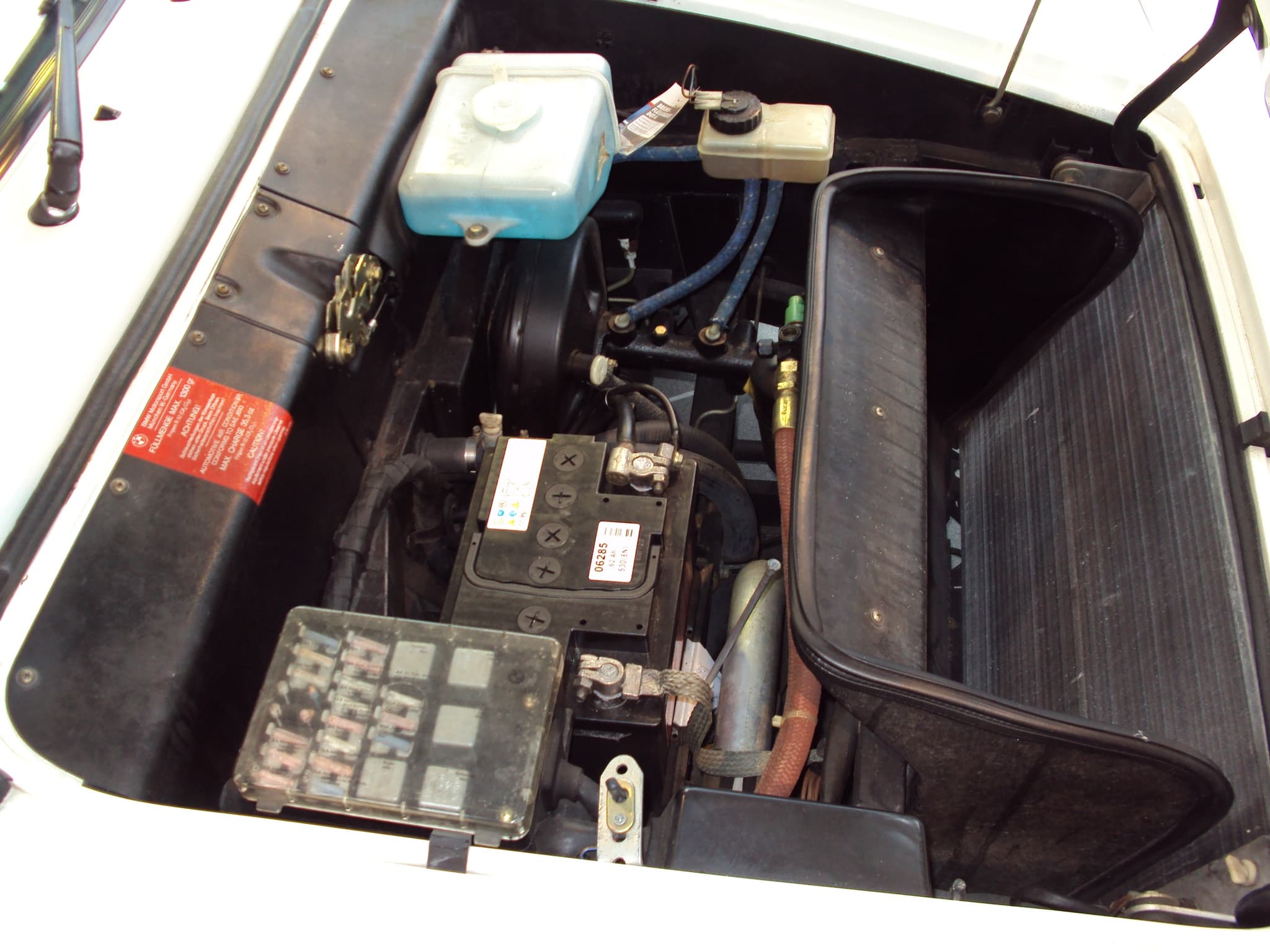
The M1 carries its luggage behind the engine, in what Walton called "minimal baggage space aft of the engine in a grey-carpeted area", under a rear deck that lifts in one piece, as the museum car shows. The front lid opens on what he called "a possible front baggage area dominated by a large cowl around the front radiator, battery and brake servo", with the fuses laid out there too and a lined tray beside them. No source read gives the luggage space in litres.source 1
Interior colours
The BMW M1 Register's table records each car's interior colour in a single German word, schwarz or braun, and nothing of the material or its pattern. Among the road cars numbered in BMW's series, by our count:
- Black
- 374road cars
- Brown
- 4road cars
- Not entered
- 8road cars, all built early in 1979
The four brown interiors went with two red cars, a blue one and a white one. Five of the works, pre-series and test cars had brown interiors too.source 6
The Procar's cockpit
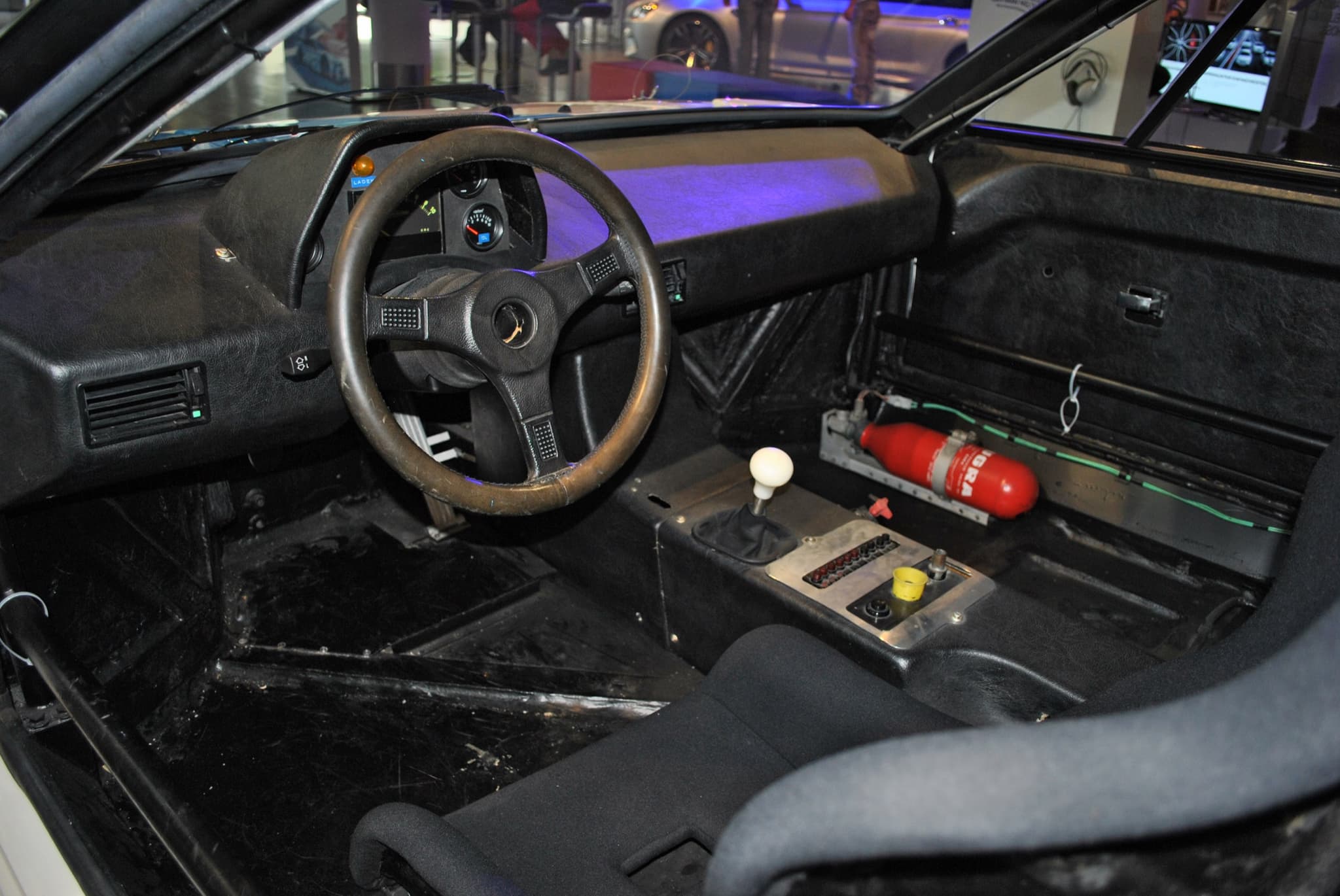
The Procar kept the road car's dashboard and binnacle and lost almost everything else, as the car in BMW's Berlin showroom shows: a racing seat with slots for a harness, a fire extinguisher plumbed in on the passenger side, a metal switch panel on the console and a short gear lever with a white knob, over a bare floor. It was light to steer; Christian Danner, who raced one in 1980, said "you could drive it with very little steering effort". It was also a small space for a tall driver: Alan Henry remembered Hans-Joachim Stuck, a six-footer, unfolding himself from it after a race in 1979. It was hot, too: "Physically, the M1 was not too bad. It's just hot. The engine is very close to you," Jan Lammers remembered in 2019.source 7source 8source 9
The details outside
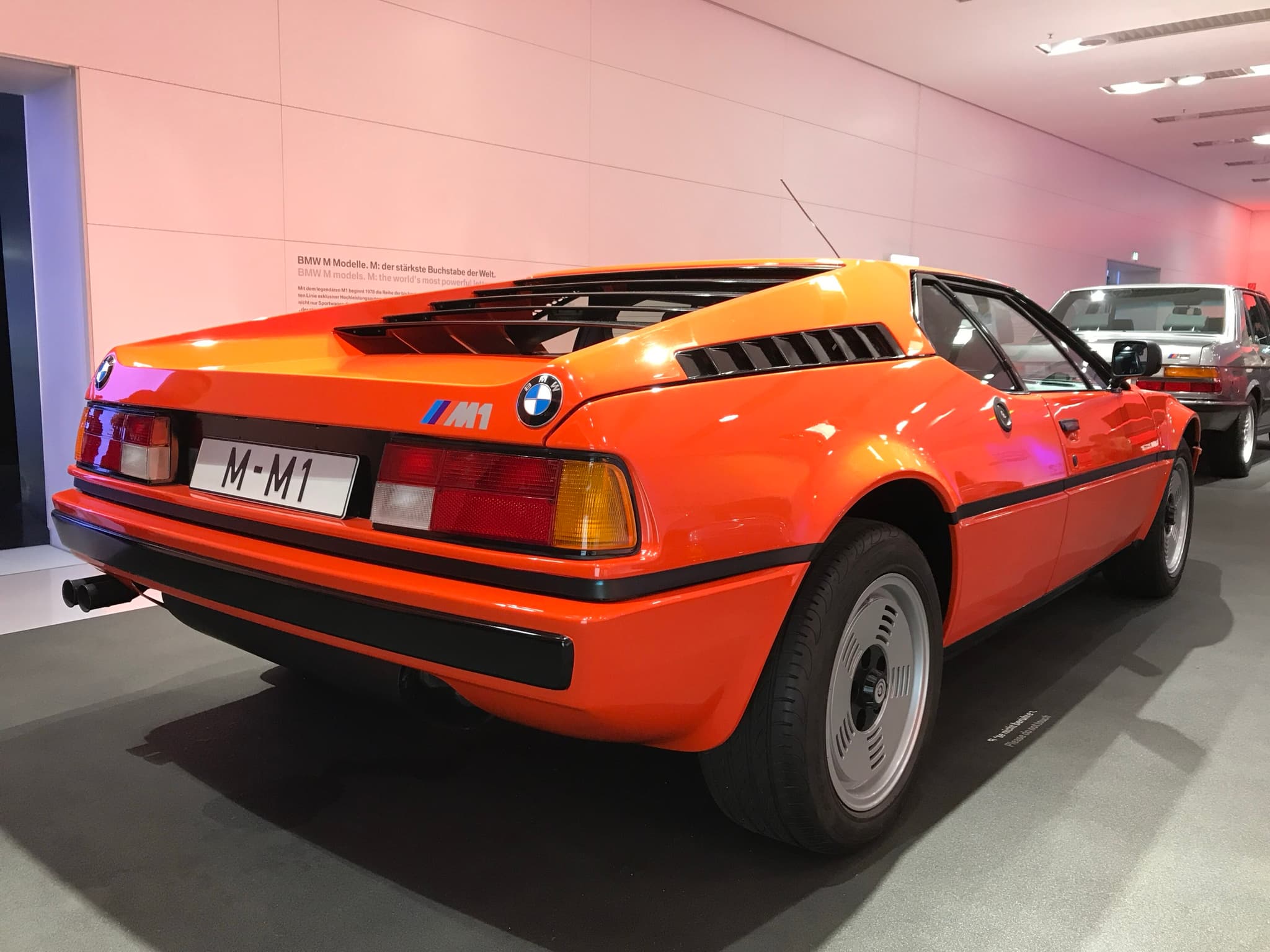
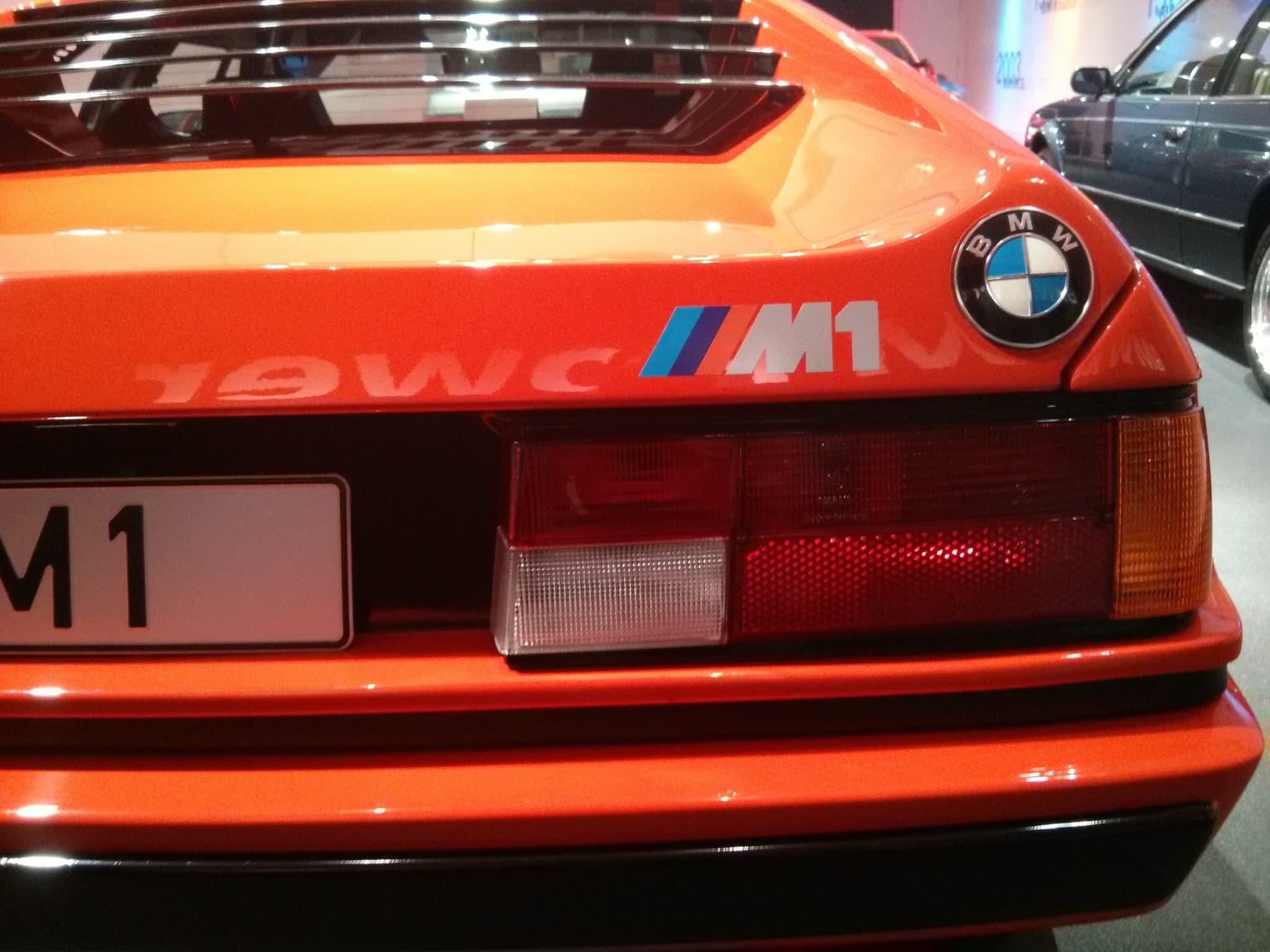
The headlamps fold away into the nose, "the efficient pop-up lamps", Walton called them, and he used the "little lamps stuck in the ends of the front grille" to flash slower traffic on the autobahn. Between them sit BMW's two kidney grilles, small and low. At the back there are two BMW roundels, one on each corner above the tail lamps, besides the one on the nose, and an M1 badge in the M colours; slats cover the rear window, "Miura-like", Bell wrote, and louvres run along the buttresses behind the doors. Each of the two fuel tanks has its own filler, the tanks "filled by separate orifices on either flank of the flying buttress roofline", and Walton counted the tail lamps among the parts BMW took from its saloons. The wheels divide the testers: Heseltine admired the Campagnolos, and Bell called them "Ugly Campagnolo alloy wheels".source 1source 3source 4source 10
Sources
Sources are given as plain text; their addresses are on the sources page.
- Primarymade at the time, by the maker or by people who were there
- Referenceserious later work: clubs, specialists, magazines, books
- Jeremy Walton ("J.W."), "Road Impressions: BMW M1", Motor Sport, Apr 1981, p. 83, p. 83, the cabin, "the furniture in this new home"; p. 83, the foot brace; the view out; p. 83, the seats, the quotation; "Trim is neat, but not fabulous"; p. 83, the wheel, the instruments, the clock and the switchgear; p. 83, windows, mirrors, the radio and the air conditioning, the quotation; p. 83, the luggage space behind the engine and in front; p. 83, the pop-up lamps and grille lamps, the rear slats, the fuel fillers, the tail lamps. Primary
- Alan Henry ("A.H."), "M1 Magic", Motor Sport, Dec 1984, p. 76, p. 76, the left-hand-drive car in Britain; p. 76, the headroom; p. 76, the trim. Primary
- Roger Bell, "Discovering BMW's lost leader", Motor Sport, Jul 1997, p. 88, p. 88, the cabin of BMW (GB)'s car; p. 88, the pedals; the quotation; p. 88, "half-leather trim"; p. 88, the binnacle; p. 88, "concessions to comfort"; p. 88, the slats and the wheels. Reference
- Richard Heseltine, "BMW M1", Motor Sport, Mar 2008, p. 134, p. 134, the cabin; p. 134, the long door and narrow sill; p. 134, the seats as offered, their adjustment, the cabin; p. 134, the Jaeger speedometer, the quotation; p. 134, the Campagnolo wheels. Reference
- BMW AG (BMW Group PressClub USA), "Icons for Connoisseurs – Thirty Years of the BMW M1" (press release), 27 Mar 2008, "Specifications BMW M1 – production model": the column adjustable for reach; air conditioning available. Primary
- BMW M1 Register, "VIN Table", the interior column, all rows (our count). Reference
- Motor Sport, "Retrospective: BMW Procar" ("Race of champions"), Jan 2017, p. 98, p. 98, Christian Danner on the steering. Reference
- Alan Henry, "Procar: When current F1 champs went tin-top racing" ("Procar – the ultimate one-make racer"), Motor Sport, Jul 1997, p. 94, p. 94, Hans-Joachim Stuck after a race in 1979. Reference
- Motor Sport, "Great Survivors", Dec 2019, p. 87, p. 87, Jan Lammers on the Procar. Reference
- BMW Group (BMW of North America, PressClub USA), "Heritage as inspiration: BMW M1 Homage" (press release), 28 Apr 2008, the M1's twin emblems at the rear, above the tail lamps. Primary