BMW M1 Buyers Guide
What to check on a BMW M1: which car it is, through its chassis, engine and Serie numbers and the Register's table; the Procar and racing histories that can attach to a serial; the mechanical points the testers and a restorer have described; and imports, conversions, parts and a checklist.
Which car is it?
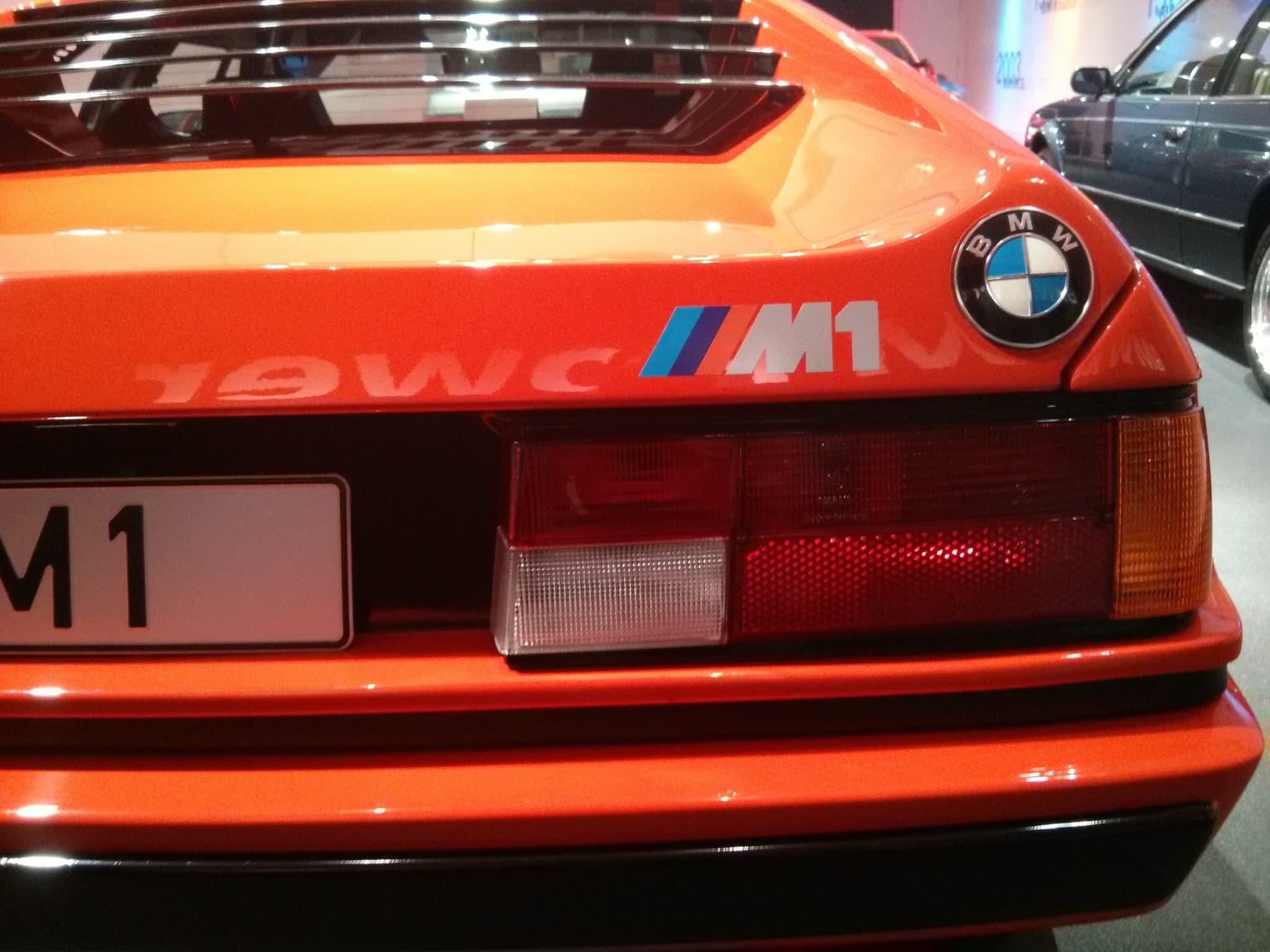
Three numbers identify an M1. The chassis number ends in the car's serial, between 4301001 and 4301460; the engine number has the form M88 followed by a number; and a road car also has its place in BMW's road-car series, its Serie number. The BMW M1 Register's public table lists every serial with its engine number, its colours, its dates at Italdesign, Baur and BMW, its category and its first delivery, so a car's numbers, colours and kind can all be checked against it; a car repainted from its first colour shows against the table's entry. The table is compiled and states no sources, so a difference from it is something to look into. It also shows nine engine numbers entered against two serials each: an engine number that appears elsewhere in the table does not on its own make a car false.
BMW Group Classic, the company's heritage arm, has issued a digital birth certificate from the BMW Group archive since early 2024. Its order form asks for the chassis, engine and gearbox (transmission) numbers and for proof of ownership, and BMW says the detail it gives varies with the model and the car's age. How many were made explains what the serial, Serie and engine numbers record.source 1source 3
Procar and racing histories
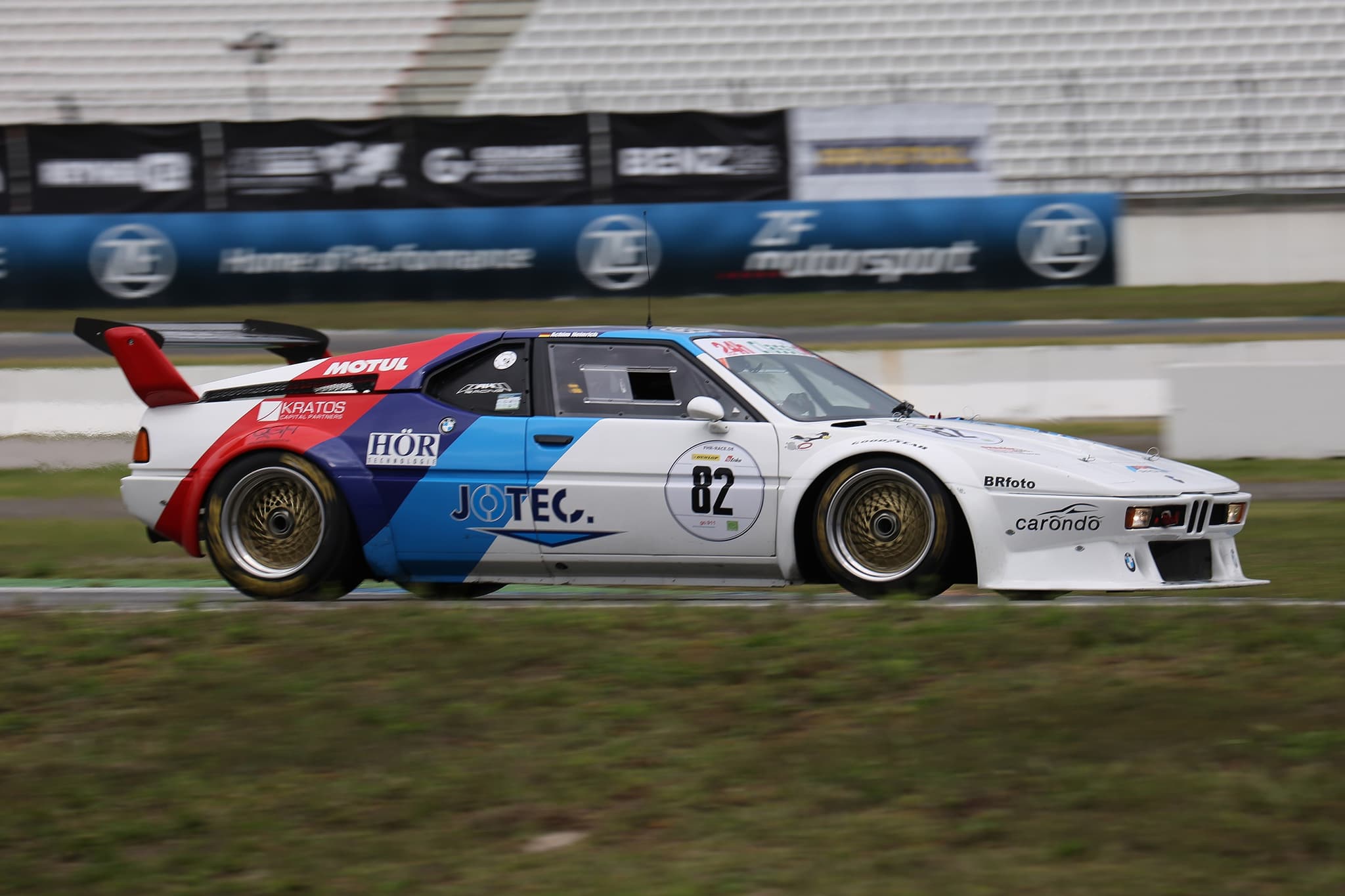
A serial alone does not say what a car has been. The Register marks a run of serials PROCAR and two more "PROCAR Test", and the six at the end of the sequence are spare bodies, sent in February 1981 to BMW, to the dealer group AHG of Bielefeld, to Schnitzer and Heidegger, and two to Seeger & Hoffmann. The Procars were built outside BMW, by Project Four, Ron Dennis's firm at Woking, by Tom Walkinshaw at Kidlington and by Osella in Turin, and each went back to BMW to be tested and set up. Race results do not always settle which car was which: racingsportscars gives some entries as "or" between two serials, and among its Procar entries of 1980 is a serial the Register gives to a road car.source 1source 4source 2
The mechanical points
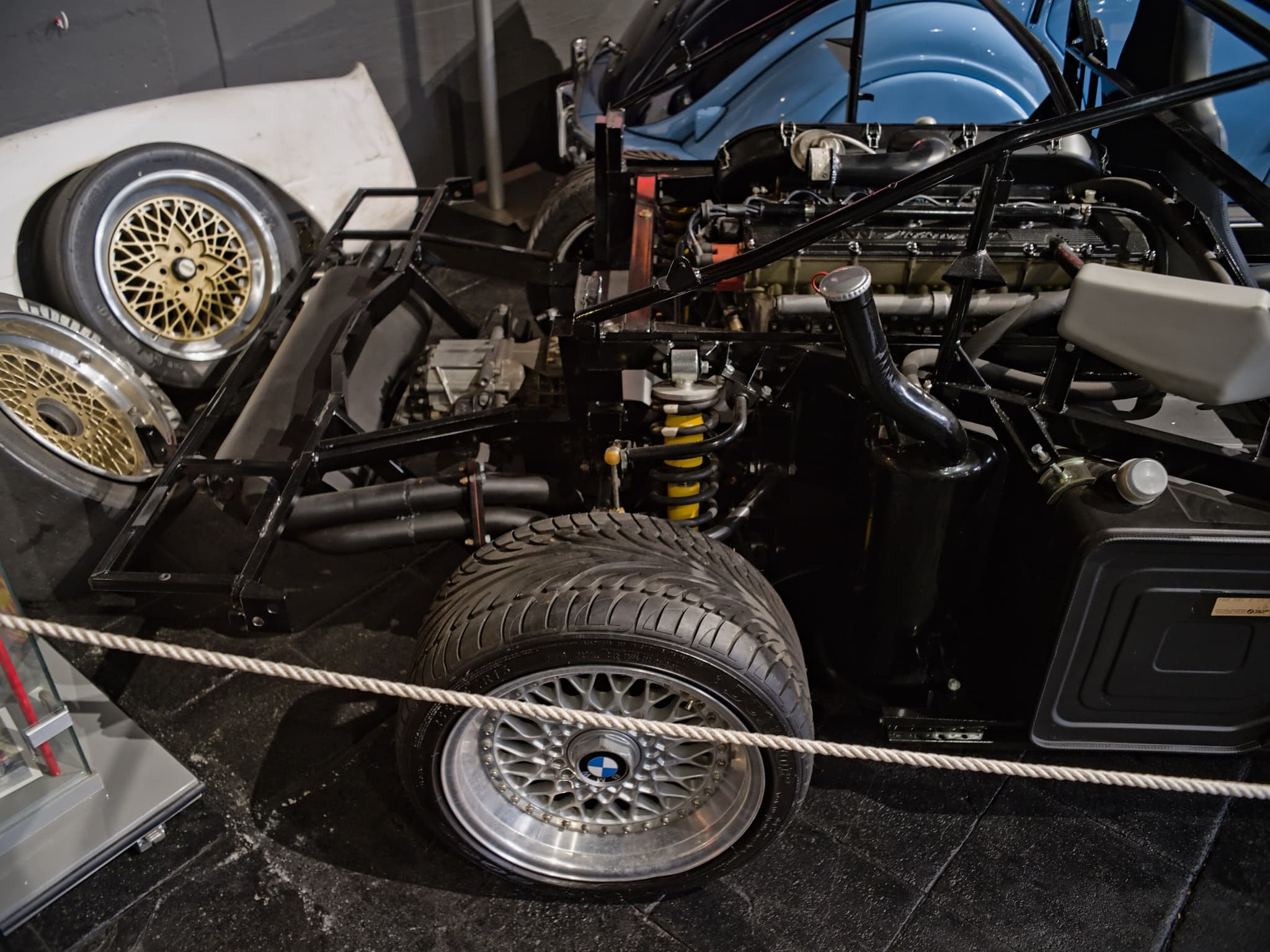
The engine is the M88 six, with Kugelfischer mechanical injection through six throttles, a dry sump with its own oil tank and Magneti-Marelli electronic ignition; the engine has the detail. It starts without ceremony: "there's no priming as it's all sorted by Kugelfischer-Bosh mechanical fuel injection", Heseltine found in 2008, and Bell's car "fires immediately, hot or cold"; idling in traffic and then accelerating, Walton found, "does not cause hiccups". On the winter drive he reported in April 1981, Walton saw an oil pressure of about 7 bar and the oil at 90 °C (194 °F), the water some 20 degrees cooler. No source read describes how the injection wears or how it is set up. A restorer's film shows the work on one car:
Iain Tyrrell found the cylinder that was misfiring by the temperature of each branch of the exhaust manifold, fitted new plugs ("these engines eat spark plugs if they're started and shunted round", he said) and new injection pipes from BMW, balanced the throttles and warmed the engine before driving the car, as he advises.
On the ZF gearbox, first gear sits on a dog-leg, left and back. A.H., in 1984, found the change from first to second the only awkward one, Bell found the shift "a mite clumsy" around town and "marvellously crisp" at full attack, and Walton learned to have the clutch right down before choosing reverse, "or an embarrassing grunt from the gearbox would result". The clutch, a hydraulic Fichtel & Sachs twin-plate of "comparatively small diameter" in Walton's words, is where the testers part company. Walton, in 1981, found it "tiresomely long in travel and consciously heavy to operate"; Heseltine, in 2008, did not:
Biting towards the end of its movement, the clutch is surprisingly light while biasing on the dog-leg ZF 'box is strong, and requires a gentle push until warm.
Of the later drivers, Brenwin Naidu of TimesLIVE in 2016 and Shane O'Donoghue of completecar.ie in 2020 both found it heavy.
Under the body, 20 glass-fibre panels moulded by T.I.R. and bonded and riveted to the frame, is a lattice of rectangular steel tubes. Walton found the panels "quite heavy, durable", with nothing of "the glassfibre horrors" of other cars, while Motor Sport's report of BMW's racing plans in January 1979 expected bodywork repairs to be the Procars' biggest cost, the bodies being hard to repair. No source read describes rust in a road car's frame or cracks in its body.
A.H., driving hard in 1984, found "no obvious Achilles heel, such as overheating brakes or rising oil temperature". The car was set up on Pirelli P7s, and Walton's test car of 1981 ran on Goodyear NCTs of the same sizes. The steering has no power assistance: Walton found it light enough to park without help, and Bell, in 1997, found it "clumsy, stodgy, heavy" on manoeuvres. The battery and the fuses are in the front compartment, and the single large wiper, Walton found, could not keep the windscreen (windshield) clear of winter salt and slush.
Fuel consumption in the tests ran from about 17 litres per 100 km (16½ mpg, imperial) in Walton's hard driving to about 10 litres per 100 km (28 mpg, imperial) at a constant 121 km/h (75 mph) in Bell's. The two fuel tanks sit ahead of the rear axle, one on each side, each with its own filler on the flank. And Walton's car came with a warning from BMW "to keep the internal air ventilation vents open to counteract any danger of excessive pressure at high speed popping the door frames ajar".source 5source 6source 7source 8source 9source 4source 10source 11
Imports
The M1 was never officially imported into Britain, as Heseltine wrote, nor officially sold in the United States, where the US National Historic Vehicle Register says only a handful were privately imported. In April 1981 Walton told British readers who wanted one to "get hold of the leaflet Permanent Import of Motor Vehicles into great Britain" and to check their "Personal Import Status" with their vehicle licensing office. Britain had 20 first deliveries in the Register, BMW (GB) Ltd taking 13, and the United States three; how many more arrived later, no source read counts.source 5source 12source 7source 1
Conversions and one-offs
Some M1s became other cars. Schnitzer's Group 5 car of 1981 put a Kevlar body on a reinforced M1 chassis, a Group 4 one by Slickpix's account, and AHG, the BMW dealer group in Bielefeld, converted road cars into the AHG Studie, with Procar-style spoilers, sills (rocker panels) and wheel arches on BBS wheels in three pieces; a short series of them, auto motor und sport wrote in 2021, had been planned. In December 2024 BMW showed a 1981 M1 made into a one-off in Techno Violet by Ronnie Fieg, founder of the New York label Kith; the M1 Hommage tells that story.source 9source 13source 14source 1source 15
Parts and specialists
BMW Group Classic's own workshop, at its Classic Center, looks after, repairs and restores classic BMWs, and its Classic Partners, certified regional workshops, take on servicing, standard repairs and appraisals, in BMW's description of its services. The restorer in the film above is Iain Tyrrell, of Tyrrell's Classic Workshop.
The firms the period sources name are the ones that built and prepared the cars. Project Four, Tom Walkinshaw's firm and Osella built the Procars, and Heidegger and Mader prepared engines for them beside BMW Motorsport; among the Group 5 teams, Sauber built and GS-Sport ran the Nürburgring winner of 1981, and Schnitzer built its own turbocharged car. The BMW M1 Register publishes its table of every serial.source 3source 4source 16source 1
Checklist
The serial
The chassis number's last seven digits against the Register's table: the category, colours and dates it gives for that serial.
The engine number
M88 and a number, checked against the table, where nine numbers appear against two serials each.
The papers
BMW Group Classic's birth certificate if one has been issued, and any import documents.
A racing past
Results and photographs of the time for any Procar or racing history; a plate alone is not a history.
The body
Repairs to the glass-fibre panels, which BMW's racing plans of 1979 already called hard to repair.
The gearbox
First on the dog-leg, the change into second, and reverse with the clutch fully down.
The clutch
Its travel and its weight, on which the testers disagree.
The engine running
A clean start, hot or cold, and an even idle.source 1source 3source 4source 7
Sources
Sources are given as plain text; their addresses are on the sources page.
- Primarymade at the time, by the maker or by people who were there
- Referenceserious later work: clubs, specialists, magazines, books
- Databaseresults and listings, entry by entry
- BMW M1 Register, "VIN Table", the categories of all rows: road cars, PROCAR, works cars and spare bodies; the columns for serial, engine number, colours, dates, category and first delivery; the engine numbers on two serials (our count); the PROCAR, "PROCAR Test" and spare-body rows; first deliveries in Britain and the United States (our count); the spare body delivered to AHG, Bielefeld; the table of serials; serials, engine numbers and categories. Reference
- racingsportscars.com, "BMW M1 – All Results", entries recorded under two possible serials; entries with two possible serials; a road car's serial among the Procar entries of 1980. Database
- BMW Group Classic, BMW Group Classic: service pages (group): "Digitale Geburtsurkunde" and its order form, "Werkstatt", "Classic Partner", 2026, "Digitale Geburtsurkunde" and its order form; "Werkstatt" and "Classic Partner"; "Digitale Geburtsurkunde". Primary
- Clive Richardson ("C.R."), "BMW's Racing Plans", Motor Sport, Jan 1979, p. 54, p. 54, the builders and BMW's testing of each car; p. 54, bodywork repairs forecast; p. 54, the Procar builders and engine builders; p. 54, bodies hard to repair. Primary
- Richard Heseltine, "BMW M1", Motor Sport, Mar 2008, p. 134, p. 134, starting; the clutch and the dog-leg, the quotation; p. 134, never officially imported to Britain. Reference
- Roger Bell, "Discovering BMW's lost leader", Motor Sport, Jul 1997, p. 88, p. 88, starting; the gearchange; p. 88, the steering; the fuel used at 75 mph. Reference
- Jeremy Walton ("J.W."), "Road Impressions: BMW M1", Motor Sport, Apr 1981, p. 83, p. 83, the oil readings; reverse; the clutch; the panels; the steering, the battery and fuses, the wiper; the fuel used; the ventilation warning; p. 83, the postscript: the leaflet and personal import status; p. 83, reverse and the clutch. Primary
- Alan Henry ("A.H."), "M1 Magic", Motor Sport, Dec 1984, p. 76, p. 76, first to second; the brakes and oil temperature. Primary
- BMW AG (BMW Group PressClub USA), "Icons for Connoisseurs – Thirty Years of the BMW M1" (press release), 27 Mar 2008, "Specifications BMW M1 – production model": frame, body, tanks, ignition and dry sump; Schnitzer's Group 5 car, its Kevlar body and reinforced chassis. Primary
- Brenwin Naidu, "Classic Review: 1978 BMW M1 (E26)", TimesLIVE, 11 Nov 2016, the clutch. Reference
- Shane O'Donoghue, "2020 BMW M1 (1978) review", completecar.ie, 24 Jan 2020, the clutch. Reference
- Hagerty Drivers Foundation (National Historic Vehicle Register), "1979 BMW M1 Art Car No. 4, Andy Warhol", never officially sold in the United States, a handful privately imported. Reference
- Erich Kahnt, "The BMW M1 – Swiss Made!", Slickpix (first published in Curbs magazine), 29 Nov 2024, Schnitzer's turbo on a Group 4 chassis under a Kevlar body. Reference
- Sandro Vitale, Article on Paul Walker's BMW M1 AHG Studie, auto motor und sport (online), 21 Jan 2021 (later updated), the AHG Studie's conversion and the series planned. Reference
- BMW Group (PressClub Canada), "BMW and Kith continue their cooperation and present the BMW XM in an exclusive edition" (press release), 6 Dec 2024, the 1981 M1 by Ronnie Fieg. Primary
- racingsportscars.com, Race, results and car-data pages with BMW M1 entries, 1979–86 (group), the Group 5 entrants of 1981. Database